Accelerating MOF Candidate Selection for Commercialization: Simulation-Driven Materials Discovery at Atomis
- Atomis, Inc.
- Industry: Chemicals (Porous materials, MOF/PCP)
- Business Description: Atomis is a Kyoto University spin-off founded on the research of Professor Susumu Kitagawa. It develops MOFs (metal–organic frameworks), a class of porous materials, for real-world applications. For applications such as gas separation and recovery and resource recycling, it selects candidate materials based not only on performance but also on scalability and cost, and is working to build a materials discovery process designed with industrialization in mind from the earliest research stages.
I feel that being able to prioritize candidates before proceeding to experiments has been a significant advantage. In the screening stage, it's more important to be able to compare the relative strengths and weaknesses of candidates than to have perfect absolute matches. In that sense, we've been able to make decisions about our search at an earlier stage.
MOF/PCP (Metal-Organic Framework/Porous Coordination Polymer) has attracted considerable attention, particularly in the energy and environmental fields, due to its high gas adsorption performance and design flexibility.
Its academic value is recognized worldwide, as evidenced by the fact that Professor Susumu Kitagawa of Kyoto University, a leading expert in MOFs research, was awarded the Nobel Prize in Chemistry in 2025.
On the other hand, MOFs have also been known as materials that are difficult to commercialize, despite the high social value they are expected to have.
In this context, Atomis was established with the aim of not limiting MOFs to research, but to bringing it into real-world products and business applications. With Professor Kitagawa as scientific advisor, Atomis is working towards the commercialization of MOFs while directly addressing the challenges that lie between research and business.
At Atomis, a key theme has been how to translate insights gained during the research phase into business decisions. Matlantis was introduced as part of this effort.
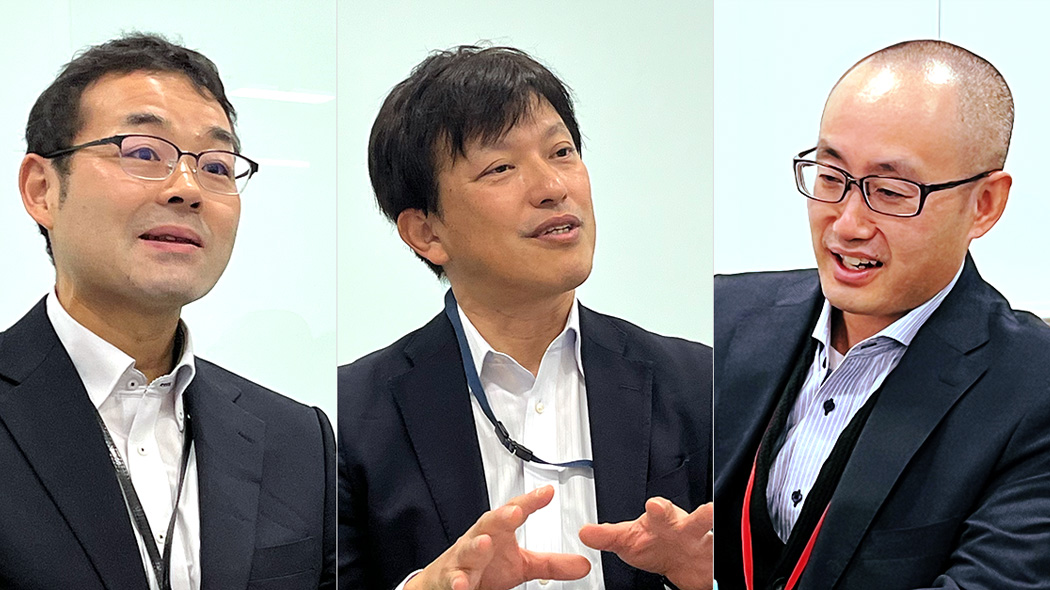
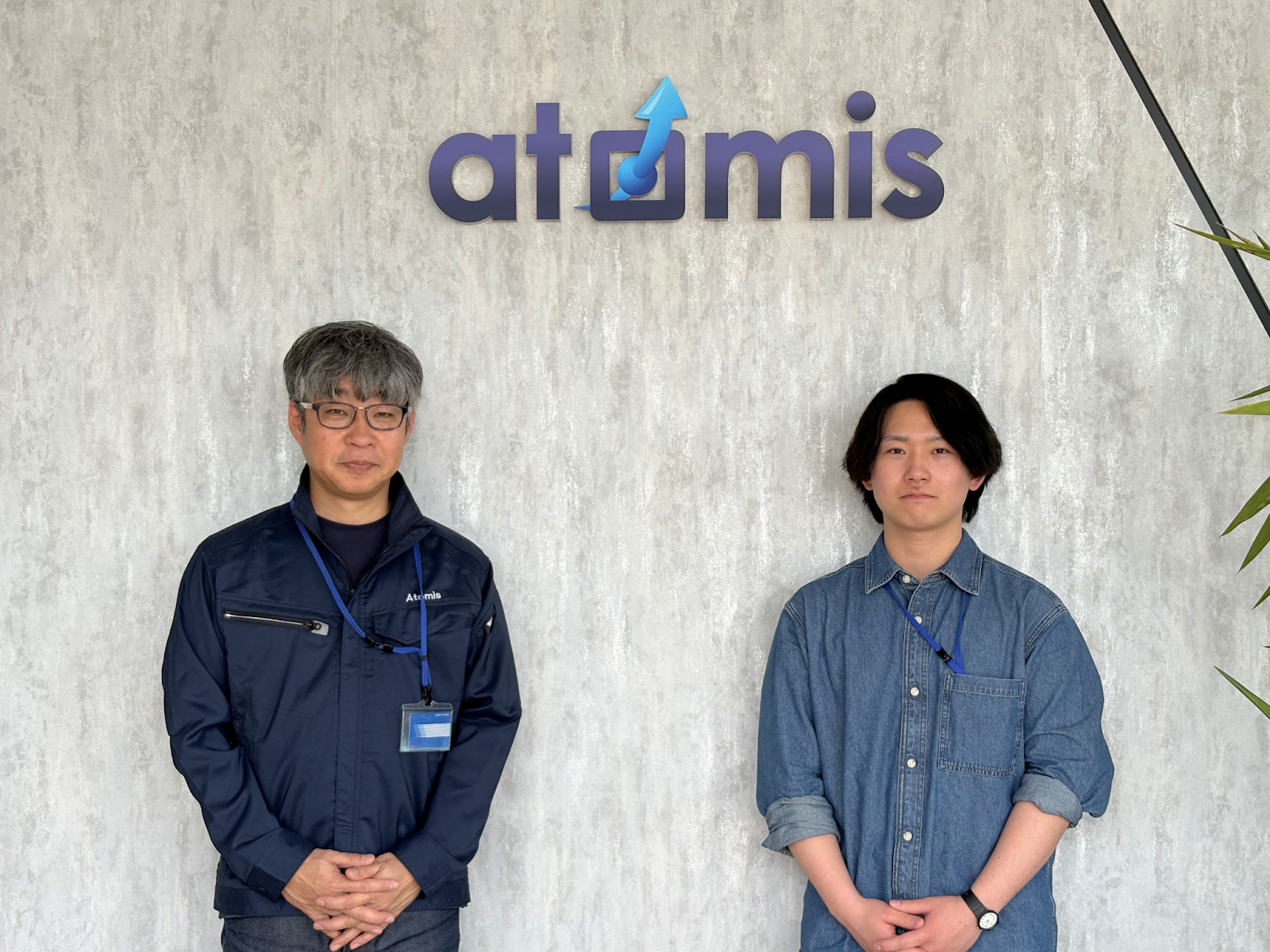
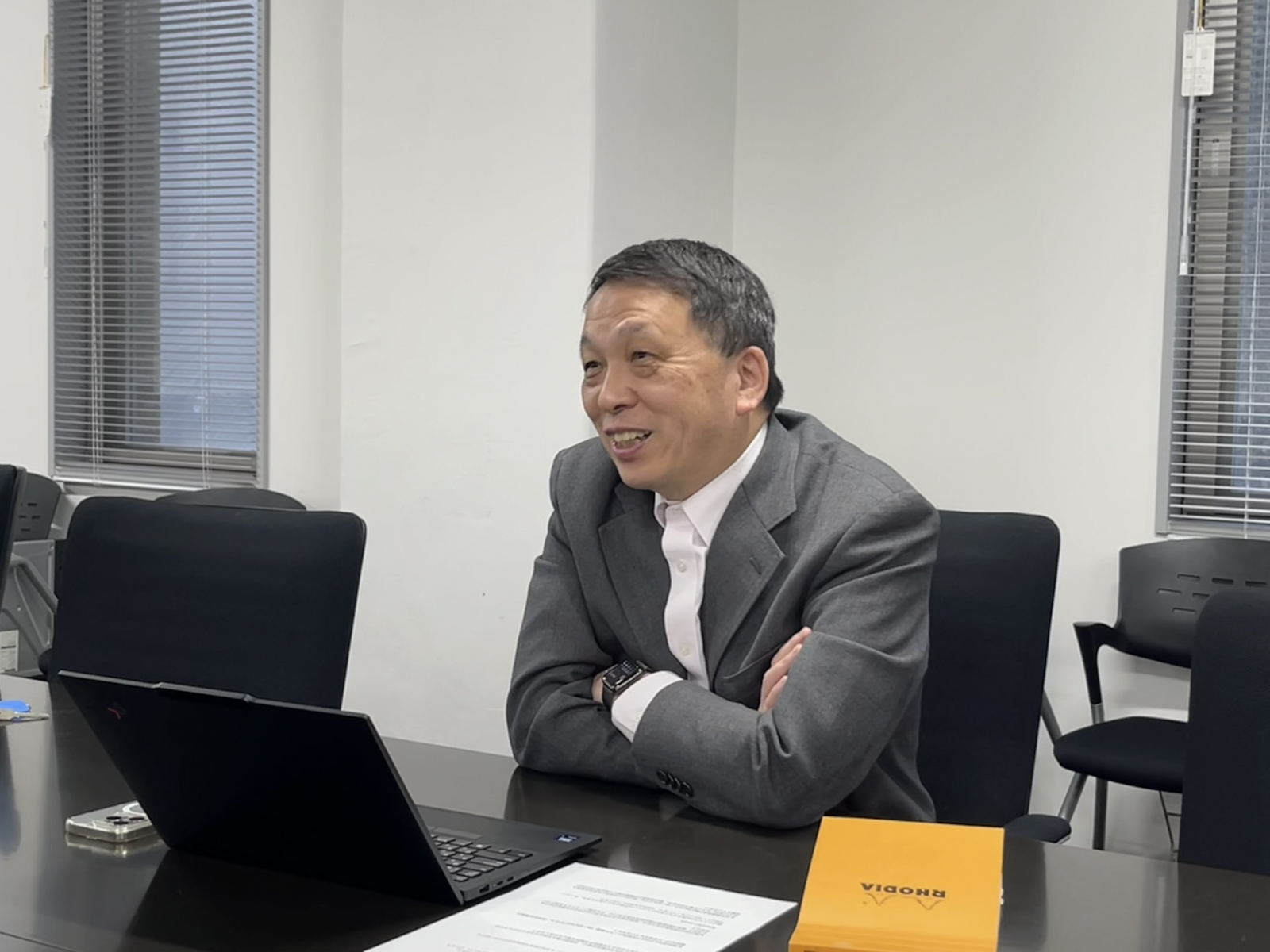
In this article, we interviewed Mr. Asari, CEO of Atomis, and Mr. Chang and Mr. Amamizu, researchers who actually conduct simulations in the field, about Matlantis' role in the commercialization of MOFs and the changes in research design and decision-making.
Taking on the challenge of commercializing promising MOFs
Q. First, could you tell us about Atomis's business overview? What kind of business do you conduct?
Asari:
Atomis is a startup whose core technology is PCP/MOF, and it aims to handle not only MOFs but also next-generation porous materials in general.
Our business has two main pillars. One is our materials business (B2B), which involves designing, evaluating, manufacturing, and selling materials. Next-generation high-performance materials like MOFs can now be designed using computer simulations (in silico), so we are engaged in a business that provides materials to our client companies while utilizing such simulations.
Another area we focus on is impact-driven businesses aimed at solving social issues. Since our founding, we've focused on "gas distribution." The world of gas cylinders has seen almost no technological breakthroughs in 100 years. I believe that this is precisely the kind of industry that startups should be transforming. This isn't just a B2B business; we're also developing businesses that can reach B2C.
The materials business is an area where material adoption can take a considerable amount of time. Therefore, at Atomis, we have created a structure that supports business growth by pursuing our materials business and impact business in parallel.
Daisuke Asari, Representative Director ,CEO of Atomis Inc.
Q. In 2025, Professor Kitagawa, who serves as a chemical advisor at Atomis, received the Nobel Prize for his research on MOFs. MOFs are well-known in the research field, but what are their most common uses in actual industrial applications?
Asari:
MOFs are primarily used in applications such as gas separation and adsorption. Typical uses include CO₂ recovery from exhaust gases and the storage and separation of gases such as hydrogen. Research is also underway on various other applications, including coating materials and deodorizing materials.
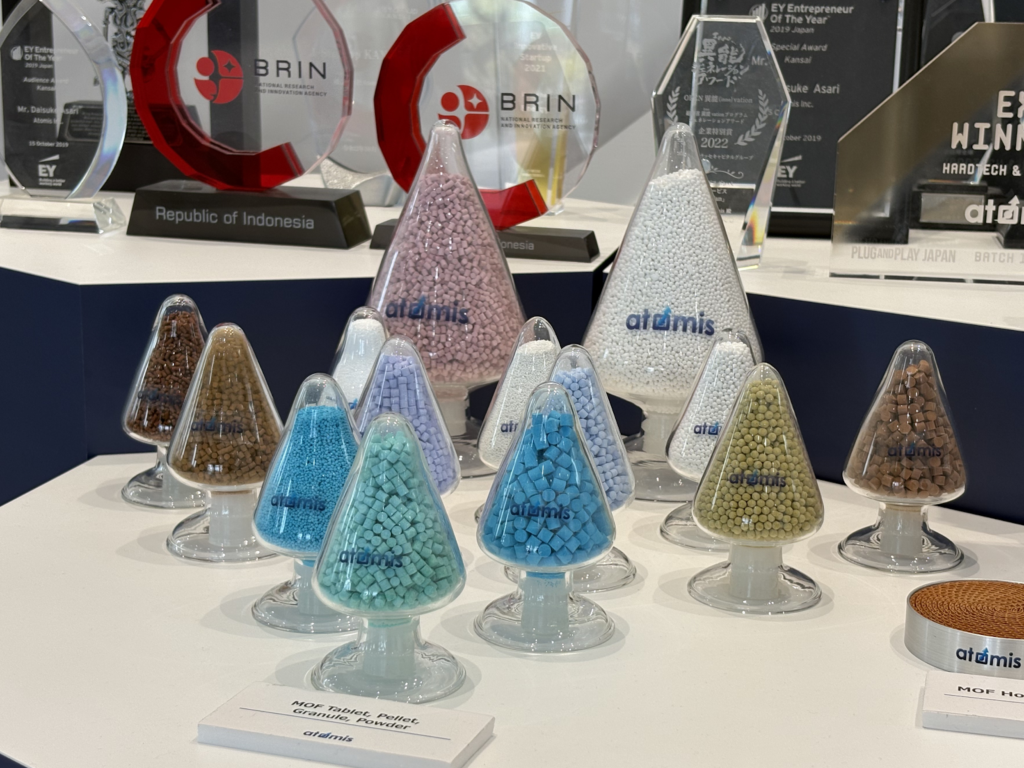
Within that context, Atomis currently has products available for three different applications.
One application is to improve the durability of fluorine-based coatings by mixing it with the coating agent.
Another application is refrigerant recycling. Since the recovered refrigerants (fluorocarbon gases) are a mixture of various types, the legally unusable refrigerants are separated and removed, and only the usable ones are recycled and reused. MOFs are used in this separation process.
Another use is as a deodorizing and antibacterial material. Activated carbon is well-known for its deodorizing properties, but there are some odors it cannot completely eliminate, and it does not have antibacterial properties. It is being commercialized as a material with these new functions added.
However, these applications still represent a small market, and they haven't generated significant sales for our company yet.
On the other hand, many MOFs manufacturers are working on CO₂ separation. This presents a huge business opportunity. CO₂ separation requires a very large amount of material, so it could potentially be used on a scale of hundreds of tons. If it can be mass-produced and sold, the price will decrease, and it will also demonstrate to the world that "it can actually be made and quality can be guaranteed."
New materials tend to target high-value-added areas, which often results in high prices and limited sales. This can lead to them being perceived as "materials usable only in limited applications," making it difficult for them to spread to other industries.
Therefore, I believe CO₂ separation is an important topic in terms of demonstrating that it can be mass-produced and its cost can be reduced.
Why is commercialization of MOFs difficult? – The gap between research and industry.
Q. While these possibilities exist, MOFs are also said to be difficult to commercialize. What are the actual challenges?
Asari:
MOFs are materials whose function and structure can be designed by changing the combination of organic ligands and metals, but because they can be designed, research can easily lose focus.
When designing new materials with AI, we consider what kind of pores and properties will result from different ligands, but if we pursue that to its limits, it ultimately becomes a matter of "creating new reagents." This, in turn, drives up the cost of the components.
In other words, I believe the pitfall when aiming for commercialization is that because you can design it, you tend to disregard profitability.
Therefore, we consider everything from the initial stages, including the price range, while talking with our customers. We don't just pursue performance; we aim for products that strike a good balance between durability, performance, and cost to be put into practical use.
In university research, there's a tendency to choose materials with outstanding performance. For example, even a material that breaks immediately after being taken out of a glove box can be considered valid for a research paper if its performance is high enough. However, when considering practical applications, such materials must be excluded from consideration from the start.
To that end, we have created our own database called POROS™, which includes data on not only material performance but also cost. This allows us to quickly find materials that meet the requirements our customers desire.
Another major difference is the scale between research and industry.
While 100 mg is usually sufficient for experiments at a university, for industrial applications, the minimum requirement is typically around 1 kg. Furthermore, the manufacturing method cannot be just any old method.
For example, manufacturing methods that use large amounts of organic solvents and consume a lot of energy are environmentally undesirable. Even if a material is marketed as environmentally friendly, it can still produce a lot of CO₂ during production.
To create something that is practical and usable, we need to consider not only the performance of the materials, but also the manufacturing process, cost, and environmental impact from multiple perspectives. That's precisely where we should be focusing our efforts.
Q. Given the difficulties of industrialization, what process does Atomis follow to develop products from the research stage to commercialization?
Asari:
In our materials business, we combine research and development processes in various ways, depending on the application and customer needs.
Using simulations like Matlantis is for the initial stage of desk-based evaluation.
When a customer asks us, “Is there anything we can do with MOFs?”, we first run an in silico simulation to explore the possibilities.
We use our database to search for candidate materials and perform common simulations such as GCMC*. However, there are cases where a DFT calculation is necessary. In those cases, we proceed with evaluation by comparing the results of the DFT calculation with those of Matlantis.
By running the simulation multiple times in this way, we narrow down the promising candidates.
Once we identify a promising candidate during the simulation phase, the next step is to collect data through experiments. If the simulation and experimental results match, we proceed with development; otherwise, we go back to simulation and reconsider our approach. That's the general idea of moving from research to development.
The experiments will start on a lab scale and gradually progress to conditions closer to actual usage. Finally, if large-scale verification is successful and no problems are found, the product will be commercialized.
Being able to perform calculations instantly when needed will change the research process.
Q. You mentioned "doing the simulation first." Are Mr. Chang and Mr. Amamizu both in charge of the simulation?
Chang:
The simulation is handled by two people: myself and Amamizu.
The team as a whole consists of four members, with the remaining members primarily responsible for the experiments.
The development process involves alternating between simulation and verification.
Since simulations alone can sometimes lead to results that are misleading, we still frequently adjust parameters while checking experimental values. In that sense, we are proceeding by combining simulations with empirical verification.
Amamizu:
I joined the company as a member responsible for simulations.
My main responsibility is computational analysis, such as calculating adsorption amounts using simulations to evaluate the adsorption characteristics of MOFs.
Q. You started using Matlantis through a joint research project with another company, and have since continued to use it independently. What aspects of Matlantis made you want to continue using it not only for research purposes but also in your company's internal R&D processes?
Chang:
In MOFs, adsorption characteristics, especially energy evaluation, are crucial, and Matlantis's extremely fast computation speed was a major advantage in this regard.
While we have a contract with Kyoto University that allows us to use their supercomputer, university supercomputers are shared resources, so even if we submit a job, it's not guaranteed that calculations will start immediately. Depending on the congestion, we may have to wait for several days or more, and sometimes we can't perform calculations at the exact moment we want to test a particular set of conditions.
In that respect, Matlantis was a huge advantage because it allowed us to run calculations immediately when needed, enabling us to integrate simulations without interrupting the experimental process. We were able to change the conditions while looking at the experimental results and immediately try the next calculation, which I feel has increased the speed of decision-making throughout the entire research.
This immediacy was one of the reasons we wanted to continue utilizing it not only in collaborative research but also in our subsequent internal research and development processes.
Q. Given that you also utilize conventional methods like DFT, how do you differentiate the two, and at which stage of the research process is Matlantis most often used?
Chang:
Because DFT is highly reliable in terms of accuracy, we continue to use it for final evaluations and detailed verifications. On the other hand, Matlantis is very fast in computations, so we often use it in the initial stages, such as screening candidate structures and understanding their behavior.
When comparing our results with those from supercomputers, we feel they are not significantly different, and we believe they are quite reliable for search purposes.
Furthermore, while GCMC calculations usually require adjustment of force field parameters, Matlantis allows calculations to begin relatively quickly, making it convenient for evaluating the adsorption properties of materials.
Q. Does this speed of calculation affect not only the research phase, but also the decision-making process for commercializing materials and the speed of development?
Chang:
Yes. In the commercialization consideration process, we feel that being able to obtain calculation results immediately is a major advantage. When evaluating materials, it is necessary to quickly decide "which conditions to try next," and being able to obtain the data needed for that decision on the spot is extremely important.
Furthermore, since Matlantis can perform calculations using Python, I find it easy to use because it allows for the continuous execution of calculations based on multiple conditions. With conventional tools, it's necessary to configure each condition individually, which inevitably increases the workload. However, with Matlantis, you only need to write a script once to run calculations continuously, allowing for efficient data accumulation.
Being able to compare results under multiple conditions in a short amount of time has sped up the evaluation and selection of materials, and I feel it has made it easier to proceed with considerations toward commercialization.
Q. I understand that Mr. Chang's research originally focused on experiments. To what extent did he have experience with calculations? Also, did he encounter any difficulties when actually using Matlantis?
Chang:
Originally, my work was primarily experimental, and I had very little experience with simulations. I started using computations through collaborative research, and that's how I became familiar with Matlantis. I wasn't originally a computational specialist.
Many calculation tools require understanding their own unique input specifications, and I often found them to take a while to get started. However, Matlantis can be operated with Python, which made it relatively easy to get into. The fact that I could use it while leveraging my existing coding knowledge was a big plus.
Furthermore, it has become easier to try new methods when we think, "I want to try this kind of calculation too." I feel that being able to write code and work on new calculations while utilizing generative AI like ChatGPT has also been a significant change. In the sense that the options for calculations themselves have expanded, I think it has also had an impact on how we conduct research.
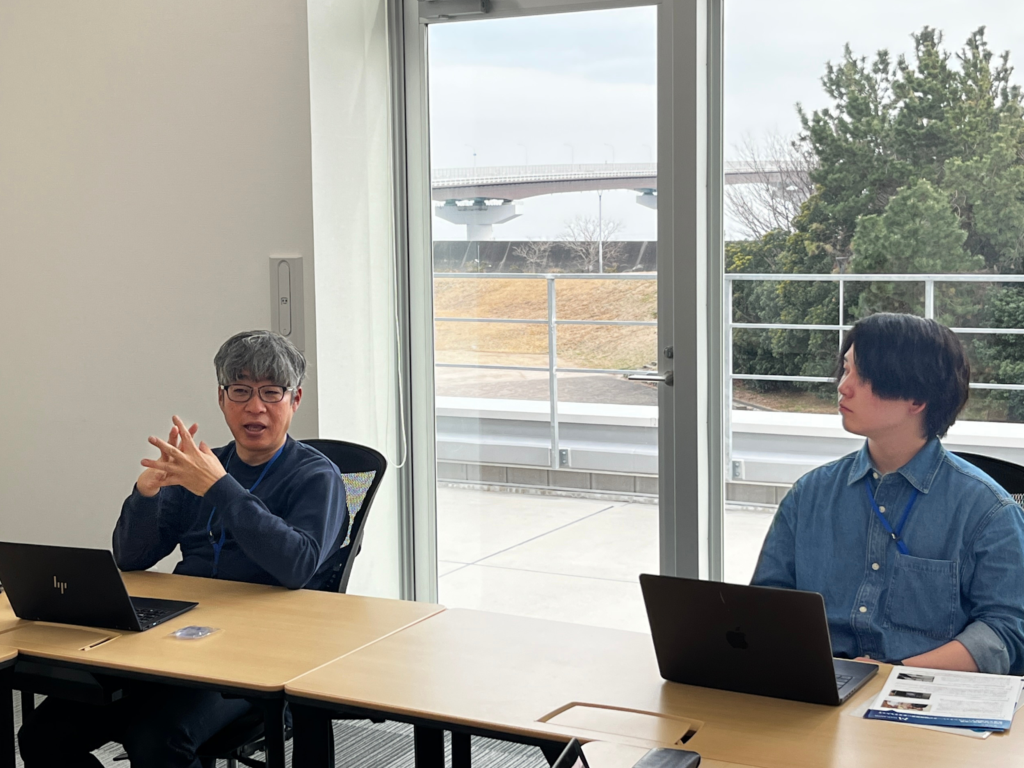
What can be seen through simulations helps move decisions forward.
Q. How have these changes in research methods affected the commercialization and business of MOFs?
Chang:
The biggest advantage of Matlantis was that it could run calculations immediately when needed, allowing us to integrate simulations without interrupting the experimental process.
In material evaluation, it's crucial to quickly decide "which condition to test next," and being able to obtain the necessary data on the spot is extremely important. Since calculations for multiple conditions can be run continuously and simultaneously, results can be compared in a short time, significantly speeding up material evaluation and selection.
Furthermore, the MOFs search allows for simultaneous evaluation of adsorption capacity and stability under various conditions, enabling efficient comparison of compatible candidates. Structures that do not converge can be judged as "highly unlikely to be fabricated in reality," allowing for selection of candidates before proceeding to experiments.
Furthermore, at the screening stage, we believe it's more important to be able to correctly compare the relative strengths and weaknesses of candidates than to obtain absolute values that perfectly match experimental values. In fact, although there is some variability in the Matlantis results, the trends are consistent, making it quite useful for exploratory purposes. We feel that being able to prioritize candidates at an early stage in this way has made it easier to proceed with considerations toward commercialization.
Asari:
Simply explaining things based on experience isn't always convincing to customers. There are many situations where saying "This is just how it is" doesn't get the message across.
In that respect, I feel that Matlantis makes it easier to create persuasive materials because it allows us to visualize the behavior of materials.
Furthermore, since we can also calculate systems with large molecular weights, we can show not only the unit structure but also the movement of the entire structure. Because MOFs are flexible materials with movable structures, being able to show this movement as a video is also a great advantage.
Because we can visualize behaviors such as "gas molecules actually entering adsorption sites where we thought they wouldn't normally enter," I think it contributes to customer satisfaction.
Being able to explain the behavior of materials with evidence in this way has made it easier to move forward with discussions with customers, and I feel that it has led to decisions toward commercialization.
*GCMC (Grand Canonical Monte Carlo) is a simulation method that estimates the amount of adsorption and arrangement of atoms and molecules when they reach equilibrium by inserting and removing them into the internal spaces of porous materials. It is commonly used in the evaluation of MOFs, zeolites, porous carbon, battery materials, and catalyst surfaces.
*The information presented in this article is current as of the time the interviews were conducted.
Publication date of this case study: 2026.05.07
-


 URL
URL
Copied
what's new
Winning Through Technology: Building an Enterprise-Wide MI Platform at Sumitomo Electric
Sumitomo Electric Industries, Ltd.Non-ferrous metals, electric wires, electronic components, and automotive parts
Seoul National University/CCEL
Where to Position Matlantis Among Computation, Experiment, and Machine Learning Research Design for Materials Discovery — Insights from CCEL at Seoul National University
Seoul National University, CCEL (Computational Catalysis and Emerging Materials Lab)Academia


Computation Guides, Experimentation Tackles. Accelerating Research at Honda with Matlantis
Honda R&D Co., Ltd.Research and Development (Transportation Equipment and Advanced Technology)
Shimogaki Laboratory, The University of Tokyo
Prof. Shimogaki of the University of Tokyo talks about two "Before and Afters" with Matlantis: The new research style transforming surface reaction research and education
University of Tokyo, Shimogaki LaboratoryAcademia
Verification period shortened from 2-3 years to 1.5 months after Matlantis. Significant enhancement in speed and efficiency of development processes with computation.
Kuraray Co., Ltd.Chemicals