Computation Guides, Experimentation Tackles. Accelerating Research at Honda with Matlantis
- Honda R&D Co., Ltd.
- Industry: R&D (transportation equipment and advanced technology)
- Business: As the Honda Group's research and development division, it conducts research and development of advanced technologies, such as environmental and safety technologies and new materials, focusing on the mobility field.

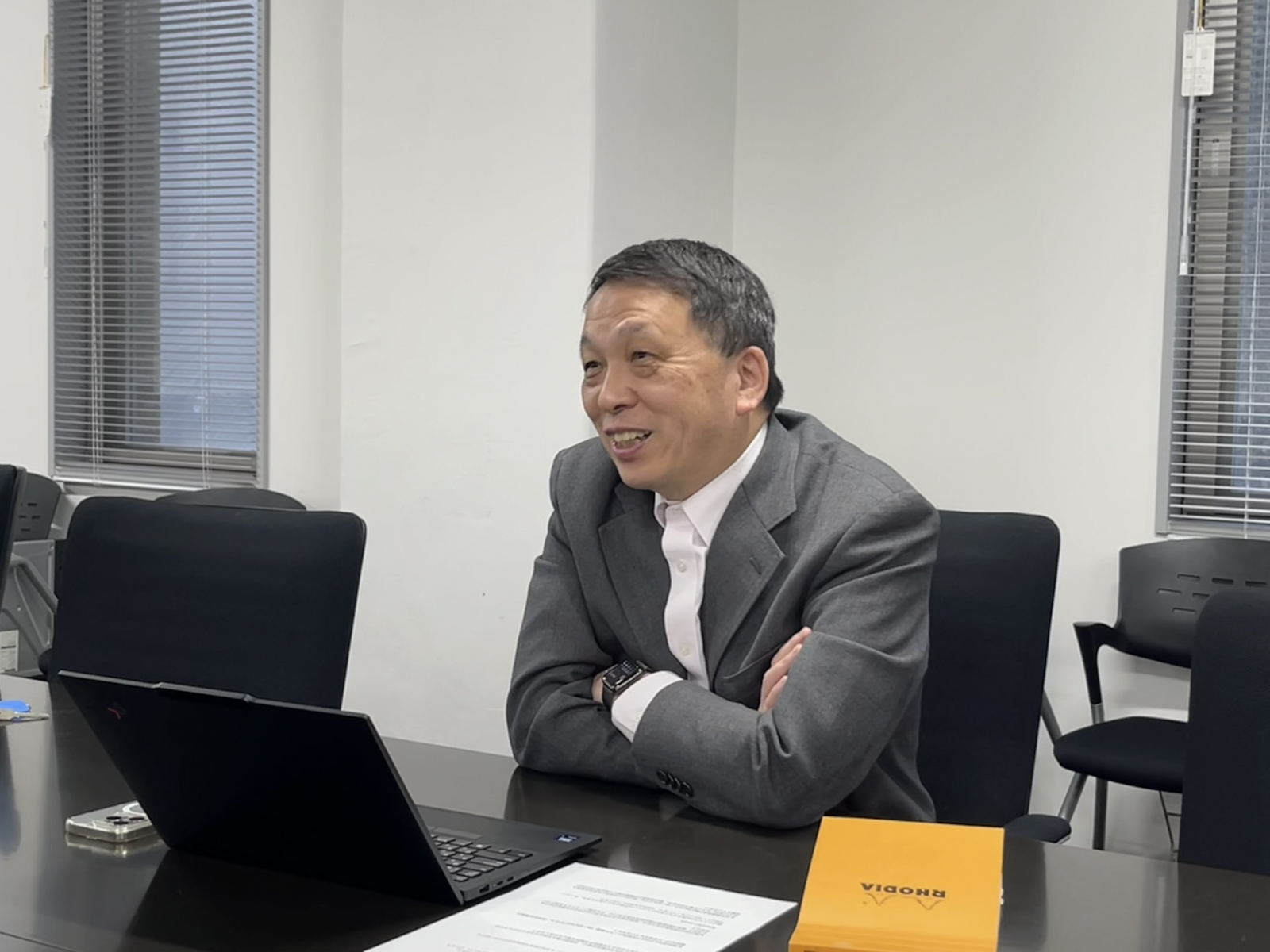
"We have now been able to clearly demonstrate, based on calculations, that this substance can theoretically be synthesized," says Kawai.
As electrification advances, the automotive industry faces growing demands for higher performance, improved safety, and greater durability in onboard batteries. At Honda R&D Co., Ltd. (Honda), researchers are leveraging a long-standing culture in which computational science and experimentation work side by side to explore next-generation battery materials.
In recent years, Honda has further advanced its use of computational science to improve both the accuracy and speed of materials exploration. This effort has increased the need for enhanced computational environments capable of more precise property evaluation, as well as advanced exploration methods such as crystal structure prediction (CSP) that allow researchers to examine structural space more comprehensively.
Against this backdrop, Honda began exploring new computational approaches unconstrained by conventional frameworks, clarifying the need for a unified computational platform capable of handling diverse methodologies in a consistent manner.
Following this development, Honda introduced Matlantis as its computational platform.
In addition, a joint research collaboration with Preferred Networks, the developer of Matlantis, has begun, and the use of Matlantis CSP (hereafter MTCSP), a function designed to efficiently perform crystal structure prediction, is also progressing.
At present, it has become possible to conduct comprehensive searches for candidate materials and to evaluate their synthesizability in advance on Matlantis, greatly expanding the scope of the initial research and consideration process.
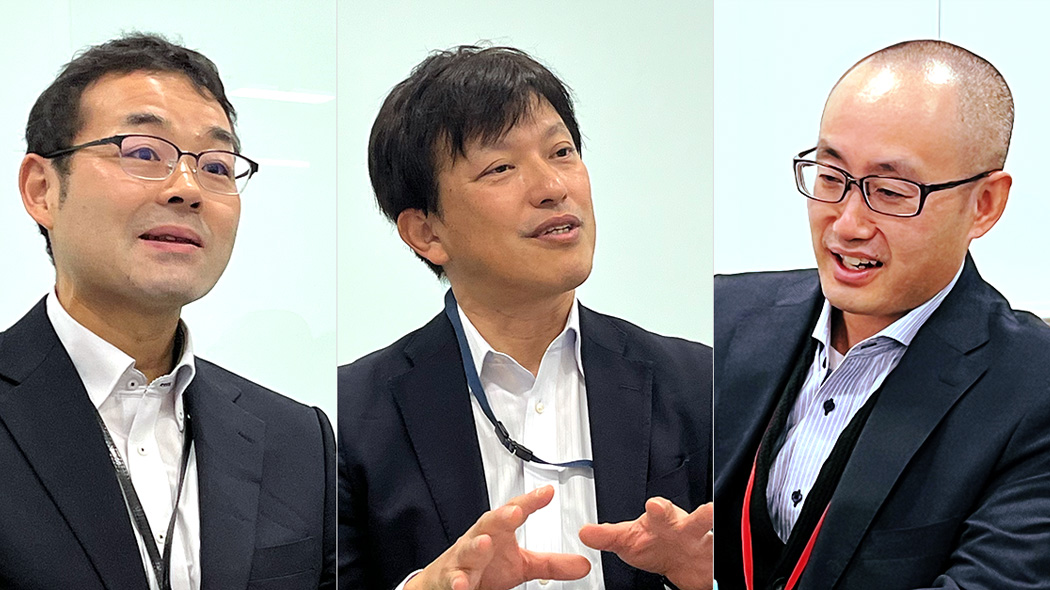
This time, we interviewed three members of the project team: Mitsumoto Kawai, who oversees the project as project leader; Haruka Matsuyama, who is responsible for computation; and Terumi Furuta, who works on both computation and experimentation, about the background behind the introduction of Matlantis, changes in collaboration with experimental research, and the tangible impact that has significantly accelerated their R&D speed.
Honda’s Integrated “Computation × Experimentation” Culture
Q. Could you tell us about your department’s mission and role?
Kawai:
Our department is responsible for advanced research at Honda, with a particular focus on battery materials for automotive applications. Our project aims to identify promising candidate materials through computational science and then validate those results experimentally. The team is composed of researchers from both computational and experimental domains, and as project leader, I coordinate the overall effort.
Q. Computation and experimentation seem to be closely integrated within the same team. How does this collaboration work in practice?
Kawai:
Because computational and experimental researchers belong to the same project, collaboration happens on a daily basis. Hypotheses and candidate materials identified through computation are quickly shared with the experimental team, where verification proceeds in parallel.
This approach is not new to Honda. Even when I joined the company nearly 30 years ago, computation and experimentation were already working together within the same teams. That accumulated experience forms the foundation for our current projects, where computation and experimentation are seamlessly integrated and progress smoothly.
Q. What kind of materials research are you conducting?
Kawai:
We are engaged in research and development of materials for automotive batteries. Batteries for electric vehicles face a fundamental challenge: achieving high energy density within limited space while maintaining safety. Our research therefore focuses on how much energy can be stored safely in a compact volume. While today’s batteries already offer high energy density and safety, we believe there is still room for improvement—just as gasoline vehicles evolved significantly over time. With this perspective, our team explores a wide range of material possibilities by combining computational predictions with experimental validation.
The Wall Between Computation and Experiment: Can a Computationally Promising Material Actually Be Synthesized?
Q. What led Honda to adopt Matlantis? What challenges were you facing?
Kawai:
The main challenge was not the technology itself, but the methodology. From the computational side, we can propose many materials that appear promising or possess desirable properties. However, successfully synthesizing those materials and realizing them as actual substances is extremely difficult. In reality, successful cases are rare, and failures are far more common.
Even when a material is evaluated computationally as having excellent properties, experimental teams may point out that it is difficult to synthesize. To move research forward collaboratively, we need a step-by-step process that first convinces experimentalists that a material is theoretically synthesizable and can stably exist. This makes it essential to evaluate ground-state stability and possible crystal structures in advance. However, performing exhaustive structural searches using conventional methods is computationally expensive.
Machine-learning potentials were already known to significantly improve computational speed, but conventional machine learning potentials often faced accuracy limitations. In many cases, results diverged substantially when validated by first-principles calculations.
In this context, we learned about Matlantis as a machine-learning potential that achieves both high speed and high accuracy. As we continued to investigate, it became clear that Matlantis could maintain high precision while enabling extremely fast calculations. That led us to believe it could be used to rapidly and broadly explore phase diagrams and stable structures—this was the initial trigger for considering adoption.
Around the same time, a neighboring research team at Honda was evaluating and introducing Matlantis to strengthen their computational environment. This prompted our team to begin a joint research project with Preferred Networks, through which we started using Matlantis in earnest.
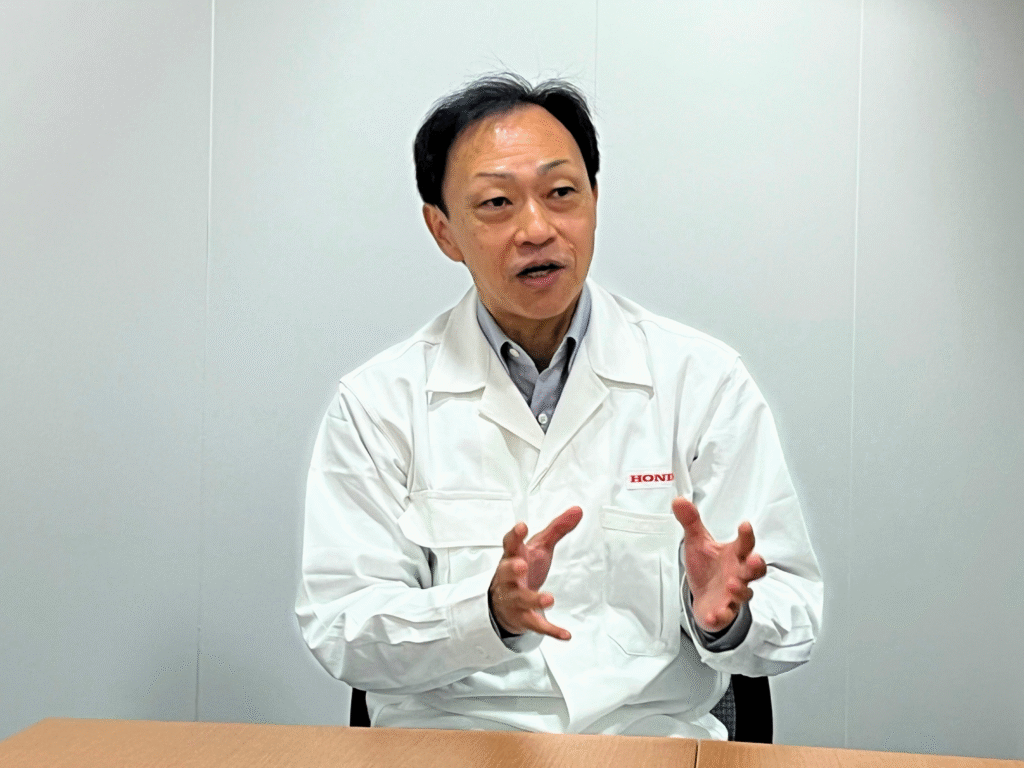
Mitsumoto Kawai,Chief Engineer, Device Process Innovative Research Excellence, Honda R&D Co., Ltd.
Exploring Structures That Can “Stably Exist”
Q. How is Matlantis CSP used to identify stable structures?
Kawai:
We first clarify the required functions and properties, then computationally design materials that may satisfy those requirements. At that stage, it is critical to determine whether a material can exist stably in reality—not just in theory.
From this perspective, we use MTCSP for materials exploration.
One of its greatest strengths is that it can predict crystal structures directly from chemical composition. This allows us to assess synthesizability—whether a material is likely to exist stably or is inherently difficult to realize—already at the computational stage.
Before adopting MTCSP, our evaluations focused mainly on thermodynamic stability. While we attempted to generate model structures computationally, we were unable to systematically capture nearby metastable structures.
With MTCSP, however, we can explore not only stable structures but also the surrounding structural space in a comprehensive manner. This broad exploration capability is its greatest advantage and has significantly increased our confidence in materials design.
Q. What differences did you notice after actually using MTCSP?
Kawai:
The most striking change was the dramatic increase in exploration speed. Previously, identifying candidate structures required a tremendous amount of time. Structures that could not be found despite extensive trial and error using conventional codes were proposed by MTCSP in a short period of time. The efficiency gain is truly significant.
Matsuyama::
Coming from a background in first-principles calculations, I was amazed by the sheer number of structures that could be evaluated at once.
Although I thought I understood the mechanism beforehand, actually using it made things much clearer. From composition alone, I can see where truly stable structures might exist, or when a composition appears physically unfeasible. It allows us to narrow down candidates while forming hypotheses, which is extremely valuable.
Furuta:
Because it is Python-based, even if we don’t fully understand every detail internally, it’s relatively easy to follow the workflow. It feels transparent, and potentially customizable if needed. From an extensibility standpoint, it’s quite user-friendly.
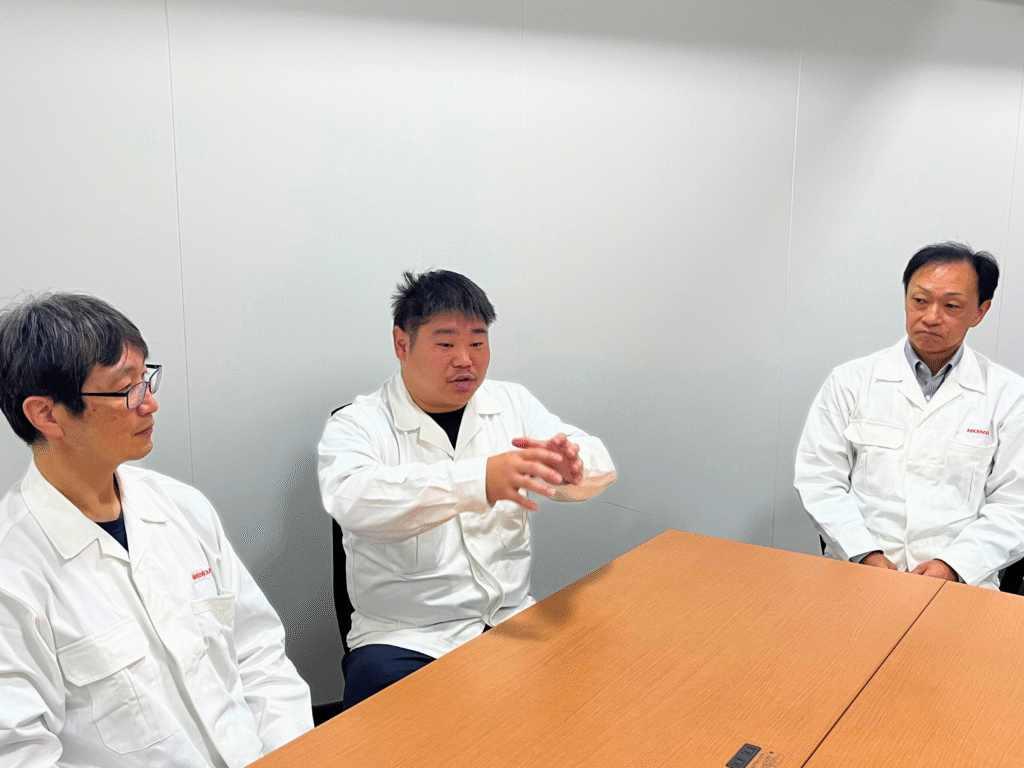
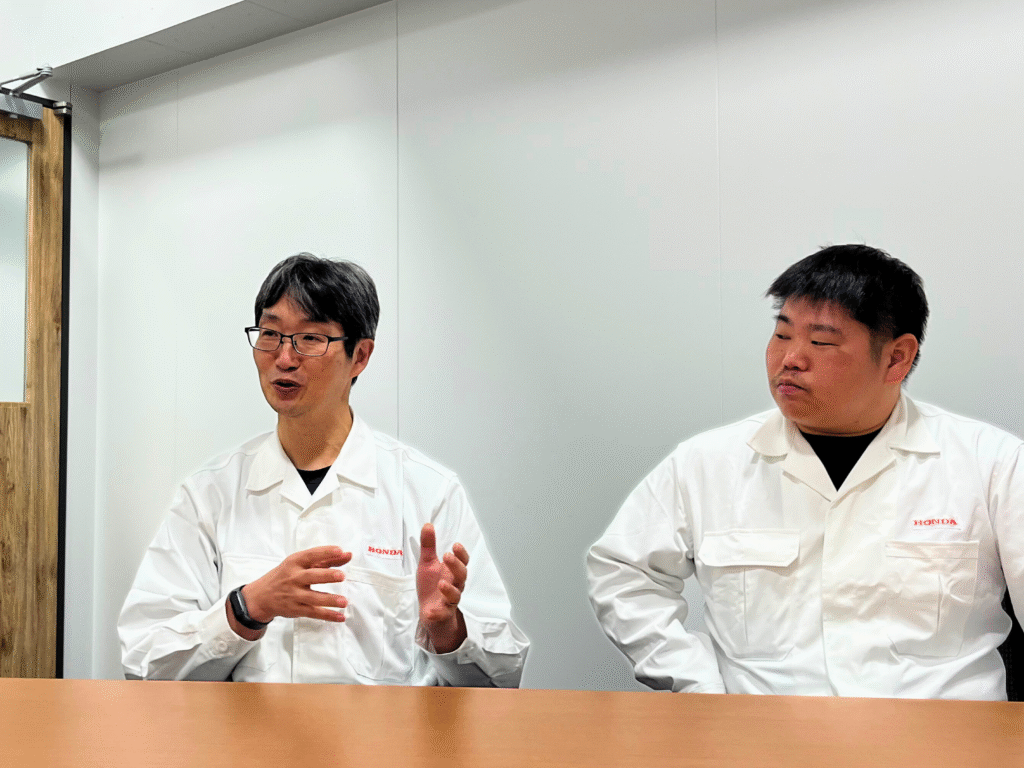
Terumi Furuta,Assistant Chief Engineer, Device Process Innovative Research Excellence, Honda R&D Co., Ltd.
Haruyuki Matsuyama, Ph.D. Staff Engineer, Device Process Research Innovative Research Excellence, Honda R&D Co., Ltd.
Q. How do you validate accuracy and compare Matlantis with other methods?
Matsuyama::
At this point, we feel confident using it. When necessary, we plan to compare results with other methods. Our priority right now is speed—we want to find materials that can actually be synthesized as quickly as possible. Rather than spending too much time on accuracy verification upfront, we prefer to identify promising candidates and pass them to experiments. So detailed validation is still ongoing.
Kawai:
Through repeated verification with Preferred Networks, we have concluded that Matlantis’s machine-learning potential provides sufficient accuracy. Reproducibility has also been confirmed using previously published literature. Based on these results, we have sufficient confidence to apply MTCSP to our current projects. For the themes we are working on now, full-scale validation is just beginning.
Computational “Possibilities” Accelerate Experiments
Q. Has the increased speed and accuracy of computation changed how experiments are requested or conducted?
Kawai:
The computational throughput of MTCSP has exceeded our initial expectations. Even large-scale structural searches that would be impractical with first-principles calculations can be performed quickly with Matlantis. While full experimental feedback is still forthcoming, it is easy to imagine that candidate narrowing will become dramatically faster. We have very high expectations that, as this tool is fully utilized and spreads internally, it will accelerate the entire R&D process—including experimentation.
Q. Do you already feel that this will lead to tangible results?
Kawai:
At present, only some themes have reached the stage where computation and experimentation are fully integrated, and we are not yet operating at full capacity. Further validation is still required.
That said, a major difference from the past is our growing ability to state clearly—based on computation—that a given material should be synthesizable. Previously, we sometimes had to ask experimentalists to attempt synthesis despite uncertainty, simply because the performance looked promising.
Now, we are approaching a point where we can assert, backed by theoretical evidence, that a material can stably exist.
This enables experimental researchers to actively test various synthesis methods based on specific conditions under which synthesis may succeed.
With both speed and accuracy now working together, we see strong potential for deeper discussion and tighter collaboration between computation and experimentation going forward.
Q. From the experimental perspective, what changes do you anticipate?
Furuta:
As computational capabilities improve, the number of candidate materials will naturally increase. Meanwhile, experiments inevitably take time—sometimes weeks or longer for a single unknown material—so experimentation can become a bottleneck.
If computation can narrow down candidates with reasonable confidence, experimentalists can focus on the most promising ones first. In that sense, the overall certainty and efficiency of the research process should improve significantly.
Publication date of this case: 2026.01.28
-


 URL
URL
Copied
what's new
Seoul National University/CCEL
NEW
Where to Position Matlantis Among Computation, Experiment, and Machine Learning Research Design for Materials Discovery — Insights from CCEL at Seoul National University
Seoul National University, CCEL (Computational Catalysis and Emerging Materials Lab)Academia

Shimogaki Laboratory, The University of Tokyo
Prof. Shimogaki of the University of Tokyo talks about two "Before and Afters" with Matlantis: The new research style transforming surface reaction research and education
University of Tokyo, Shimogaki LaboratoryAcademia

Verification period shortened from 2-3 years to 1.5 months after Matlantis. Significant enhancement in speed and efficiency of development processes with computation.
Kuraray Co., Ltd.Chemicals

Matlantis enables a development process that shifts from the traditional "test-first" approach to "calculation-first" testing.
AGC Inc.Glass and Chemicals

Kao Corporation - ahead of experiments with computational chemistry mastering the speed of Matlantis - shortening devlopment period
Kao CorporationChemicals