Prof. Shimogaki of the University of Tokyo talks about two "Before and Afters" with Matlantis: The new research style transforming surface reaction research and education
- Shimogaki Laboratory, The University of Tokyo
- Sector: Academia
- Research description: Specializing in the process design of thin film fabrication and surface reactions, the Shimogaki Laboratory is involved in analyzing the reaction mechanisms of thin film growth processes in the manufacture of semiconductor devices, which are becoming increasingly miniaturized, such as CVD (chemical vapor deposition) and ALD (atomic layer deposition). With the theme of designing new material processes through the "science" of reactions, the laboratory is leading the research and development of fundamental technologies that support next-generation devices, such as supercritical fluid processes, selective film fabrication, and composite material fabrication.
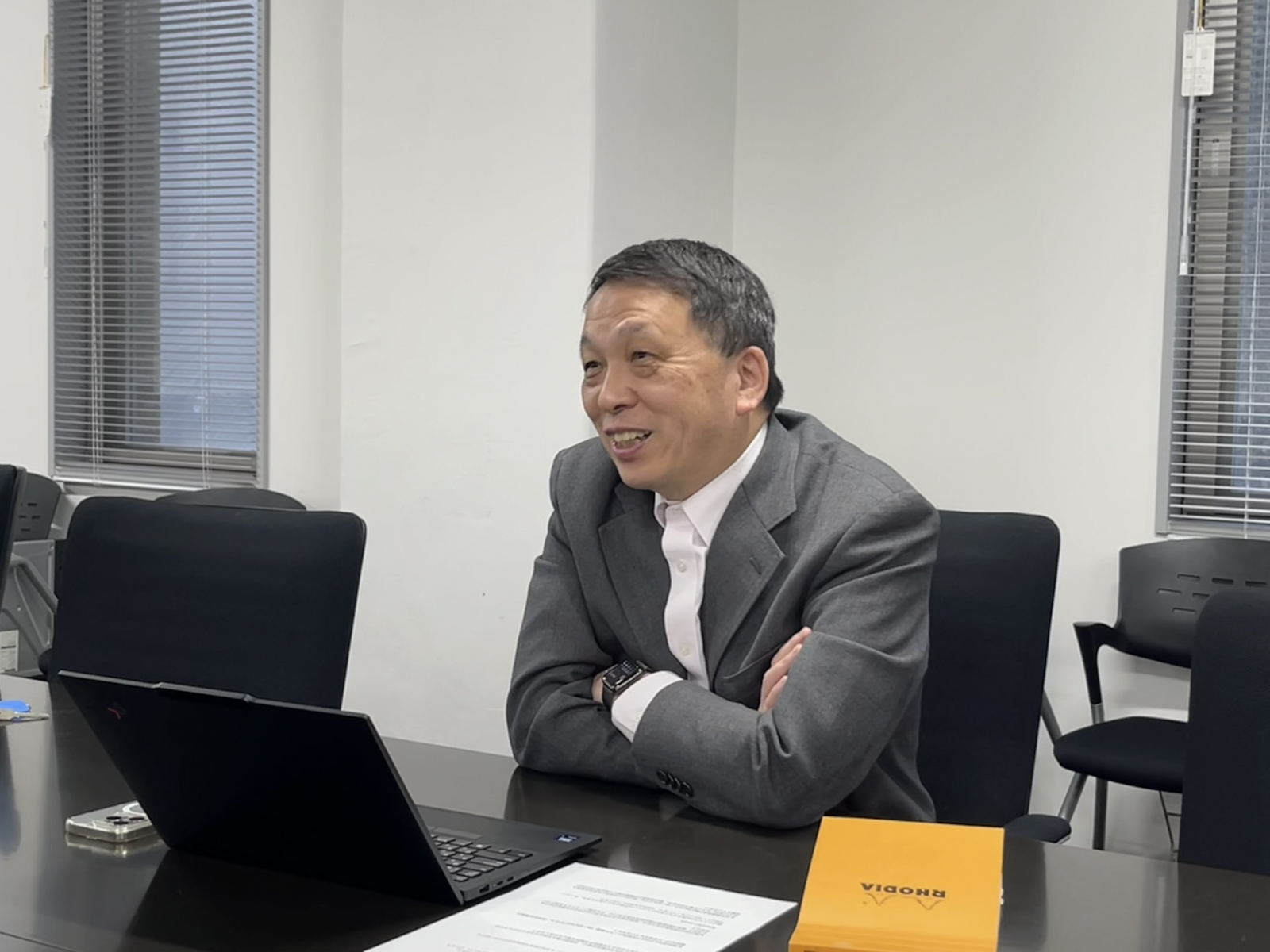
Yukihiro Shimogaki, Ph.D., Director of Materials Innovation Research Center, Collaborative Research Organization, The University of Tokyo, Professor of Materials Engineering, Graduate School of Engineering
We’ve reached a world where we can run the calculations we need, exactly when we need them. I feel this marks a massive "Before and After" in my research career.
As semiconductor devices become increasingly miniaturized, precise control of thin-film formation processes such as CVD (chemical vapor deposition) and ALD (atomic layer deposition) is essential. Professor Yukihiro Shimogaki of the University of Tokyo has been challenging himself to design new material processes by studying the "science" of these reaction mechanisms.
The Shimogaki Laboratory has been working on analyses that combine experiments and atomic-level simulations, not only for gas-phase reactions but also for "surface reactions," which are considered particularly difficult to handle. In recent years, the laboratory has fully implemented the AI material simulation platform "Matlantis," and is tackling reaction mechanism and kinetic analysis using large-scale surface models.
As a result, the laboratory experienced two major "Before and After" transformations. One was that kinetic analysis of surface reactions, which had previously been considered "nearly impossible," became feasible on a realistic time scale. The other was that the style of student education changed fundamentally. In this article, Professor Shimogaki discusses the "Before and After" impact brought about by Matlantis.
*In this article, we use the term "film fabrication" rather than the more commonly used term "film formation." Professor Shimogaki does not see thin film formation as a phenomenon in which a film "forms" naturally, but as the act of designing a process and creating a film with a specific purpose, based on an understanding of the reaction mechanism. This expression comes from a quote from Professor Kunio Tada of the Department of Electronic Engineering at the University of Tokyo, who said, "The act of designing and creating something with a specific purpose is 'fabrication.' In that case, thin film research is 'film fabrication,' right?" and Professor Shimogaki still holds this way of thinking dear to this day.
The major shift from "experiment to calculation" achieved in gas-phase reactions remained elusive for surface reactions.
Q: I heard that the difficulty of analyzing the gas-phase reactions and surface reactions that you are focusing on is very different. First, could you tell us the background to this?
Professor Shimogaki:
That's right. First of all, when it comes to gas-phase reactions, we have reached a point where we can go deeper and deeper into them through calculations. On the other hand, when it comes to surface reactions, the story is the exact opposite.
If a quantum chemical calculation gives a gas-phase reaction rate of "1," the actual reaction rate can be treated as a range between "0.1 and 10." However, in the case of a surface reaction, even if the reaction rate calculated by quantum chemical calculation is the same "1," it could be 1000, or 1/1000th of that. It could even be outside the range.
In other words, the reality for many years has been that "we cannot proceed with research by trusting the calculated values themselves. In the end, we have to actually measure them."
Ultimately, we want to know the rate constant, but this cannot be achieved by simply calculating the adsorption state; we need to find it through a series of steps, including searching for the transition state, vibrational analysis, and derivation of the partition function.
This is where the problem of "large-scale models are needed, but DFT cannot handle them" comes into play.
The surface model commonly used is a small cell with an area of about 0.5 to 1 nm on a side, which, due to the influence of periodic boundary conditions, results in calculations where if a single molecule arrives, it appears as if it has arrived "all at once" across the entire surface.
The actual phenomenon is much more dilute, with perhaps one particle per 10 x 10 of the surface. Differences in doping and adsorption like this have a major effect on the film fabrication rate and film thickness distribution.
For example, the same thing happens with the adsorption of carbon monoxide (CO) molecules. When CO is adsorbed onto a metal surface, the molecules behave almost independently up to 60%, but once it exceeds 70%, the adsorption energy itself changes due to the repulsion and interaction of adjacent molecules. This kind of "coverage-dependent" behavior cannot be reproduced in small cells, and its true nature can only be grasped on a large scale. Therefore, even if you perform calculations using small cells, you cannot see the true nature of the matter.
When using atomic-level simulations for surface reactions, I have always said that it is meaningless unless it is done on a large scale. Intuitively, an area of a few nanometers on a side is the minimum, and ideally 5 nm or more on a side.
However, trying to run such a thing using DFT is no longer realistic. Even with the University of Tokyo's supercomputer, even a slight increase in size would mean the calculation time would reach tens of hours, or even hundreds of hours in some cases. The laboratory also spent 5 million yen to purchase a workstation with 1 TB of memory and dual 64-core processors, but in reality, the situation was such that "Large-scale calculations are technically possible, but they don't run in a practical sense."
Even more cumbersome is the process of going from there to kinetics: calculating the adsorption state, searching for the transition state, performing vibrational analysis, deriving the partition function, and then finding the rate constant. Performing this series of calculations on a large-scale model is nearly impossible using conventional DFT.
That's why I've always thought, "In the gas phase, a major shift from 'experiment to calculation' occurred in the 1990s and 2000s, but the same revolution did not occur in surface reactions."
I witnessed firsthand the moment when researchers who were experimentally studying gas-phase reaction kinetics using shock tubes eventually abandoned them for workstations. However, this didn't happen with surface reactions. I think this is because there have always been structural barriers, such as "large-scale models are necessary," "DFT is too heavy to run," and "it is almost impossible to derive the kinetics."
Q: Under those circumstances, how did you come across Matlantis?
Professor Shimogaki:
The first time I heard the name Matlantis was when I was talking about the latest developments in my research with Professor Hiroshi Komiyama, former president of the University of Tokyo. He asked me, "Do you know Matlantis?" Naturally, I answered, "No, I don't know it," but he continued, "Apparently, Matlantis is a combination of the words 'material' and 'Atlantis'. It seems to be very fast at calculations."
At the time, my impression was simply, "Oh, so something like that has come out," and I had no idea that it would be related to my research.
Later, I heard a similar story from another corporate researcher at a research meeting, and little by little I began to realize that "some kind of new computing technology seems to be emerging."
Then, in 2023, when I went to SEMICON Japan, I spoke with someone from Matlantis and realized, "Oh, so this is Matlantis." That’s when the dots finally connected. From that point on, my interest suddenly became real, thanks to the structural problem awareness that had been lingering in my mind for a long time.
The true nature of surface reactions cannot be seen unless they are examined using large-scale models. However, the calculations are too heavy for DFT, making it virtually impossible. Deriving the rate constant is even more difficult. This was an obstacle that had remained unresolved for nearly 30 years, but the rumor that "it seems to be fast even on a large scale" struck a chord with me.
"If that's true, it could change the landscape of the lab."
To be honest, I didn't really understand what Matlantis was all about at first, but at the time, Machine Learning Interatomic Potential (MLIP) was already starting to develop globally, and I think I gradually began to sense that "the computational revolution that had occurred in the gas phase might finally be coming to surface reactions as well."
First "Before and After": Analysis of surface reactions that previously took a year can now be completed in just one week
Q: What changes have occurred in how you conduct your research since implementing Matlantis?
Professor Shimogaki:
It was a postdoctoral researcher in my lab who first started using Matlantis in earnest.
He has been conducting joint research with companies for 14 to 15 years on the subject of SiC CVI (chemical vapor infiltration) processes, thoroughly exploring the reaction mechanism. SiC fiber is made by bundling thousands of thin fibers, each about 10 μm in diameter and up to 1 km in length, and weaving them like cloth. Gas is permeated into the gaps in the "fabric" to cause a reaction, creating a lightweight, heat-resistant ceramic matrix composite (CMC). It is one of Japan's most important strategic materials.
We looked at existing reaction kinetics parameter models and calculated each reaction using DFT to fill in any gaps. We have been doing this work for three years.
However, when we got to the surface reaction part, we were almost at our limit. A large-scale surface model was required, but DFT was too heavy to handle. It wasn't enough to just look at the adsorption state; we had to calculate the transition state, perform vibrational analysis, derive the partition function, and then derive the rate constant. Trying to perform this series of calculations with a large surface model would be impossible in terms of both time and computing resources.
Even though I knew I had to do it, I just couldn't. That was the reality for many years.
At that time, he started using Matlantis and came to me and said,
"Professor, Matlantis makes surface vibration analysis very easy. I calculated the partition function and derived the rate constant, and it matched quite well with the measured values."
At first, I wondered, "Is that really possible?" This is because, in my opinion, it was nearly impossible to properly calculate the partition function on a surface and derive the rate constant from it. For a long time, it had been impossible to properly determine the partition function for surface reactions, and in the end, the only option was to treat it arbitrarily as "1."
In fact, the calculation results he presented demonstrated that the partition function was properly derived from surface vibration analysis, and the rate constant was in fairly good agreement with the measured value. This made me think, "Ah, this is really a 'Before and After'."
What was particularly impressive was the speed at which the energy profile was generated. Work that had previously taken him a year or a year and a half could now be generated in just two or three days. He himself said, "This is something else entirely," and I was also truly amazed at the speed. Previously, it could take one or two years to create a single diagram showing the "peaks and valleys" that progress from adsorption, through the transition state, to the next stable state. With Matlantis, however, it can be completed in a few days to a week.
Furthermore, and this is a key point, until now it has been nearly impossible to calculate partition functions using large-scale surface models and then apply them to kinetic theory. I myself have seen situations where such calculations were not possible since the 1990s, and at the time, even if it was possible in the gas phase, we had no choice but to give up on it for surfaces. The best we could do was referencing the infrared absorption spectrum of adsorbed molecules. However, with Matlantis, the calculation ran as a matter of course. The feeling that "what was previously impossible is now possible routinely" was very significant.
The feedback cycle between experiment and calculation also changed dramatically. Previously, results would take six months to arrive, but now, if we notice a phenomenon of interest, we can immediately scan the surface reaction analysis using Matlantis and then conduct an experiment the next day to confirm it.
We’ve reached a world where we can run the calculations we need, exactly when we need them. I feel this marks a massive "Before and After" in my research career.
Matlantis' "true value" is not just about precision
Q: Having heard this much, I'm sure many readers are wondering about the accuracy, in the sense of "is it really that fast and trustworthy?" How do you personally perceive the accuracy of Matlantis?
Professor Shimogaki:
Actually, I'm not the type of person who is too picky about precision. Whenever I give a presentation at a conference, I'm always asked, "What's the precision?" But that question is actually nonsense. For example, if the adsorption energy is 1.38 eV, should we allow ±0.1 eV or ±0.3 eV? It is meaningless unless discussed in conjunction with the question: "How much error should we tolerate for our objectives?" To begin with, no one knows the "true value," and DFT itself is the result of a compromise based on multiple approximations. It's strange to say there's "zero error" just because DFT and Matlantis agree, and there is naturally error on the experimental side as well.
Furthermore, when discussing accuracy, we need to consider "what purpose the simulation is being used for in the first place." People actually fabricating thin films in the field won't say "it's wrong and unusable" just because a simulation says the thickness will be 100 nm and the experiment turns out to be 97 nm. Rather, what's important is whether the qualitative trends, such as increasing the temperature to change from 100 to 120, or decreasing the concentration to change from 100 to 80, are quantitatively consistent. I'm quite skeptical about the value of pursuing accuracy just to fine-tune an absolute value of 90 to 90.5.
The same is true in drug discovery. Instead of relying solely on calculations to find the one winning candidate out of 1,000, calculations are first used to "narrow down" the list from 1,000 to 100 to 10. After that, the final choice is always decided through experiments. Simulations are merely a "tool to show direction" and are not a substitute for experiments.
The value of Matlantis lies in the overwhelming speed with which this "narrowing down" process can be done. Energy diagrams that previously took one to two years to draw can now be produced in a week. The process of deriving rate constants from surface vibration analysis has begun to move forward at a speed that is realistic for research. As a result, the very landscape of the lab has changed dramatically - from the way experiments are designed, the way themes are developed, and how students are trained.
For me, the fact that the research workflow is completely different between "Before Matlantis" and "After Matlantis" is far more important than whether the adsorption energy is off by 0.1 eV. I feel that Matlantis is a completely reliable tool for narrowing down candidates on a realistic time scale and deepening our understanding of phenomena by going back and forth between experiments.
Experiments and Simulations: The Future of Research
Q: Has the introduction of Matlantis resulted in any changes in your research style?
Professor Shimogaki:
The style itself may not have changed much.
As I mentioned earlier, I don't think I will follow "the path of the gas-phase researchers of the past
who abandoned shock tubes and replaced everything with workstations."
In other words, we will continue to conduct experiments properly. On top of that, I believe that the half-experiment, half-simulation approach of "deepening understanding of phenomena through atomic-level simulations" will continue to be the standard.
Second "Before and After": From B4 to M1, we have cultivated researchers who can perform both experiments and calculations.
Q: What changes have there been in terms of education and student guidance?
Professor Shimogaki:
I believe Matlantis' influence is huge even in terms of education.
Up until now, to be honest, it felt like students would only reach a "competitive level" in the latter half of their doctoral program. That’s how long it took to properly master quantum chemical calculations, find transition states themselves, calculate rate constants, and construct reaction models.
They would spend one year on undergraduate research and two years on master's research just learning the basics, getting used to calculation methods, and memorizing experimental procedures. It took a significant amount of time before they could finally "drive the research" themselves.
However, the situation has completely changed since Matlantis was introduced. Students who have been using Matlantis in earnest for a year as fourth-year undergraduates, learning from their seniors, are able to contribute significantly as "half-experiment, half-Matlantis" style researchers by the time they move on to master's program. This is truly exceptional considering the scale of education up until now.
In other words, the amount of data that students can handle has increased by an order of magnitude. With conventional DFT, the calculations are so heavy that students can only manage one or two reaction paths per theme, but with Matlantis, even students can track dozens of reactions in a short period of time.
This allows students to naturally internalize a sense for things like "where the transition state is located," "what reaction pathways are likely to occur," and "where on the surface is most likely to react."
"Quantity transforms quality."
This is an old saying, but it's so true, and students quickly come closer to "the perspective of a researcher." I think this is very significant in terms of education. From the past when there was a division between students who only did experiments and students who only did calculations, it has now become common to develop "students who can do both" within the first year of a master's program.
As a result, the quality of discussions within the lab as a whole has improved, and I feel that the way we view both experimental data and calculation results has become more "hybrid" in a good sense.
So, in terms of education, there is a clear "Before Matlantis and After Matlantis." That is what I feel now.
Experimentation × Simulation × Data Science
Q: Finally, from the perspective of future material development and human resource development, what are your expectations for tools like Matlantis?
Professor Shimogaki:
I believe that in the future, the world of materials development will undoubtedly move forward through the trinity of experiments, simulations, and data science.
Nowadays, data scientists are using machine learning to analyze experimental data in many places to optimize equipment and process conditions. However, when it comes to understanding the physical and chemical aspects of the process, there are still many areas where we are only halfway there.
I believe that what we will need in the future will probably be people who are both process scientists and data scientists.
These people will likely work with an atomic-level simulation tool like Matlantis in one hand and tools like big data analysis and symbolic regression in the other.
Using a tool like Matlantis, we can sample large amounts of data such as adsorption free energy, coverage dependence, and temperature dependence, and then convert this data into simple, highly versatile empirical formulas and models. I feel that Matlantis also plays a major role as a "bridge" in this regard.
In that sense, in terms of both research and education, the two worlds of "Before Matlantis" and "After Matlantis" are clearly separating. The two "Before" and "After" worlds I've talked about today may only be part of the story.
Publication date of this case: 2026.01.06
-


 URL
URL
Copied
what's new
ソウル大学校・CCEL
NEW
計算・実験・機械学習の中で、Matlantisをどう位置づけるか――ソウル大学CCELに聞く、材料探索の研究設計
ソウル大学校・CCEL(Computational Catalysis and Emerging Materials Lab)アカデミア


Computation Guides, Experimentation Tackles. Accelerating Research at Honda with Matlantis
Honda R&D Co., Ltd.Research and Development (Transportation Equipment and Advanced Technology)

Verification period shortened from 2-3 years to 1.5 months after Matlantis. Significant enhancement in speed and efficiency of development processes with computation.
Kuraray Co., Ltd.Chemicals

Matlantis enables a development process that shifts from the traditional "test-first" approach to "calculation-first" testing.
AGC Inc.Glass and Chemicals

Kao Corporation - ahead of experiments with computational chemistry mastering the speed of Matlantis - shortening devlopment period
Kao CorporationChemicals