
2026.9.4
Events & Seminars
Announcement of Matlantis User Conference 2026
We will be holding our annual user event for all Matlantis users, "Matlantis User Conference 2026," on September 18th.
Last year's User Conference 2025 saw participation from over 300 people from companies, universities, and other research institutions, where they shared examples of how the product is used in research and development, introduced the latest features, and engaged in active information exchange among users.
For its third edition, this year’s conference will be held under the theme:
The front runner of AI for Science ~ the R&D evolution by the collaboration between Scientists andAI
As research approaches that integrate computation, experimentation, and data become more widespread, the use of AI is steadily penetrating the field of materials development. This conference will focus on practical application examples from Matlantis users and changes in the research and development process, sharing a vision for the future of research and development where scientists and AI work together.
To allow more people to participate, we will be holding this year's event at a larger venue.
Keynote
Two lectures that will explain the current state of AI for Science and the direction of its research and development.
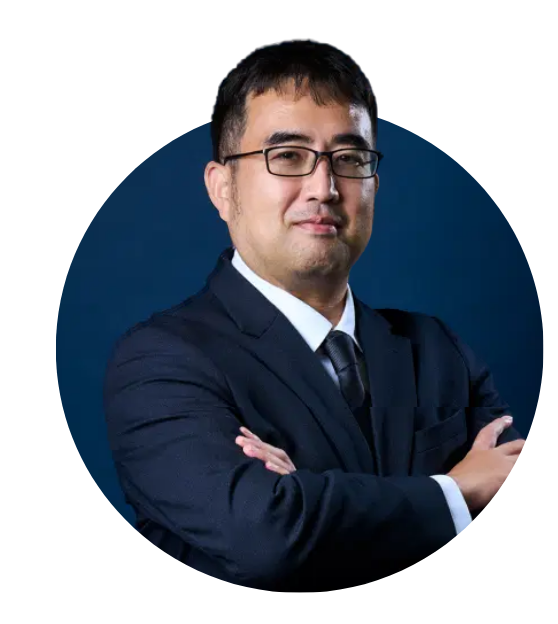
Power Decisions with Atomistic Insights – Navigating R&D in the Era of AI for Science
Daisuke Okanohara
Matlantis Corporation President and CEO
Co-founder, President and CEO of Preferred Networks, Inc.
Title
Power Decisions with Atomistic Insights – Navigating R&D in the Era of AI for Science
Abstract
Matlantis is celebrating its 5th anniversary, a milestone made possible by the support of our community. Over the past five years, universal machine learning interatomic potentials (MLIPs) have steadily gained recognition as an approach to materials research. We have also received feedback that insights enabled by Matlantis has helped researchers redirect development efforts at an earlier stage and contributed to the discovery of new materials. Meanwhile, major changes have been taking place in the AI landscape. AI agents are becoming capable of carrying out tasks autonomously, while Physical AI is learning physical laws to handle real-world tasks. MLIPs can also be seen as a pioneer of Physical AI—having learned microscopic physics. As Physical AI advances across various scales and AI agents connect these capabilities, we believe this is what defines the era of AI for Science. So how will R&D and decision-making change in this new era? The answer to this question lies behind why we chose our vision: “Power Decisions with Atomistic Insights.” In this talk, we will explore the current status of Matlantis and AI for Science, and reflect together on how decision-making will evolve in this era. We will also share our vision for supporting R&D with our full capabilities—combining our proprietary MLIP technology with services and technical solutions.

Justin S. Smith
NVIDIA
Principal Developer Relations Manager

Justin obtained a B.S. in math and Ph.D. in chemistry from the University of Florida, then was a postdoc at Los Alamos National Laboratory, where he was promoted to staff scientist. He was a ML scientist in drug design at Relay Therapeutics. Justin developed the ANI machine learning interatomic potential (MLIP) and pioneered the development of general-use machine learning interatomic potentials for small molecule drug design. He later contributed to the HIP-NN and AIMNet MLIPs, and active learning methodologies for training MLIPs for materials science and reactive chemistry applications. Now he helps the ML chemistry and materials science community fully utilize NVIDIA hardware.
How has AI changed research and development?
The current state of co-creation of experiments, calculations, and data.
How is AI transforming research and development? Researchers from various companies will share their cutting-edge initiatives in a discussion format.
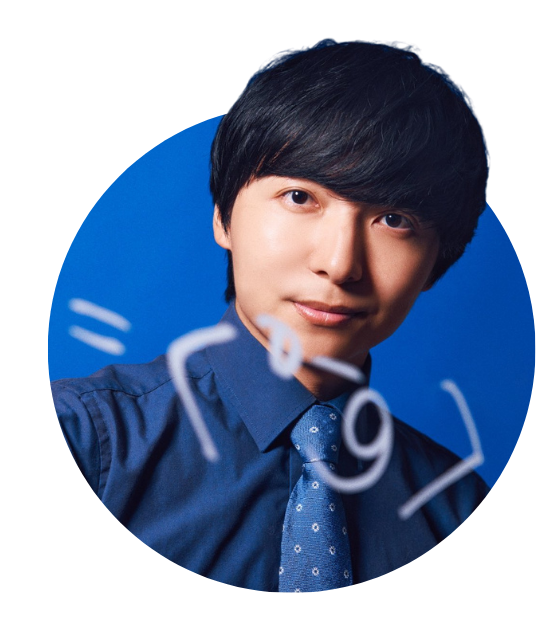
Yobinori Takumi
YouTuber / Educational Creator
He completed his master's degree at the University of Tokyo Graduate School, specializing in theoretical physics during his student years. Based on his experience as a cram school instructor, he launched the YouTube channel "Learning University Mathematics and Physics in a Cram School Style" (commonly known as "Yobinori") as part of his science outreach activities. The channel distributes video lectures on science subjects, mainly university-level mathematics and physics. He received the Commendation for Science and Technology by MEXT, Prize for Science and Technology (Public Understanding Promotion) in 2023 for his achievement of "innovatively promoting understanding of science through internet video distribution." The channel currently has 1.28 million subscribers.
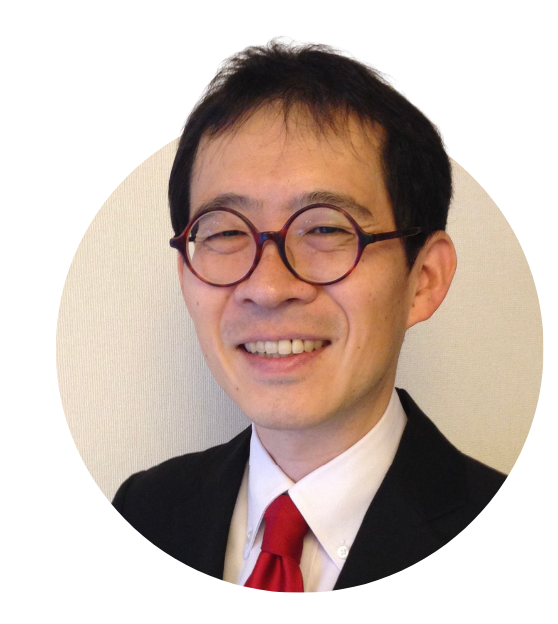
AI for Materials × Knowledge Value Chain
Masashi Hattori
Director, Materials Science and Nanotechnology Division, Research Promotion Bureau, MEXT
Director, Materials Innovation Section, Secretariat of Science, Technology and Innovation Policy, CAO
User Session
Researchers from four companies and academia will take the stage. They will present practical examples and initiatives on how Matlantis is being used in materials research and what changes it is bringing to research and development.
Tech Session
This article will introduce the latest developments in Matlantis from two perspectives: its development roadmap and its application in research settings.
The expanding role of simulations by AI
— To enhance the organization's research capabilities
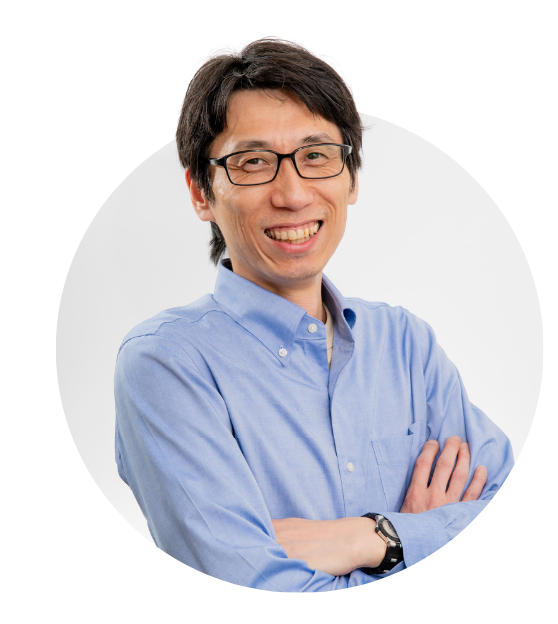
Masateru Kawaguchi
Matlantis Corporation
Head of Product Management
Beyond simulation: Matlantis enables innovation in materials and process design.
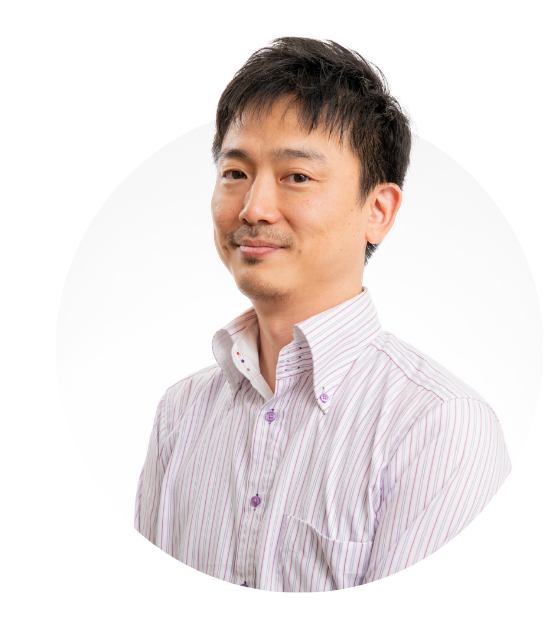
Yusuke Asano
Matlantis Corporation
Head of Technical Solutions
Title
The expanding role of simulations by AI
— To enhance the organization's research capabilities
Abstract
For a long time, simulations were a tool used by computational chemistry experts to produce results in their research. However, the evolution of AI is now changing the role of simulations.
The accuracy of general-purpose neural network potentials has improved, establishing a reliable computing infrastructure for use in research settings. Furthermore, AI agent technology is supporting the design and execution of calculations, creating a point of connection between the deep knowledge of computational chemistry and the practical experience of experimental chemists.
This isn't about replacing specialists. It's the expertise of computational chemistry that gives meaning to simulation results, and the questions posed by experimental chemists that determine the topics to be calculated. We're already seeing real-world examples where combining different areas of expertise is beginning to transform the research and development cycle within organizations.
In this presentation, we will discuss how simulation can enhance an organization's research capabilities, using these case studies and the direction of Matlantis's development.
He completed his graduate studies in Aerospace Engineering at Tohoku University. After working as a software engineer in the manufacturing industry for over 10 years, he served as development manager at a startup before joining Preferred Networks (PFN). In December 2023, he was seconded to Matlantis (formerly PFCC). Currently, as the head of product management, he oversees product strategy and works to maximize Matlantis' business value by integrating technology strategy and business model.
Title
Beyond simulation: Matlantis enables innovation in materials and process design.
Abstract
The history of chemistry, which began with the discovery of fire, intersected with the evolution of artificial intelligence (AI) in the 21st century. At the heart of this "AI for Science" trend, where AI is accelerating discoveries in all fields of science, Matlantis has been revolutionizing atomic-level simulations for the past five years since its inception. In this lecture, we will unravel the driving forces behind our contributions to materials development and the rapid adoption of Matlantis, using concrete data including citation analyses of Matlantis in research papers worldwide.
Success as a general-purpose atomic-level simulator is not our goal. To realize Matlantis' vision of "Power Decisions with Atomistic Insights," we need a comprehensive solution that goes beyond simply "producing calculation results" and translates them into practical applications such as "materials design and process design."
We will reveal the full scope of our goal to "provide value beyond simulators," and discuss our current position and future challenges in bridging the gap between microscopic atomic behavior and macroscopic manufacturing processes—that is, overcoming the barriers of scale and time.
After completing his master's degree in science and engineering at Sophia University Graduate School, he worked as a researcher for a domestic chemical manufacturer for approximately 12 years. During his tenure, he was engaged in research and development primarily focused on semiconductor materials such as ArF immersion photoresists and chemical mechanical planarization (CMP) materials. He also participated in overseas research as part of the Grant Wilson (C. Grant Willson) research group at the University of Texas at Austin, where he worked on research into directed self-assembly (DSA).
From March 2019, I worked at ENEOS (formerly JXTG Energy), engaging in research on materials design using materials informatics (MI) and developing materials design methods using general-purpose machine learning interatomic potential (uMLIP). Subsequently, I was seconded to Matlantis Corporation (formerly Preferred Computational Chemistry) as a customer success specialist, where I currently work.
Specializations: Organic synthesis, polymer synthesis and evaluation, photoresist materials, self-assembled materials, machine learning, atomic-level simulation, patent analysis, literature analysis
Poster Session
Researchers from companies and universities will present case studies of how they are using Matlantis in poster format. This is a valuable opportunity to delve deeper into their work while directly interacting with the presenters. The posters will be displayed all day, so please feel free to take a look.
A platform for interaction between researchers and users.
Following the lectures and poster sessions, a social gathering will be held for participants to network with each other. The aim is to create an environment for information exchange and the formation of new connections across different fields and affiliations.
【Outline】
Date: Friday, September 18, 2026, 10:45-20:00 (tentative)
Target participants: Corporate and academic users currently using Matlantis
This year, in addition to the latest information on Matlantis, we are planning content such as case study sessions and poster sessions by our users, showcasing practical initiatives in research and development, and we are preparing to create a space where participants can share knowledge with each other.
Also, if you'd like to see what last year's event was like, please click here.
-


 URL
URL
Copied
Related News
-
2026.8.28Events & SeminarsNEW
-
2026.8.25Events & SeminarsNEW
-
2026.8.21Events & SeminarsNEW
