
2026.1.28
press release
Products & Services
Matlantis Launches Matlantis CSP, a New Capability to Rapidly Discover Unknown Stable Crystal Structures
Materials discovery leader launches Crystal Structure Prediction solution, with Honda as early adopter.
Matlantis株式会社(本社:東京都千代田区、代表取締役社長:岡野原 大輔)は、汎用原子レベルシミュレータ「Matlantis™」において、特定の元素系における無数の原子配置や組成の組み合わせの中から未知の安定結晶を高速に発見する新機能「Matlantis CSP(Crystal Structure Prediction)」を、2026年1月28日より提供開始いたします。
New materials are essential for challenges such as decarbonization and next-generation energy, but materials R&D has long depended on repeated synthesis experiments, even when the likelihood of success is low. Matlantis CSP introduces a computational screening step earlier in the process, helping teams rule out what is physically implausible in advance and focus on the most promising candidates.
Honda R&D is adopting Matlantis CSP to improve exploration efficiency in materials development, including multi-component systems and metastable structures that have historically been difficult to evaluate due to computational cost.
Issues with conventional methods
The traditional CSP approach had three major obstacles.
- Limitations of calculation time: Structural evaluation using DFT calculations (electronic structure calculations) takes several hours per structure, and conversely, simple methods lack the reliability of results.
- Search bias: When conducting searches while varying compositions, sampling tended to cluster around certain compositions, making it difficult to conduct comprehensive searches.
- Complex environment setup and configuration: When attempting to explore complex composition spaces, setting input parameters and managing computational environments became extremely complicated, requiring specialized expertise.
Breaking past the limits of conventional CSP approaches
Until now, crystal structure prediction has been constrained by several persistent barriers: DFT-based evaluation can take hours per structure, search processes often bias toward particular compositions when exploring variable composition spaces, and large-scale runs can require complex environment setup and specialized expertise. Matlantis CSP is designed to remove these constraints by combining Matlantis’ core technology—its universal machine-learning interatomic potential PFP (Preferred Potential)—with proprietary algorithms and a parallel processing foundation optimized for large-scale CSP. This delivers:
1) High-throughput structure evaluation:
Using PFP, Matlantis CSP can evaluate energies in seconds to minutes per structure while maintaining reliability. It also incorporates safeguards to complete calculations robustly without halting on anomalous atomic configurations that commonly arise during searches.
2) Comprehensive and highly efficient search across composition space:
Matlantis CSP includes a proprietary algorithm designed to explore the full composition space while preserving diversity in sampled structures. Compared with random search, it improves search efficiency by approximately 3–6×, enabling thorough exploration without omissions across arbitrary compositions.
3) A parallel processing foundation optimized for the Matlantis environment:
To process tens of thousands of trials in a short time, Matlantis CSP optimizes memory and parallel execution for Matlantis. Users can begin large-scale searches immediately, without complex environment setup.
Functional design that pursues ease of use for researchers
Matlantis CSP will be continuously improved based on feedback from customers involved in actual material development.
1. Usability born from feedback from the field
- Intuitive interface: Eliminates the need to build a specialized computing environment, allowing researchers to focus on their primary goal: materials exploration.
- Extensive examples: Sample code covering practical calculation procedures is provided. Simply change the element names to suit your system and you can immediately start advanced searches.
2. Two search modes to choose from depending on your purpose
- Global Search: A mode that discovers completely new structures from scratch without making any assumptions about crystal structures. It searches exhaustively for optimal structures by exploring all possible element combinations without prescribing specific atomic numbers or composition ratios.
- Substitutional Structure Search: A mode that assumes a particular parent structure (such as perovskite structure) and explores the stability of substituting elements at specific sites within that structure. This mode is particularly useful for predicting the limits of elemental doping.
These technological innovations and customer-friendly functional designs will dramatically improve development efficiency and enable the early commercialization of new materials.
We have received the following comments from customers regarding the release of this new feature:
Chief Engineer, Device and Process Area, Advanced Technology Research Center, Honda R&D Co., Ltd.
Comment from Mitsuki Kawai
Congratulations on the release of the CSP code. We have high hopes for this technology as a dramatic improvement in search efficiency in materials development. This CSP, in conjunction with Matlantis, a highly accurate machine-learned interatomic potential that covers most of the periodic table, makes it possible to explore crystal structures, including multi-component systems and metastable structures, which previously could not be fully explored due to computational cost constraints. Narrowing down promising crystal structures and compositions with high accuracy even at the pre-experimental stage not only increases the probability of realizing next-generation materials, but also shortens development time. We strongly hope that this CSP will evolve into a core technology that accelerates materials development.
Usage history
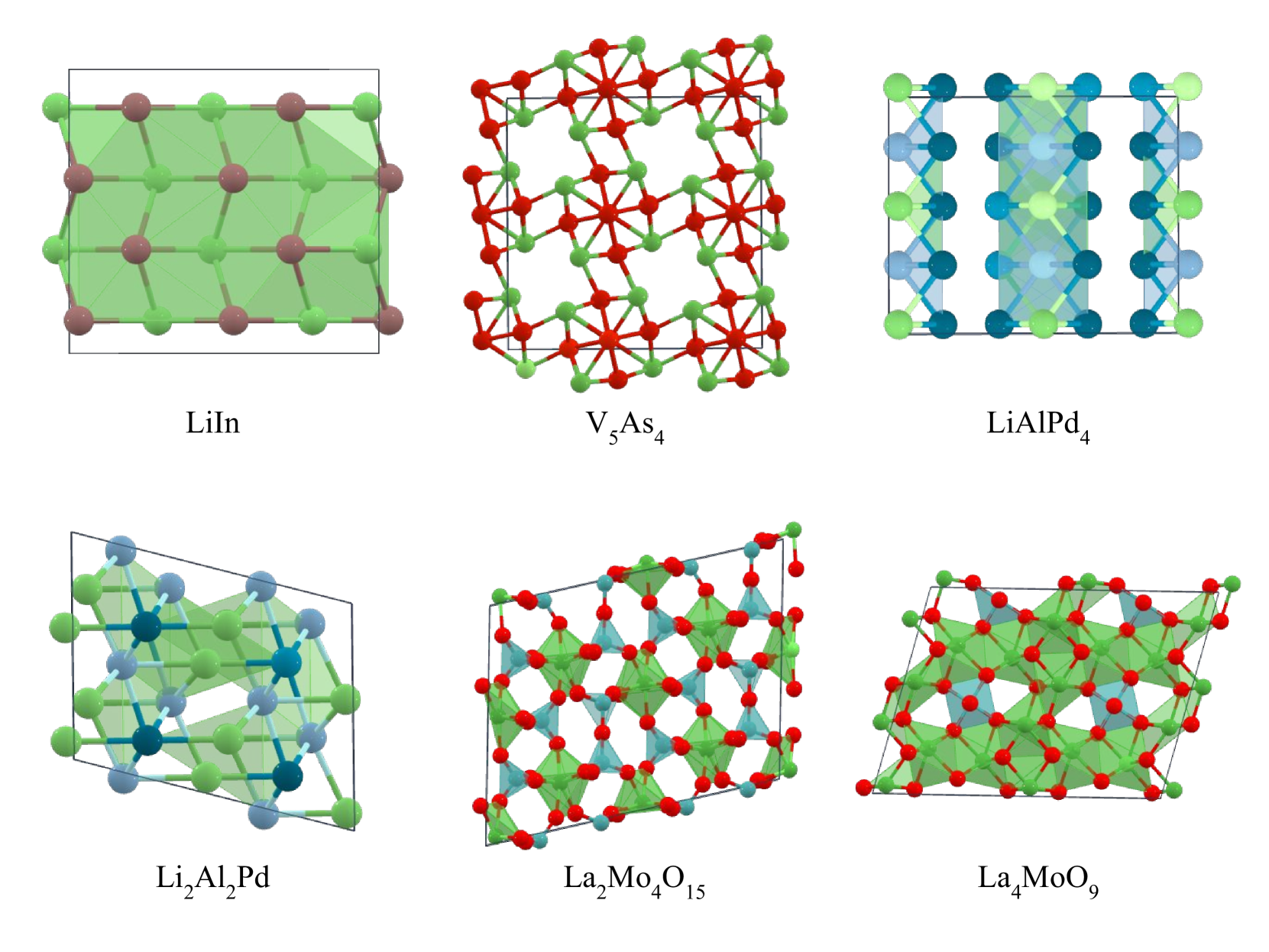
Discovery of unknown new crystals: We have already discovered more than 10 unknown new crystals in various systems, including oxides, alloys, and phosphides. For example, 13 new crystals were found in the Ga-Au-Ca system, significantly updating the phase diagram in the existing database.
About Matlantis
Jointly developed by PFN and ENEOS, Matlantis is a universal atomistic simulator that supports large-scale material discovery by reproducing new materials’ behavior at an atomic level on the computer. PFN and ENEOS have incorporated a deep learning model into a conventional physical simulator to increase the simulation speed by tens of thousands of times and to support a wide variety of materials. Matlantis was launched in July 2021 as a cloud-based software-as-a-service by Matlantis Corp. (formally named Preferred Computational Chemistry), a company jointly invested by PFN, ENEOS and Mitsubishi Corporation.
Matlantis is used by over 150 companies and organizations for discovering various materials including catalysts, batteries, semiconductors, alloys, lubricants, ceramics and chemicals. For more information, please visit: https://matlantis.com/en/
Materials discovery leader launches Crystal Structure Prediction solution, with Honda as early adopter.
BOSTON, Mass and TOKYO, Japan – January 28, 2026 – Matlantis today announced the launch of Matlantis CSP (Crystal Structure Prediction), a new capability within its universal atomistic simulator that rapidly identifies previously unknown stable crystal structures from the enormous search space of atomic configurations and compositions within a given elemental system.
New materials are essential for challenges such as decarbonization and next-generation energy, but materials R&D has long depended on repeated synthesis experiments, even when the likelihood of success is low. Matlantis CSP introduces a computational screening step earlier in the process, helping teams rule out what is physically implausible in advance and focus on the most promising candidates.
Honda R&D is adopting Matlantis CSP to improve exploration efficiency in materials development, including multi-component systems and metastable structures that have historically been difficult to evaluate due to computational cost.
Breaking past the limits of conventional CSP approaches
Until now, crystal structure prediction has been constrained by several persistent barriers: DFT-based evaluation can take hours per structure, search processes often bias toward particular compositions when exploring variable composition spaces, and large-scale runs can require complex environment setup and specialized expertise. Matlantis CSP is designed to remove these constraints by combining Matlantis’ core technology—its universal machine-learning interatomic potential PFP (Preferred Potential)—with proprietary algorithms and a parallel processing foundation optimized for large-scale CSP. This delivers:
1) High-throughput structure evaluation: Using PFP, Matlantis CSP can evaluate energies in seconds to minutes per structure while maintaining reliability. It also incorporates safeguards to complete calculations robustly without halting on anomalous atomic configurations that commonly arise during searches.
2) Comprehensive and highly efficient search across composition space: Matlantis CSP includes a proprietary algorithm designed to explore the full composition space while preserving diversity in sampled structures. Compared with random search, it improves search efficiency by approximately 3–6×, enabling thorough exploration without omissions across arbitrary compositions.
3) A parallel processing foundation optimized for the Matlantis environment: To process tens of thousands of trials in a short time, Matlantis CSP optimizes memory and parallel execution for Matlantis. Users can begin large-scale searches immediately, without complex environment setup.
“We have high expectations for CSP as a technology that will dramatically improve exploration efficiency in materials development,” said Mitsumoto Kawai, Chief Engineer, Device Process, Innovative Research Excellence, Honda R&D Co., Ltd. “Through CSP, crystal structure searches—including multi-component systems and metastable structures that were previously impractical—have become feasible. Being able to narrow down promising crystal structures and compositions with high confidence before experiments will not only increase the probability of realizing next-generation materials but also shorten development timelines.”
Here is the link to the Honda case study.
Matlantis CSP has already produced early results across multiple systems—oxides, alloys, and phosphides—discovering more than 10 previously unknown stable crystals. In the Ga–Au–Ca system, it identified 13 new crystals, significantly updating the phase diagram relative to existing databases.
“With Matlantis CSP, we’re making crystal structure prediction practical at real research scale, so teams can explore broader composition spaces, identify promising candidates earlier, and reduce time spent on low-probability experiments,” said Daisuke Okanohara, CEO, Matlantis. “We’re encouraged to see Honda R&D recognize the impact CSP can have, and we look forward to accelerating the path from simulation to synthesis with partners across industry.”
About Matlantis
Jointly developed by PFN and ENEOS, Matlantis is a universal atomistic simulator that supports large-scale material discovery by reproducing new materials’ behavior at an atomic level on the computer. PFN and ENEOS have incorporated a deep learning model into a conventional physical simulator to increase the simulation speed by tens of thousands of times and to support a wide variety of materials. Matlantis was launched in July 2021 as a cloud-based software-as-a-service by Matlantis Corp. (formally named Preferred Computational Chemistry), a company jointly invested by PFN, ENEOS and Mitsubishi Corporation.
Matlantis is used by over 150 companies and organizations for discovering various materials including catalysts, batteries, semiconductors, alloys, lubricants, ceramics and chemicals. For more information, please visit: https://matlantis.com/en/.
-


 URL
URL
Copied
Related News
-
2025.12.3press release
-
2025.11.21press release
Materials Scientists Embrace AI to Accelerate Discovery—Yet Nearly All Confront Compute Limitations
-
2025.7.16press releaseBusiness/ManagementProducts & Services
