2025.12.4
Matlantis, an AI materials simulation that accelerates research, is taught at the University of Tokyo's SPRING GX lectures. Doctoral students experience AI-based molecular design simulations with ENEOS.
As part of the doctoral student support program "SPRING GX" (Project Director: Professor Shinichi Ohkoshi) at the University of Tokyo, an experiential lecture using the AI materials simulation platform "Matlantis" was held. In this lecture, a lecturer from industry introduced practical ways to use simulation to accelerate the launch of research. It was a valuable opportunity for doctoral students to learn by actually getting their hands dirty.
The instructor was Masao Oba of ENEOS Holdings Corp. (hereinafter referred to as ENEOS). In addition, several researchers active in the company's materials development field also participated as supporters, providing assistance to the students during the practical training.
The lecture was titled "Make use of your idea – Experience molecular design by AI: Let's make the best deodorizer," and aimed to "think about the best deodorizer" through molecular design using AI.
The class consisted of a lecture section (30 minutes) and a practical section (90 minutes), with over 40 doctoral students participating. Many Japanese students attended, as well as international students, making it an international session with lively discussions. Despite the short time, the students were able to set hypotheses, test them, discuss them, and give presentations, gaining insights into the potential of AI simulation and how they can apply them to their research.
What is SPRING GX?
The University of Tokyo has adopted the "SPRING GX (Development of Highly Skilled Human Resources to Lead Green Transformation)" (Project Director: Professor Shinichi Ohkoshi) as part of the Japan Science and Technology Agency's (JST) Challenging Research Program for Next-Generation Researchers (SPRING).
This program broadly positions GX as "not just about reducing greenhouse gas emissions, but also about transforming society as a whole," and offers a variety of learning opportunities to doctoral students from all departments of the university, from science and engineering to humanities and social sciences.
We aim to help doctoral students with deep expertise reconsider their research from a broader perspective through cross-disciplinary exchanges and cutting-edge technology workshops, so that they can gain the insight to connect their research to social change.
The Matlantis hands-on lecture was one example of this. Computational science has traditionally been a challenging subject for students outside of the field, but by giving students hands-on experience, the aim was to connect this to new research approaches and ideas, even in a short space of time.
Lecture: Materials development using machine learning
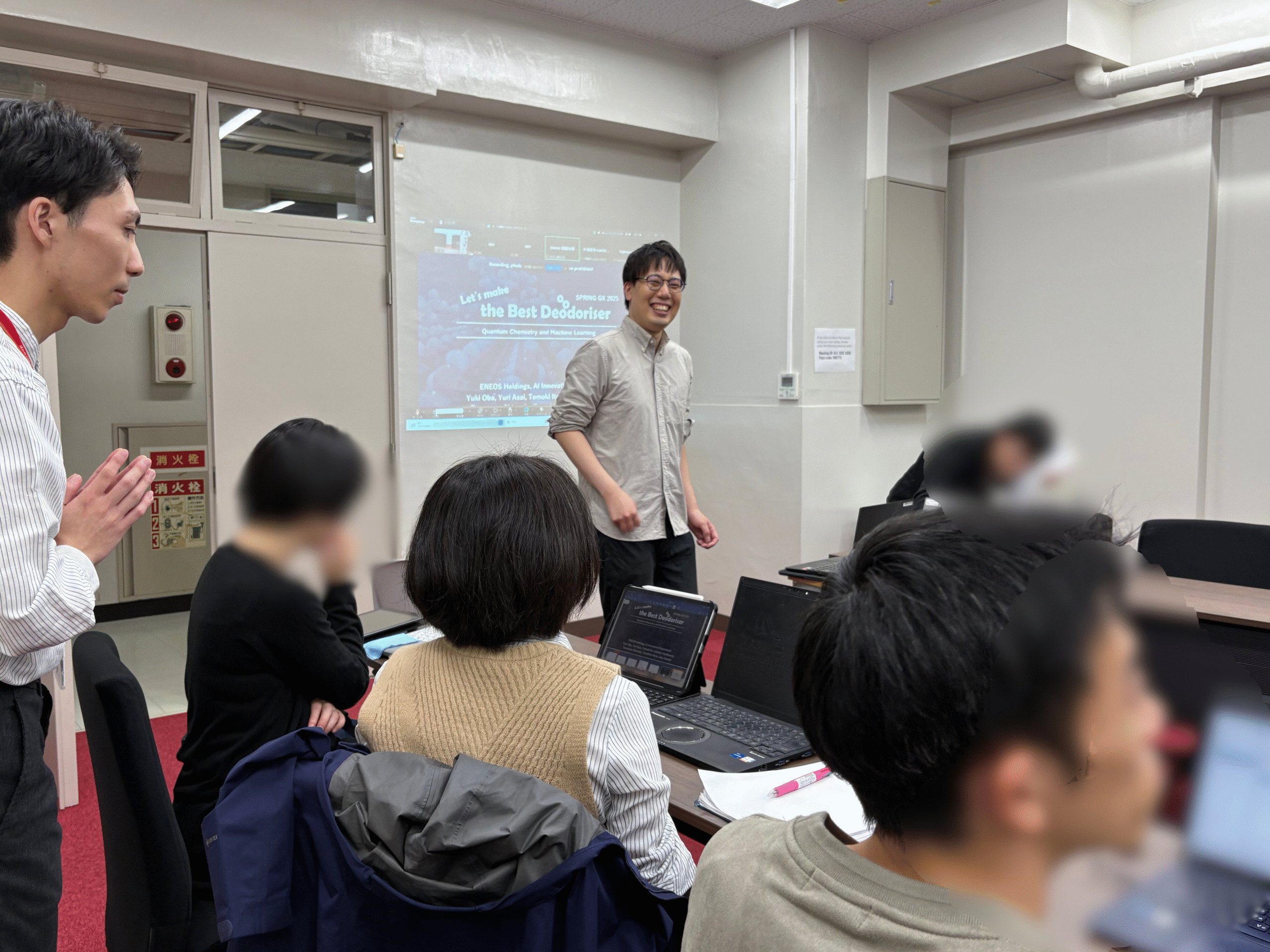
In the first half of the event, Mr. Oba of ENEOS (ENEOS Holdings Corporation, AI Innovation Department) took the stage and gave a lecture on the theme of "Machine Learning x Quantum Chemistry." In recent years, the number of papers utilizing machine learning has rapidly increased in the field of chemistry, and there is a growing movement to incorporate AI as a new approach to research. The lecture began with a basic question: "What is machine learning?" Using the example of how AI learns and recognizes the handwritten digit "6," he explained how AI extracts features from data and finds patterns. Mr. Oba explained that the essence of machine learning lies in the incorporation of human experience and intuition as data, which the model then reproduces and expands.
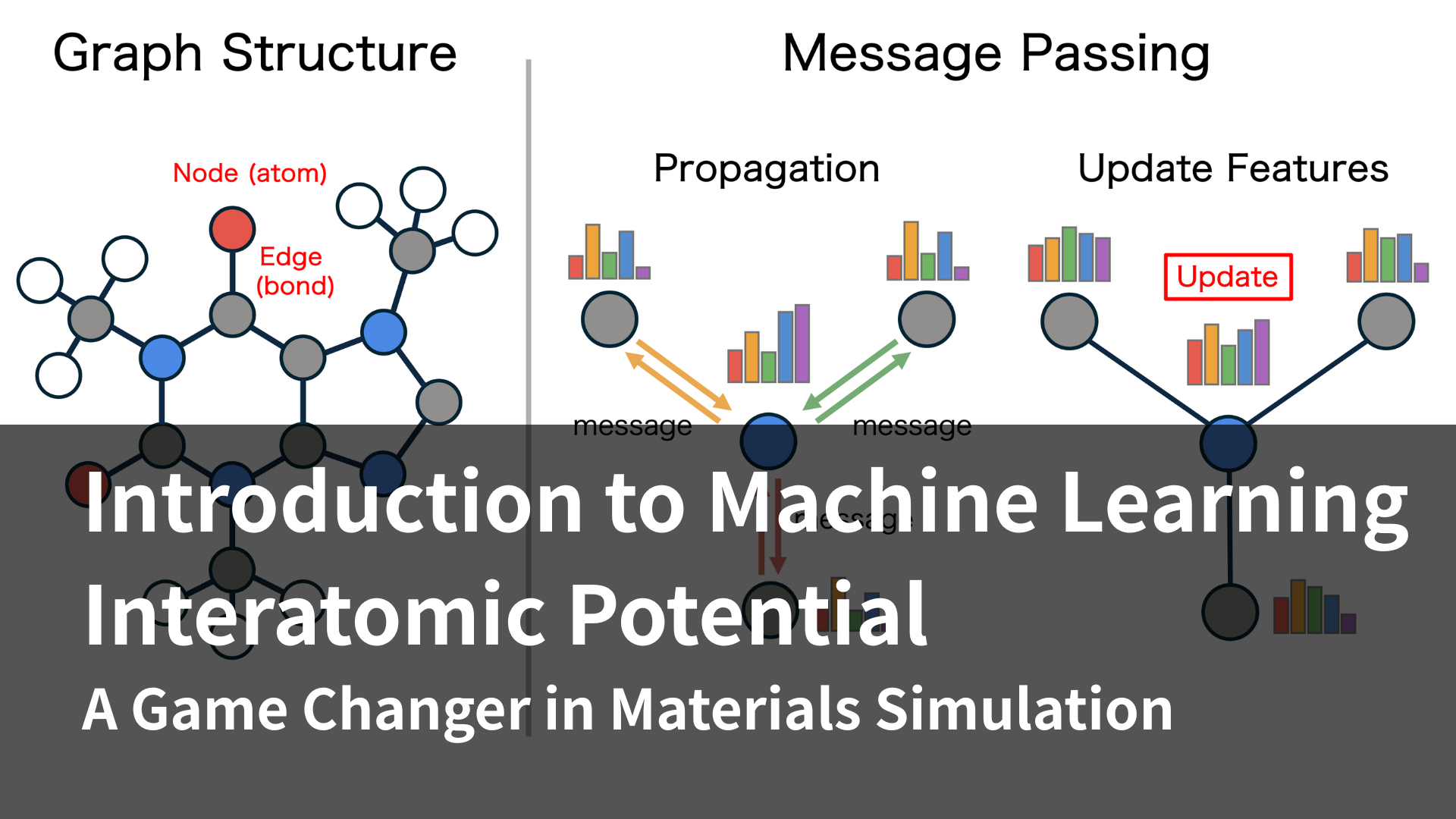
Next, he explained how machine learning can be applied in the field of chemistry, comparing traditional computational methods, ab initio calculations and classical force fields, and summarizing their respective advantages and challenges. While ab initio calculations are highly accurate, they are computationally expensive. While classical force fields are fast, they do not explicitly address electronic structure and assume fixed bonds, limiting their ability to reproduce reactions involving bond breaking and creation or electron rearrangement. He introduced the potential model based on machine learning as a third option to bridge the "gap between accuracy and efficiency" between these two methods. Machine learning calculations can achieve high-speed calculations while maintaining accuracy by learning from highly accurate data obtained from ab initio calculations.
He then explained the background to the development of Matlantis, a platform that made it possible to achieve both accuracy and efficiency through joint research between ENEOS and Preferred Networks.
Hands-on: Designing the "strongest deodorizer" with Matlantis
In the second half of the practical session, students used Matlantis to try to design a molecular structure with the highest adsorption capacity, based on the theme "Let's make the best deodorizer." Students were divided into teams of 4 to 6 people and worked in a group work format.
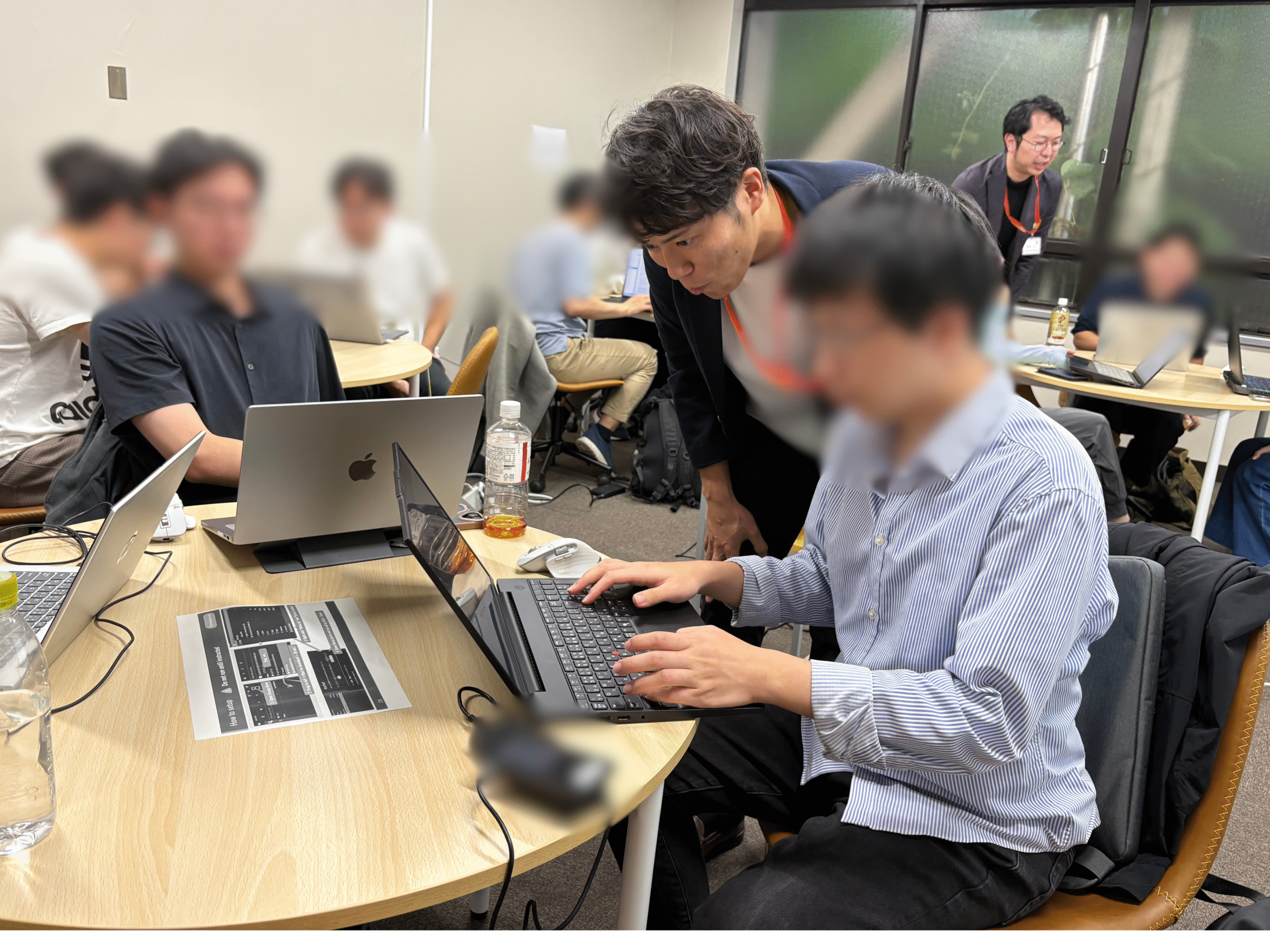
They formulated a hypothesis, "What kind of molecular structure will increase the adsorption power?" and after much discussion within the team, they created and edited the molecular structure in the Matlantis notebook environment.
The students experienced the process of running simulations, comparing the results, and searching for the best structure. Oba and several other ENEOS researchers participated in the practical training. They not only provided operational support, but also actively provided feedback to the students on their hypotheses and calculation results.
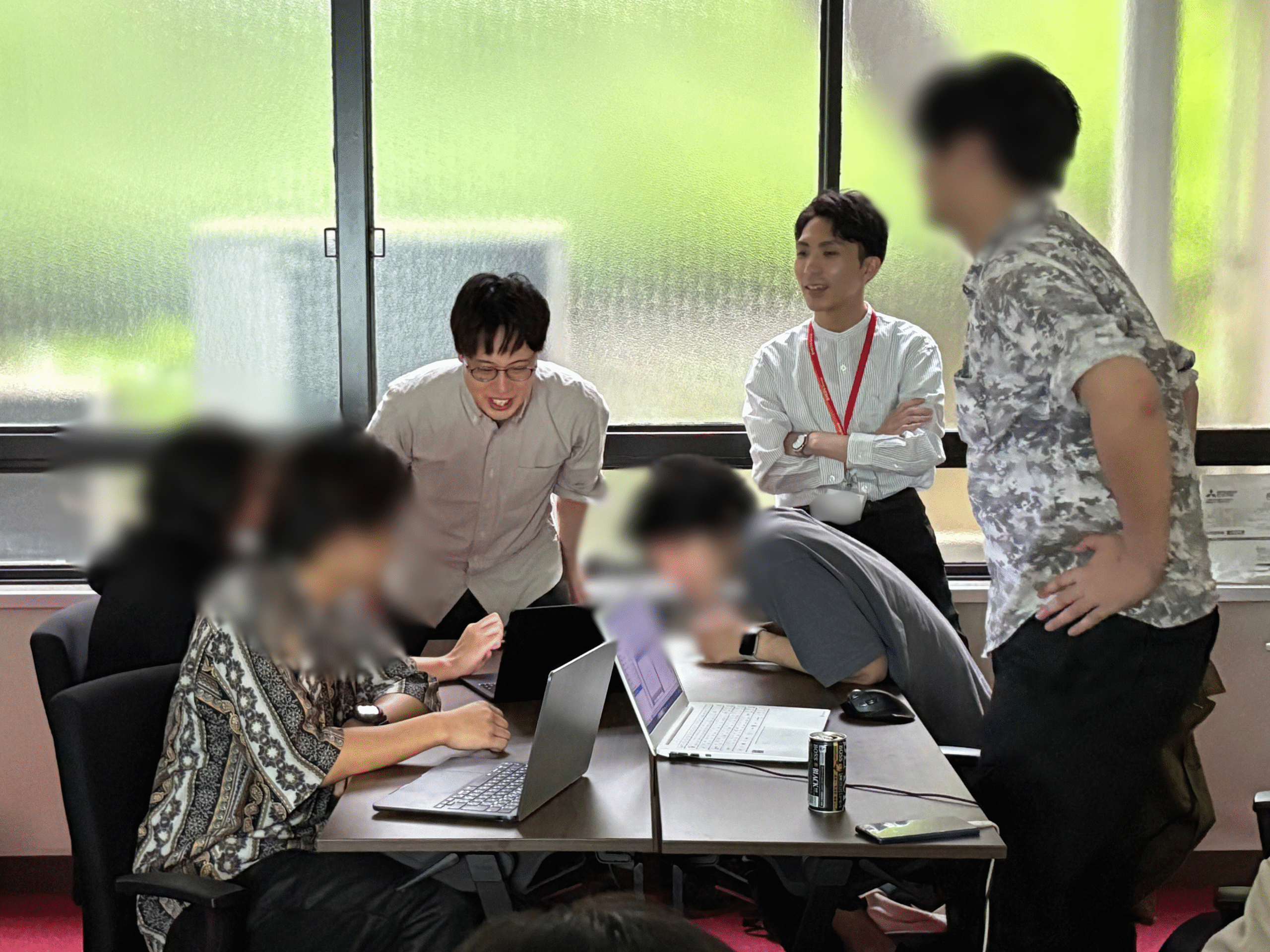
At the end of the event, each team showcased the "strongest deodorizer" they had designed using AI simulations, and competed for absorption performance.
Each team developed a unique approach, such as a team that achieved high adsorption power by combining familiar atoms such as hydrogen and carbon, and a team that attempted a completely new idea by focusing on bonding with metals.
One after another, unique and original ideas were born, impressing even the ENEOS researchers.
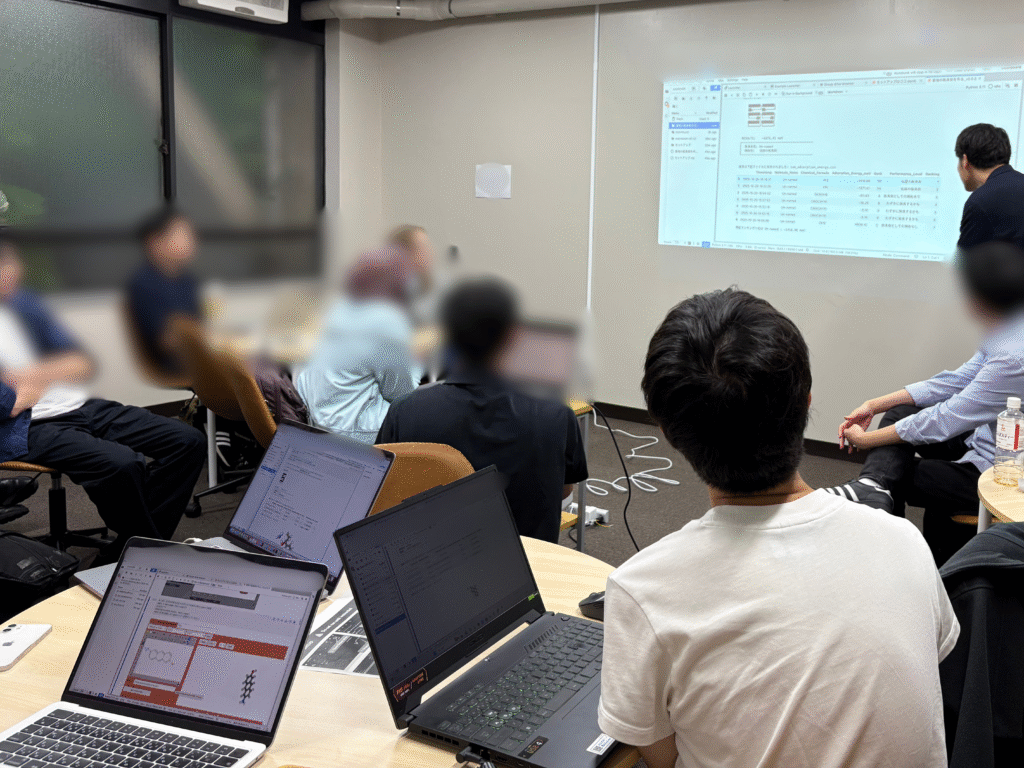
One participating student commented, "I usually perform DFT and MD calculations, but I was surprised that Matlantis completed processes that would normally take days or weeks in such a short time. I would like to use it in my own research in the future," indicating their hopes for accelerating their research. Furthermore, in the survey, many students praised the short but intense experience, saying things like, "The two hours flew by," and "It was easy to understand even for beginners, and it was easy to get an idea of the output results."
Summary
This SPRING GX lecture provided doctoral students with a valuable opportunity to operate Matlantis and incorporate new approaches into their research. AI simulation allows even students from outside the field to quickly experience hypothesis testing, providing an opportunity to broaden their research ideas. Furthermore, through practical lectures by lecturers active at the forefront of ENEOS research and development, industrial perspectives were incorporated into graduate school education, demonstrating new value in connecting research and society. Matlantis Corporation will continue to support the acceleration of research and human resource development in both education and industry.
tag
-


 URL
URL
Copied
Latest Articles
NEW
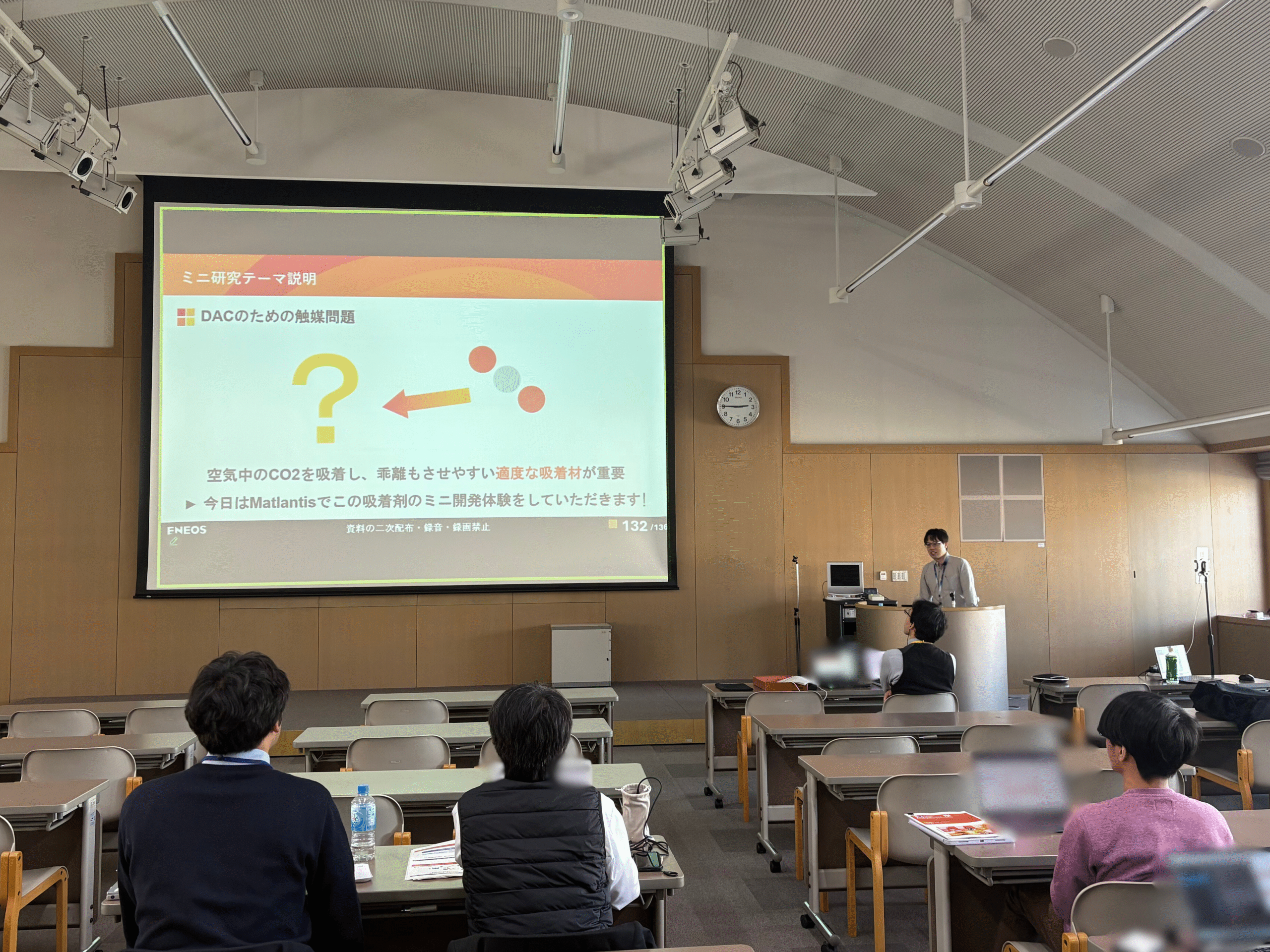
Learning AI materials simulation to accelerate research at the Fukui Kenichi Memorial Research Center, Kyoto University - Working with ENEOS to design the "best CO2 adsorbent"
NEW
Explainer : Why Did the AI Predict That ? Uncovering Atomic-Level Interpretability through PFP Descriptors and Shapley Values

Materials Informatics Explainer computational chemistry

NEW
Writing SMILES from scratch
Explainer computational chemistry
Nagoya University × Matlantis Case Study:“Advanced Experiments for Frontier Technologies and Sciences” —A Four-Day Intensive Course That Sparked Experimental Students’ Curiosity Through AI Simulation
Interview computational chemistry
Introduction to Machine Learning Interatomic Potentials (MLIPs): A Game Changer in Materials Simulation
Machine learning force field Explainer