2026.1.22
Nagoya University × Matlantis Case Study:“Advanced Experiments for Frontier Technologies and Sciences” —A Four-Day Intensive Course That Sparked Experimental Students’ Curiosity Through AI Simulation
Nagoya University’s Graduate School of Engineering offered a chemical simulation course incorporating the AI atomic-level simulator “Matlantis” as part of the 2025 fall-semester class “Advanced Experiments for Frontier Technologies and Sciences.” Through the use of AI simulation, students experienced firsthand how the quality and speed of research can be dramatically improved. Experimental-oriented students with no prior expertise in computational chemistry were able to explore this potential through hands-on practice.
On November 15th, a final presentation was held to conclude the four-day course spanning two months, where each participant presented the results of their calculations. The students, who had witnessed the "world of atoms that cannot be seen in experiments," were driven by curiosity, and after trial and error, they reported on their breakthrough findings, making for an exciting class.
Nagoya University × Matlantis “Advanced Experiments for Frontier Technologies and Sciences”
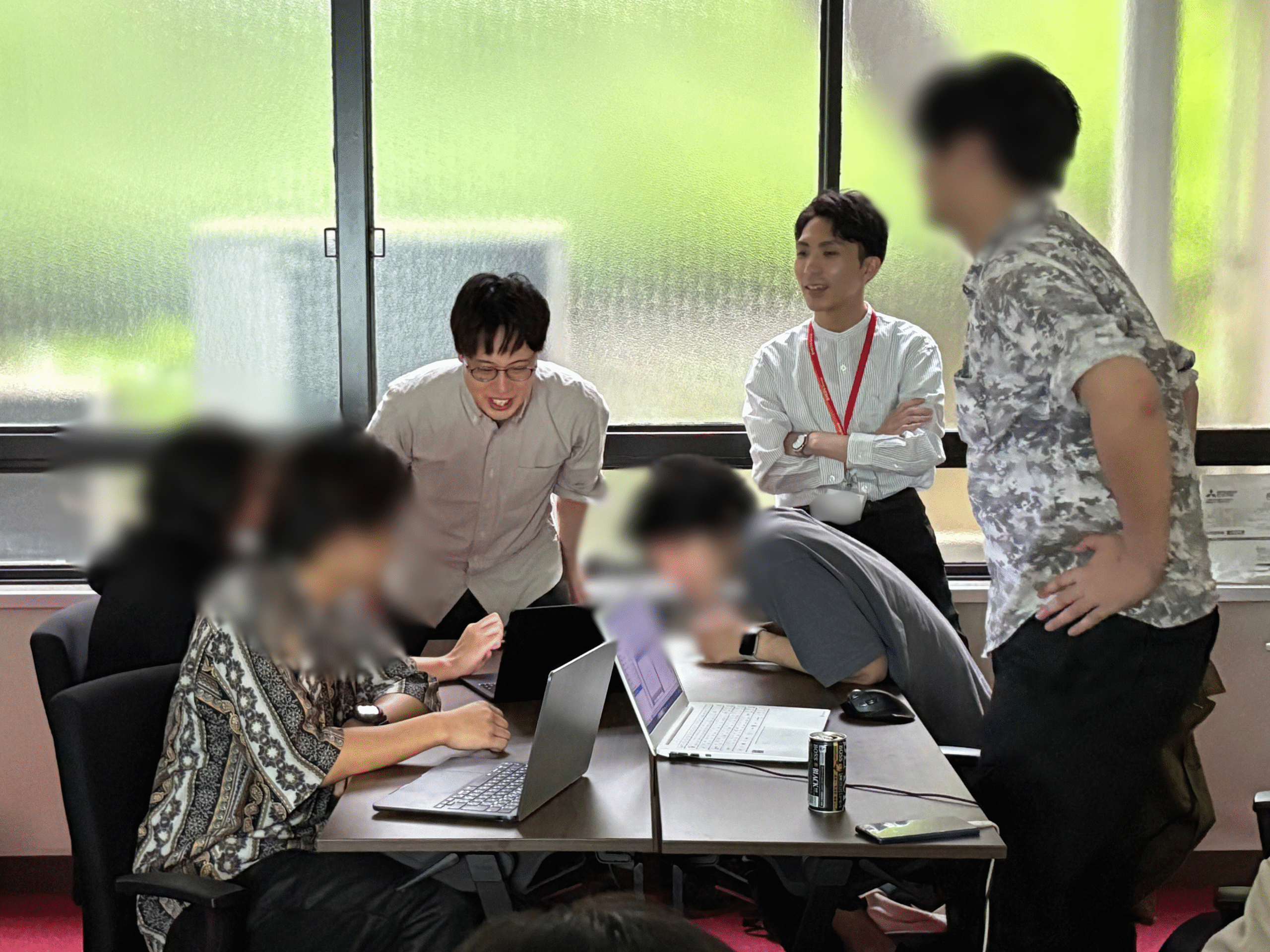
This course was conducted as a four-day intensive program, in which primarily master’s students brought their own research themes from their respective laboratories and engaged in hands-on training using AI simulations.
During part of the course, members involved in the development and operation of Matlantis participated as lecturers. In addition to covering the fundamental theories of computational chemistry and practical tool usage, they discussed with students the design phase of simulations, including questions such as what types of calculations are effective for specific research problems and how to execute them on Matlantis.
A distinctive feature of this course is that students do not work on pre-prepared case studies, but instead analyze their own research topics from their home laboratories. They experienced the entire workflow, from constructing computational models and defining simulation conditions to executing calculations and analyzing the results. In conventional computational chemistry education, limitations in computation time and system size often make it difficult to address one’s own research themes and iterate through trial and error within the constraints of class hours.
By leveraging Matlantis’ cloud-based AI simulation platform, students were able to work with larger and more realistic systems during the course. The program combines lectures with hands-on sessions and is structured as a continuous process, from understanding fundamental theory to applied simulations, project-based research, and final presentations. A major characteristic of the course is that it enables students to simulate real research workflows by setting their own topics and deepening their insights through repeated cycles of simulation and experimentation.
A New Attempt to Bridge the Gap Between Experiment and Theory
The course was planned and organized by Assistant Professor Heajeong Cheong of Nagoya University’s D-Center. Based on an educational approach that emphasizes deepening understanding through repeated interaction between experiment and theory, she introduced AI-based atomic-level simulations into the program.
“Advanced Experiments for Frontier Technologies and Sciences is a graduate-level course designed not only to teach theoretical knowledge, but also to develop practical experimental methods and analytical techniques. By having students design their own experiments and carry out the entire process—from data acquisition to analysis and interpretation—the course aims to cultivate strong problem-solving abilities and creative thinking skills.
In previous iterations of the course, the primary focus was on acquiring, controlling, and analyzing experimental data. However, it was difficult to sufficiently address ‘invisible phenomena,’ such as reactions and behaviors occurring at the molecular and atomic levels, within the limited timeframe of a class. Even when traditional computational chemistry methods were introduced, long computation times made it challenging to repeatedly go through the cycle of forming hypotheses, performing calculations, and analyzing results during the course period.
In this program, Matlantis was adopted as a means of overcoming these challenges, and hands-on chemical simulation exercises were conducted. With its exceptionally high computational speed and intuitive user interface, Matlantis provides an environment in which students can focus directly on running simulations themselves. Because results can be visualized in real time, students are able to receive immediate feedback while learning, allowing them to verify and refine their hypotheses on the spot.
By enabling students to actively simulate atomic-level behaviors and reaction processes themselves, they gain a deeper understanding of material properties and structures. I believe this approach holds significant educational value.”
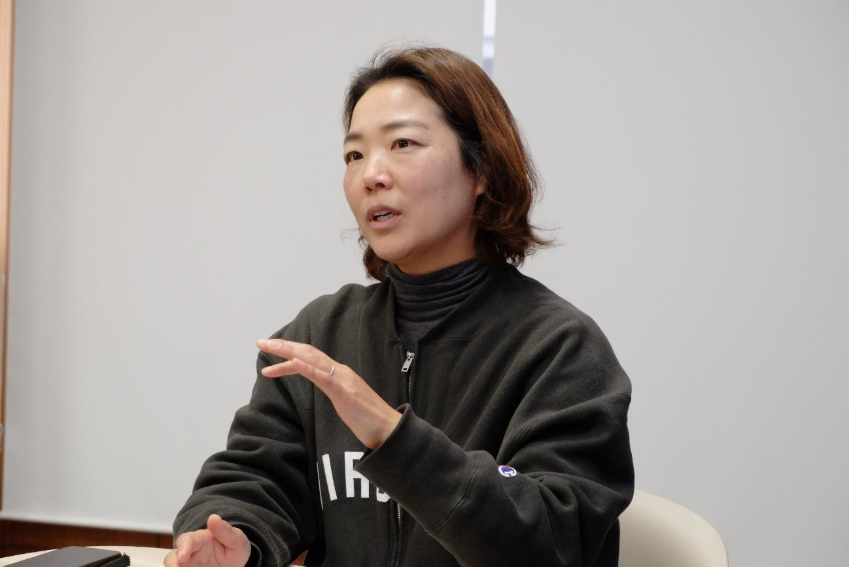
Assistant Professor Heajeong Cheong, Instructor of “Advanced Experiments for Frontier Technologies and Sciences”
A Four-Day Program to Transform Research Topics into Computational Models
This course was conducted as a four-day intensive program between October and November, with technical members of Matlantis supporting students as both instructors and mentors.
Days 1 and 2: During the foundational and familiarization phase, students studied the basic theories of computational chemistry and learned the core operations of Matlantis, including structural optimization, vibrational analysis, and electronic state analysis. As a practical assignment, they conducted atomic-level simulations on the formation of passivation layers (oxide films) on aluminum surfaces. By visualizing how oxygen atoms react with the aluminum surface and form a protective layer that prevents penetration into the interior, students reexamined—through a computational chemistry perspective—the mechanism behind why metallic luster is maintained.
Day 3: The course then moved into the applied, individual research phase, in which students brought in research topics from their own laboratories and constructed computational models. Technical members of Matlantis provided one-on-one guidance on parameter settings and model construction, helping students develop an essential research skill: how to translate complex experimental conditions into computable models.
Day 4: A final presentation session was held, during which participants presented their research topics, including background, hypotheses, results, and analysis.
Experimental Breakthroughs Driven By High-Speed Computing and Visualization
By visualizing phenomena that cannot be observed through experiments alone and accelerating the cycle of trial and error, the course helped improve the quality of research. Presentations at the final session clearly showed that participants experienced firsthand the benefits brought by Matlantis through their own hands-on work.
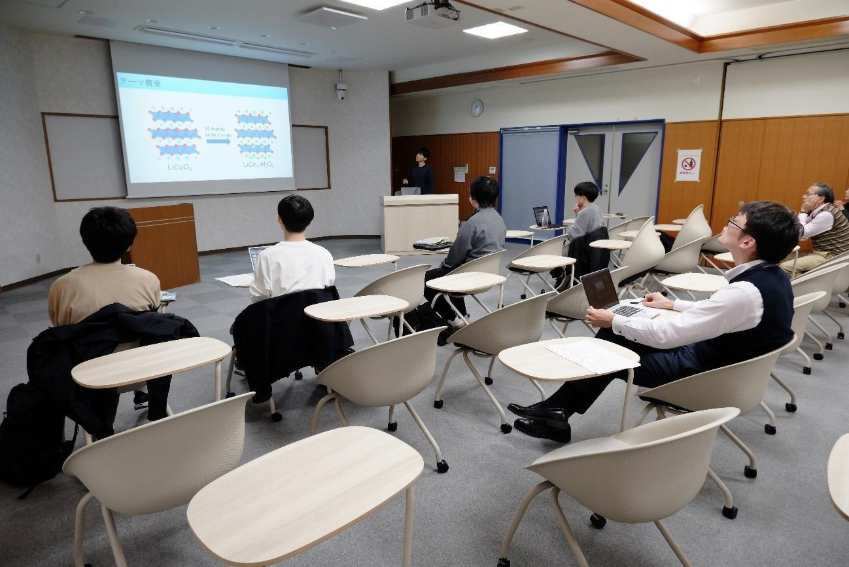
One student conducting research on cathode materials for lithium-ion batteries completed multi-condition simulations—tasks that would previously have taken several months on a supercomputer—in just three days. By leveraging Matlantis, the student was able to iterate rapidly and identify the optimal material composition. Another student analyzed processing methods for fabricating a specialized X-ray mirror made of lithium tantalate (LiTaO₃) and, based on discrepancies between simulation results and experimental data, recognized the importance of microscopic defects in real materials. This led to valuable insights for constructing more realistic computational models.
In addition, research on solar cell surface processing visualized how additives selectively adsorb onto specific crystal facets and act as a “protective mask,” demonstrating the effectiveness of simulations in additive selection and process optimization. In a separate study on controlling sulfur conductivity, students reported discovering clues that could lead to experimental breakthroughs through serendipitous findings unique to computational chemistry while testing a wide range of simulation conditions.
Technical members of Matlantis, who supported the course as mentors, highly praised the students’ dedication and achievements: “When it was difficult to directly simulate students’ desired experimental themes due to limitations in system size or computation time, our role was to guide them toward alternative computational approaches. What surprised us was how the students ultimately refined their models with original ideas and achieved results beyond our expectations. It was truly impressive to see them produce such high-level outcomes in such a short period of time, despite having almost no prior experience in computational chemistry.”
Streamlining Trial and Error to Dramatically Improve Research Efficiency
After the final presentations, we spoke with two participants of the course, Mr. Sanshiro Hosokawa and Mr. Hiroto Yamaguchi. Mr. Hosokawa, who belongs to an experimental research laboratory, had almost no prior experience with computation or simulation and initially felt strong resistance toward them. However, his perspective changed significantly through this course.
“In my usual research, I draw conclusions based on experimental measurement results, but I had never been able to visualize the underlying phenomena. I thought that being able to observe atomic motion using a simulator like Matlantis might be useful for my work, which is why I decided to take this class. To be honest, on the first day I even felt afraid because I was not comfortable with calculations or simulations. But once I started using Matlantis, that psychological barrier quickly disappeared.
In my laboratory, we handle everything from sample preparation to measurement and evaluation. Sample preparation alone takes at least two weeks, and sometimes nearly a month. In conventional experiments, we could only adjust measurement conditions or sample preparation parameters in very broad steps. With Matlantis, however, conditions can be changed easily, and many variations can be tested in a short time, which has dramatically accelerated the trial-and-error cycle. Being able to eliminate unrealistic conditions in advance through simulation also contributes greatly to improving research efficiency.
I also feel that the original goal I had for joining this course—to visualize phenomena—has been fully achieved. With Matlantis, parameters such as energetic stability and interatomic distances can be examined in detail, which provides strong support for what previously were only “highly plausible assumptions.” In some cases, it even leads to entirely new insights.
Even my academic advisor was excited when looking at the Matlantis interface,” he said with a smile. “I would like to continue using it in my own research, and I believe it could also be applied to the materials studied by other members of our laboratory, benefiting the entire research group.”
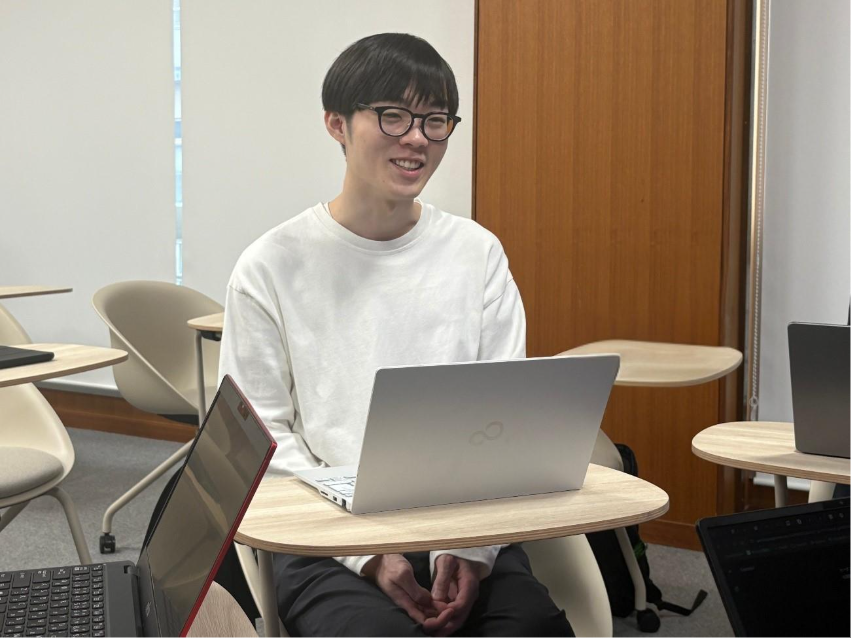
Mr. Sanshiro Hosokawa
The Thrill of Seeing Complex Structures—Once Known Only from Literature—Move Before One’s Eyes
Mr. Hiroto Yamaguchi, who is also affiliated with an experimental research laboratory and conducts atomic-level interface studies, said that he had previously assumed simulation would be impractical for his research due to the enormous amount of time required. However, that perception was overturned after working hands-on with Matlantis.
“Before taking this course, I had heard from others that simulations take an extremely long time, and that even after spending significant time on calculations, you can only observe changes over very short timescales, such as picoseconds. Because of that, I thought Matlantis would also be difficult to apply to my research, which involves longer processes such as heating materials for ten minutes.
However, through the instruction we received, I learned that by modifying the structure of the model and focusing on phenomena such as adsorption, it is possible to apply simulations even to long-timescale processes. This expanded the scope of what I felt was achievable in my research. Colleagues in my laboratory who specialize in molecular dynamics simulations were also surprised, asking, ‘You can really do that in such a short time?’
Since I had no prior experience with computational methods, every simulation result was a new learning experience for me. What impressed me most was being able to see complex structures—previously known only from academic papers—simulated and changing shape right in front of me. In experimental work, it is impossible to observe phenomena at the atomic scale, so we inevitably rely on intuition to some extent. With Matlantis, however, I was able to visualize atomic rearrangements and adsorption behavior in a way that closely matched my mental image, which convinced me that the simulations accurately reflect real systems.
Going forward, I would like to continue using simulations to support my analysis in areas that are difficult to clarify through experiments alone.”
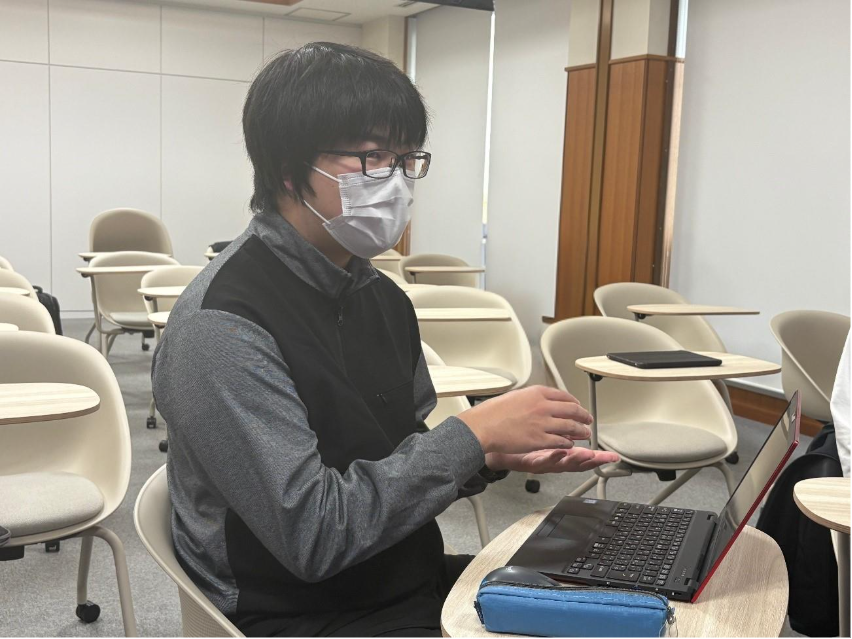
Mr. Hiroto Yamaguchi
Observing Positive Changes in Students
Reflecting on the four-day program, Assistant Professor Heajeong Cheong noted that she clearly observed positive changes in the students. She summarized that Matlantis’ high-speed computation, 3D visualization, and AI-driven equation handling significantly lowered the barriers to computation and simulation, and could serve as a key to bridging the gap between experiment and theory.
“For engineering students, experimental data usually appear as ‘results’ in front of them, but the atomic and molecular behaviors behind those results are invisible and can only be inferred from textbook knowledge or measured values. Matlantis, however, visualizes these processes as 3D animations that students can manipulate and explore in depth themselves. I felt that students were deeply impressed to see ‘a world that cannot be observed through experiments alone’ moving before their eyes, and that this became a strong source of motivation. In regular lectures, some students tend to lose concentration partway through, but in this course, everyone was fully engaged in what they wanted to explore.
Another major advantage of Matlantis is the dramatic acceleration of the trial-and-error process. Traditionally, the research workflow involves learning theory, spending a long time building simulations, fabricating materials or devices based on the results, and only then receiving feedback. As a result, once a hypothesis is proven incorrect, revising it and starting over is far from easy. With Matlantis, however, students can formulate a hypothesis, run simulations, and immediately revise and rerun them if necessary—all within a short timeframe. This speed made it possible for students to experiment boldly even within limited class hours, and I believe it also contributed to greater initiative and independence.
The combination of Matlantis and generative AI is a powerful tool for overcoming the intimidation of experimental students about theory and mathematical formulas. Experimental students excel at using data from hands-on experiments, but they tend to become defensive when faced with complex mathematical formulas. By combining Matlantis with generative AI, some participating students were able to use AI to handle complex calculations. Even when errors occurred, simply asking the generative AI would provide a prompt in Japanese, rather than using complex code. This allowed students to focus on understanding chemical phenomena and verifying hypotheses, without being hindered by programming or mathematics. This allows students to think for themselves and more easily recognize the true nature of phenomena.
Toward a More Strategic Research Style in Coexistence with AI
Reflecting on this initiative, Assistant Professor Heajeong Cheong expressed her intention to further incorporate simulation-based education such as Matlantis more actively in the future.
“In particular, using simulations at the stage before conducting experiments is highly effective. Rather than starting experiments blindly, students can first use simulations to screen a wide range of conditions and identify the most promising ones. Then, based on those insights, they can design and carry out experiments in a targeted manner. I would like students to acquire this kind of strategic and well-planned research style early in their academic careers.”
Matlantis will continue to expand the use of AI-driven simulation in materials development and device research through collaborations with academic institutions, including Nagoya University.
Beyond improving the speed and accuracy of research, Matlantis aims to foster discussions that transcend the traditional boundaries between experimental and theoretical fields, helping students and early-career researchers develop a research style in which computational methods are used effectively and confidently. By supporting both education and research, Matlantis seeks to provide a foundation for this new approach.
Looking ahead to a future in which AI simulation becomes a standard tool in research and development, Matlantis will continue to advance the materials development process itself.
-


 URL
URL
Copied
Latest Articles
NEW
Learning AI materials simulation to accelerate research at the Fukui Kenichi Memorial Research Center, Kyoto University - Working with ENEOS to design the "best CO2 adsorbent"
NEW
Explainer : Why Did the AI Predict That ? Uncovering Atomic-Level Interpretability through PFP Descriptors and Shapley Values

Materials Informatics Explainer computational chemistry

NEW
Writing SMILES from scratch
Explainer computational chemistry
Introduction to Machine Learning Interatomic Potentials (MLIPs): A Game Changer in Materials Simulation
Machine learning force field Explainer
Matlantis, an AI materials simulation that accelerates research, is taught at the University of Tokyo's SPRING GX lectures. Doctoral students experience AI-based molecular design simulations with ENEOS.
Interview