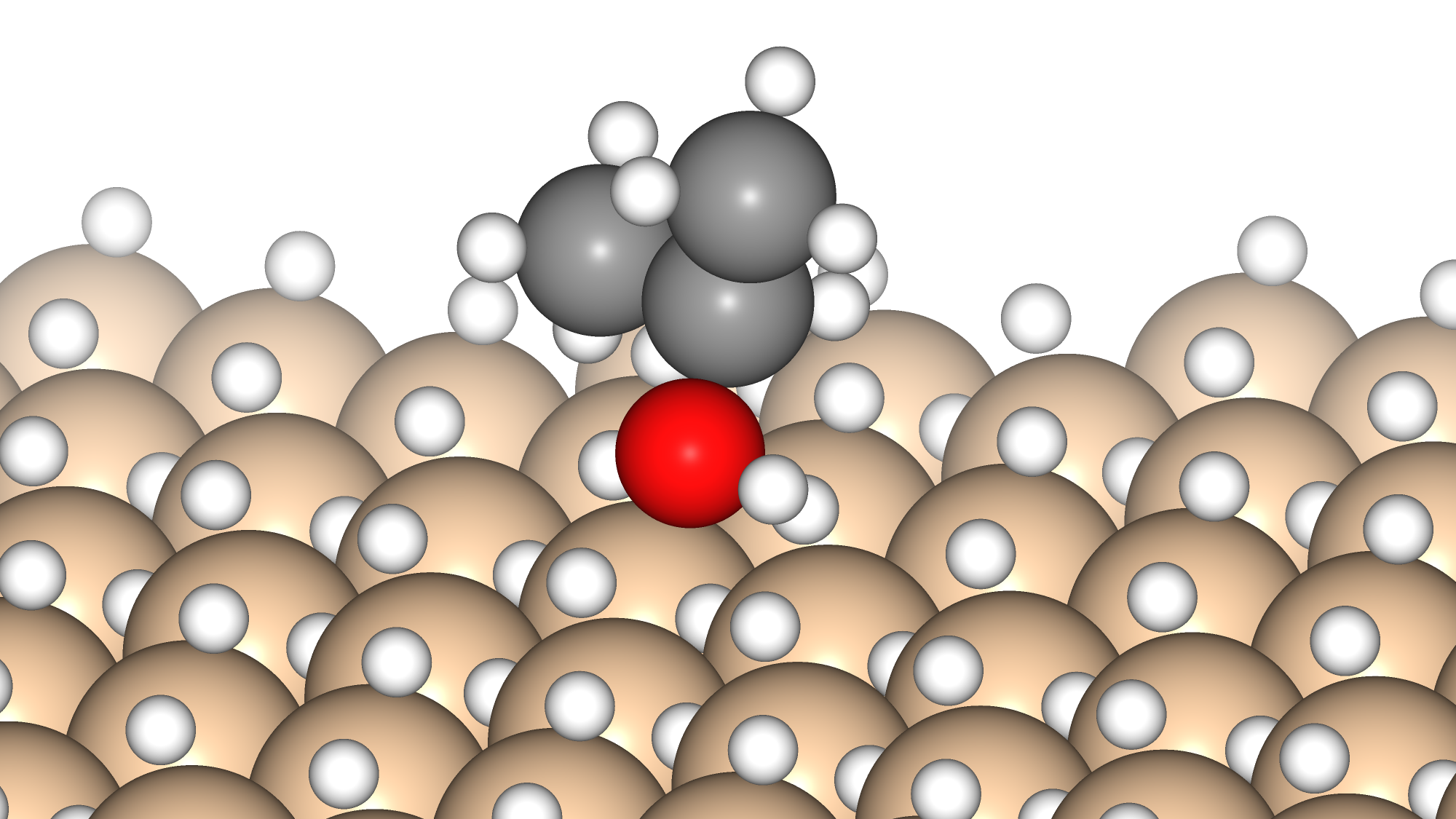
Exploration of the reaction pathways of (1) oxygen evolution reactions and (2) electrolyte decomposition using the SC-AFIR method
Exploration of the reaction pathways of oxygen evolution reactions using the SC-AFIR method
Introduction
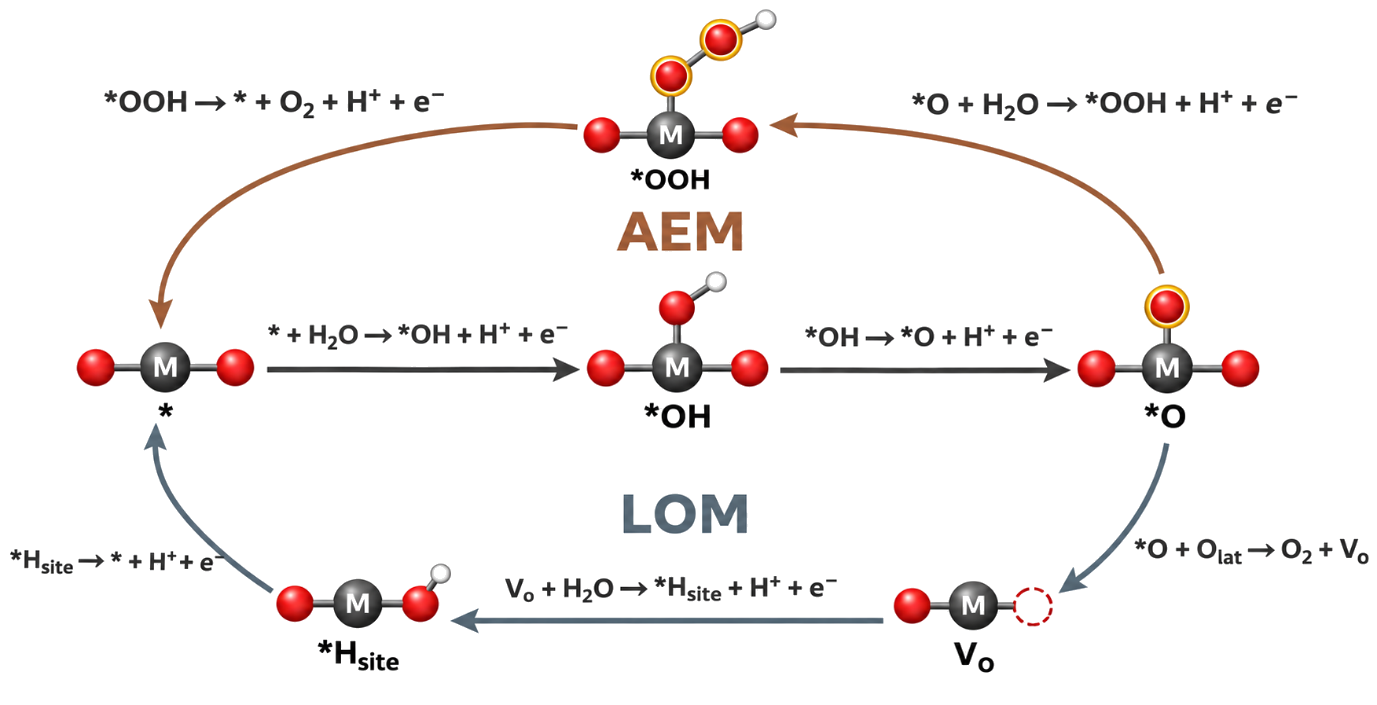
Understanding reaction pathways is crucial for improving the activity and durability of electrocatalysts. However, exploring reaction pathways is usually cumbersome because candidate pathways must be hypothesized manually, and verifying these assumptions with first-principles calculations is computationally expensive. We focused on GRRM20 with Matlantis as a solution to this problem. While this method has been applied to thermal reactions, there are very few examples of its application to electrochemical reactions [1]. Therefore, we investigated whether this method could reproduce known electrochemical reaction pathways without prior knowledge. We targeted RuO₂, a catalyst for the oxygen evolution reaction (OER). In this system, the adsorbate evolution mechanism (AEM), in which adsorbed species participate in the reaction, occurs. Previous studies have reported that the rate-determining step is *O → *OOH [2]. We aimed to evaluate the usefulness of this method and demonstrate its potential application to other electrochemical reactions and catalyst design in the future.
Computational Details
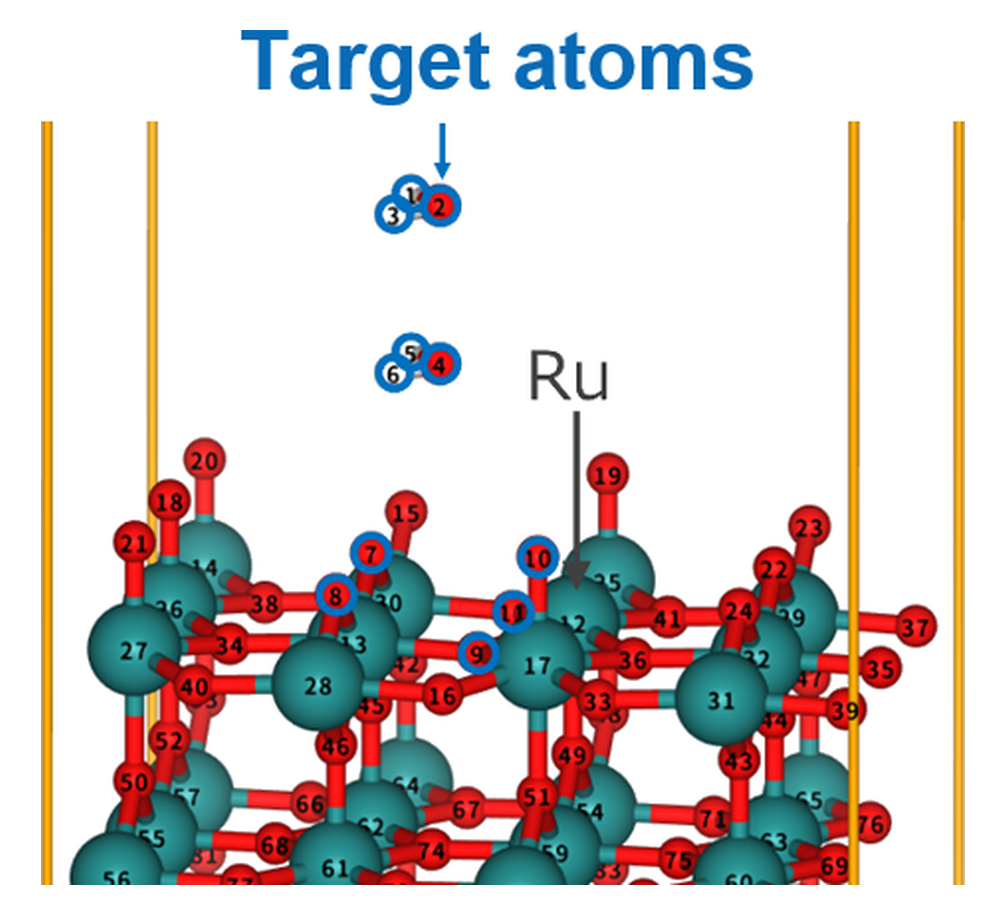
A 3×2 supercell of the rutile-type RuO2(110) surface was constructed. The RuO₂ slab consisted of four atomic layers, with a vacuum layer of 20 Å. The surface was oxygen-terminated [3]. Two water molecules were placed on the RuO2(110) surface, and an artificial force was applied to these water molecules and five oxygen atoms on the catalyst surface. The artificial force was set to 500 kJ/mol. The artificial force-induced reaction method was performed using the single-component algorithm (SC-AFIR) implemented in the GRRM20 program. After identifying the reaction pathways that produced O2 from the reaction pathways determined by SC-AFIR, an energy diagram was calculated using a computational hydrogen electrode (CHE) model.
Results and Discussion
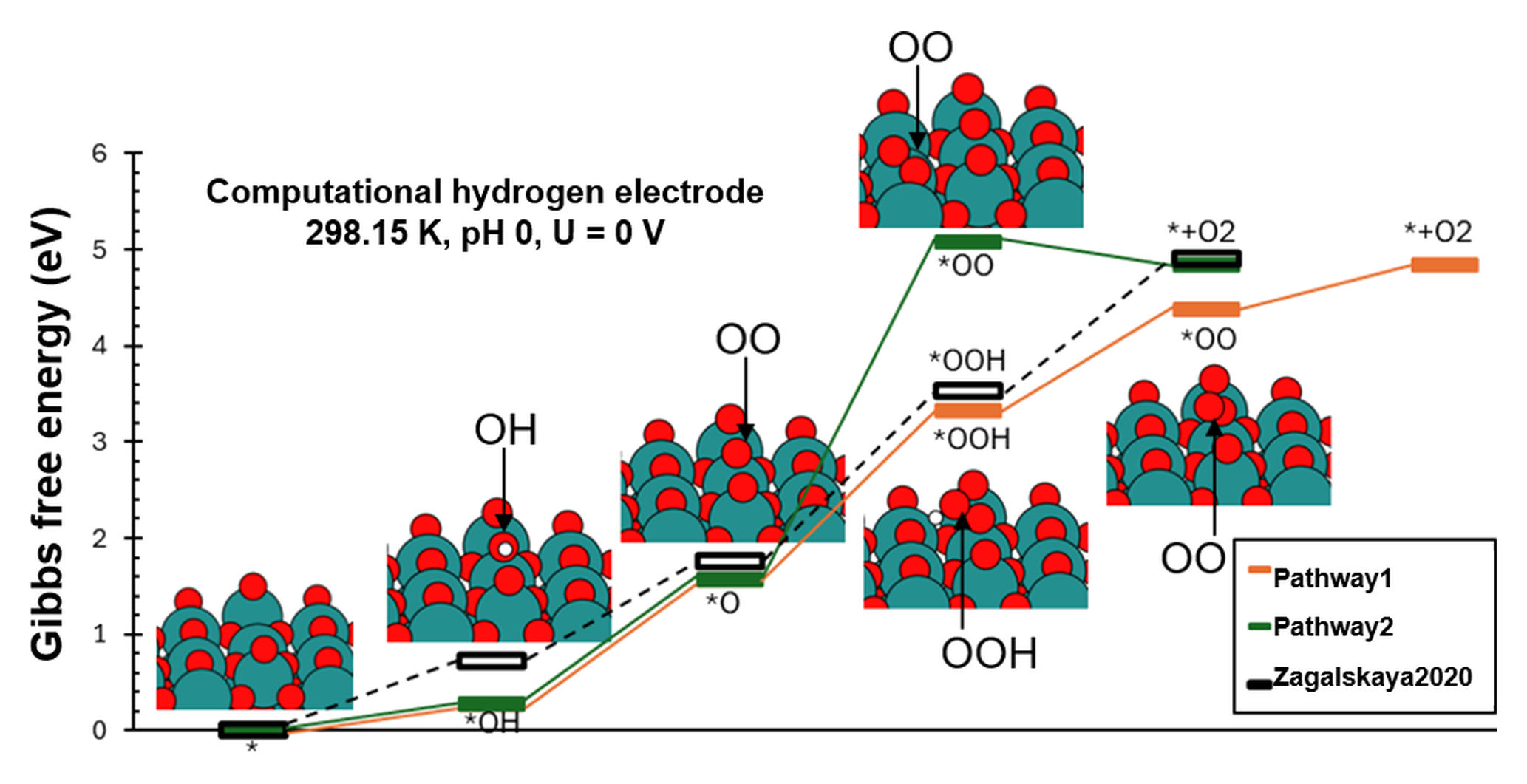
SC-AFIR allowed us to obtain more than 600 locally stable structures. By tracing the reaction pathways starting from the most stable structure, we found two main pathways for the OER. The first pathway involved adsorbed OH reacting sequentially to form OOH, which then produced OO, corresponding to the AEM (Pathway 1 in Figure 3). The second pathway involved oxygen atoms present on the catalyst surface spilling over and combining with adjacent oxygen atoms to form *OO (Pathway 2 in Figure 3). During the exploration of the reaction process, a side reaction was also observed in which hydrogen dissociated from H₂O was adsorbed onto the RuO₂ surface. This was attributed to an artifact of the vacuum slab model, in which hydrogen species that would realistically dissolve into the electrolyte were excessively adsorbed on the surface. Here, the side reaction was removed from the computational model and an energy diagram was constructed. Figure 3 shows that the free energy change for the rate-determining step was 1.74 eV for *O → *OOH in Pathway 1 and 3.51 eV for *O → *OO in Pathway 2. The lower free energy change along Pathway 1 indicates that this path is more favorable, which is consistent with previously reported first-principles calculations [2].
As described above, by using GRRM20 with Matlantis, we succeeded in exploring the oxygen evolution pathways on RuO₂(110) simply by providing the reactants, without any prior knowledge of the reaction.
Computational Details
| Items | Details |
|---|---|
| Number of atoms | 161 atoms (Ru48, O109, H4) |
| Model | (110) plane, 3×2 supercell, 4 RuO2 layers, O termination, 20 Å vacuum layer, 298.15 K |
| PFP | v8.0.0, R2SCAN_PLUS_D3 |
| GRRM20 | SC-AFIR, gamma = 500 kJ/mol, all but 11 atoms are fixed in position as Frozen Atoms (see Figure 2). |
Options
NoFC
DownDC=15
EQOnly
KeepLUPPath
Nrun=1
SaveDataIndirectory
SC=FindUDC
RandBox-X=2.56 8.80
RandBox-Y=2.22 10.49
RandBox-Z=11.15 18.03
AddInteraction
gamma=500
Target=1, 2, 3, 4, 5, 6, 7, 8, 9, 10, 11
END
ReadBareEnergy
TrafficVolCheck
TimeScale=1e3
Siml_mLatest=370
Siml_tLargest=1110
SimlTemperature=300 500 1000
RTemperature=10000
ScaleStructCheckThreshold=3
MatchDecScale=7
MatchDecTarget=1-4
sublink = ./kickpfp.py
References
[1] Ichino, T. et al. ChemRxiv. 2024, 10.26434/chemrxiv-2024-9h20v.
[2] Zagalskaya, A. et al. ACS Catal. 2020, 10(6), 3650-3657
[3] Fornaciari, J. C. et al. Electrochimica Acta, 2022, 405, 139810.
Exploration of the reaction pathways of electrolyte decomposition
Introduction
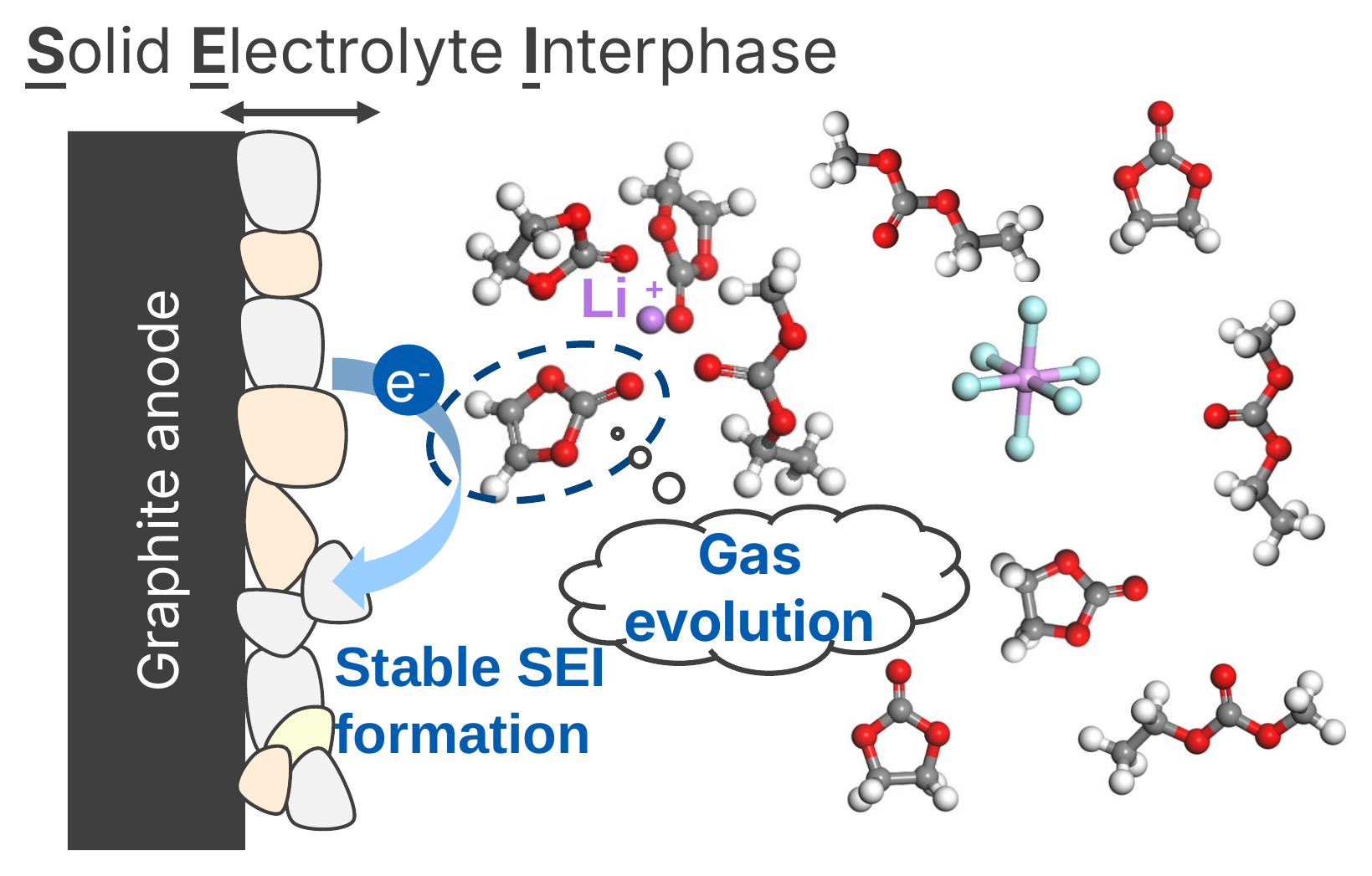
Precise control of the solid electrolyte interphase (SEI) at the electrode/electrolyte interface is crucial for the stable operation of lithium-ion batteries. Complex reactions, including electrolyte reduction, occur at the negative electrode interface, making comprehensive analysis with conventional computational methods difficult because of the high computational cost. We therefore applied GRRM20 with Matlantis, which enables systematic reaction pathway exploration at a realistic computational cost, to electrolyte components.
In this study, we modeled the reductive decomposition of vinylene carbonate (VC), a representative SEI-forming additive, near the negative electrode surface, and explored the decomposition pathways using the SC-AFIR method. In particular, we focused on CO₂ evolution, which is characteristic of the VC decomposition reaction, and analyzed the resulting reaction pathway.
Computational Details
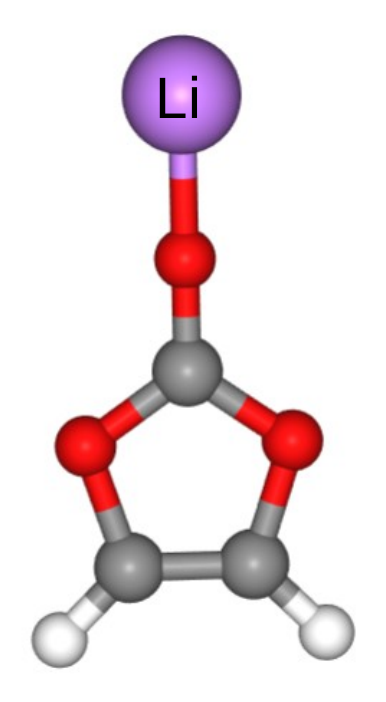
We systematically explored the reaction pathways of VC using the SC-AFIR method implemented in GRRM20 with Matlantis. Following the previous study [1], we performed calculations on the Li-coordinated VC adduct (Figure 2).
Results and Discussion
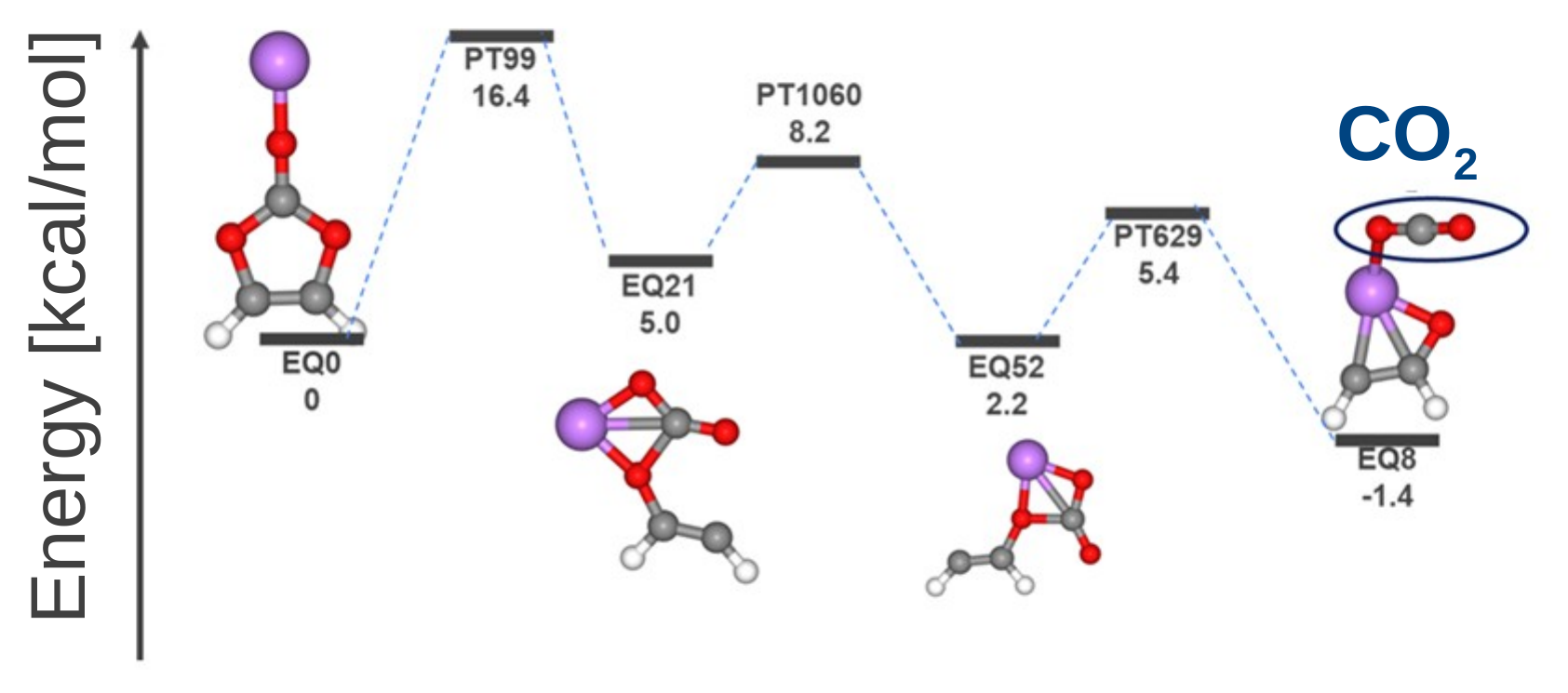
Applying the SC-AFIR method to the VC + Li model yielded 188 equilibrium structures (EQs) and 2,343 path tops (PTs) within a few days of computation.
An example of a reaction pathway is shown in Figure 3. By comparing it with a previous study [1] that applied the ADDF method based on quantum chemical calculations, we confirmed that the pathway for the formation of CO₂ from VC + Li was successfully reproduced. Although the calculated energies deviate somewhat from those reported in the previous study, the high computational speed of GRRM20 with Matlantis enabled us to systematically screen reaction pathways. Promising candidate pathways can subsequently be refined with quantum chemical calculations and discussed in more detail.
These results demonstrate the effectiveness of utilizing GRRM20 with Matlantis to analyze extremely complex reactions in electrolytes. Because this approach is significantly faster than performing full quantum chemical calculations, we anticipate it will be useful for predicting and controlling diverse reactions at the electrode/electrolyte interface in complex battery systems.
Computational Details
| Items | Details |
|---|---|
| Number of atoms | 9 atoms |
| Model | Vinylene carbonate + Li |
| PFP | PBE_U_PLUS_D3 v8.0.0 |
| GRRM20 | SC-AFIR method # Options SaveDataIndirectory NoFC DownDC=15 EQOnly KeepLUPPath Nrun=1 AddInteraction gamma=200 Target=1, 2, 3, 4, 5, 6, 9 (Specify atoms other than H) END TrafficVolCheck TimeScale=1.0 Siml_mLatest=70 Siml_tLargest=210 SimlTemperature=300 500 700 RTemperature=7000 |
References
[1] https://iqce.jp/SRPS/SRPS2012/Miyamoto.pdf
Profile of the case study provider
Asahi Kasei Corporation

本事例の公開日:2026.11.20
-


 URL
Copied
what's new
Large-Scale MD Simulation of GaN/AlN Heteroepitaxial Thin-Film Cracking Using LightPFP
ceramicsemiconductors
Analysis of the Ozone Oxidation Reaction Mechanism of Rubber Antidegradants
PolymerReaction pathway exploration
Interfacial Thermal Resistance Calculation at a Metal–Polymer Interface
Interfacial Thermal ResistanceSemiconductorAdhesive Materials
High-Accuracy, High-Speed Binding Energy Evaluation of Cyclin-Dependent Kinase 2 Inhibitors
Bio and Pharma
Data-Driven Method for Discovering Low Adsorption Energy Molecules on Si Surfaces
ScreeningMaterials InformaticsSemiconductors