Past News
Webinars
zoom7/23
Simulating Semiconductor Unit Processes with a Universal Machine-Learning Potential
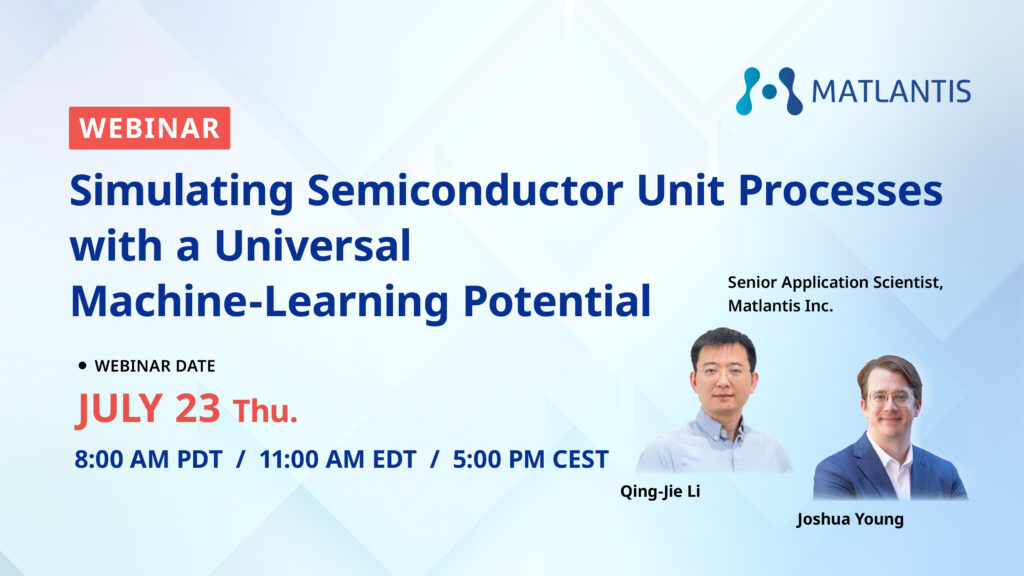
This webinar presents a practical look at how machine-learning atomistic simulation is reshaping semiconductor process development in the angstrom era.
Drawing on worked examples across ALD, dry etch, CMP, and interface engineering, it shows how PFP and the Matlantis platform bring DFT-level chemical insight to the system sizes and timescales that real process questions demand — fast enough to inform design decisions before wafers are run.
Who should attend
・Computational Materials Scientists with an interest in the semiconductor
・Semiconductor Researchers seeking to accelerate their R&D
Outline
As device architectures push into the angstrom era, process outcomes — film nucleation, etch selectivity, interface quality, planarization — are governed by surface chemistry that is hard to observe directly and costly to optimize through wafer runs alone. Atomistic simulation can close that gap, but conventional DFT is too slow for the system sizes and timescales real process questions demand, while classical force fields miss the chemistry.
This webinar demonstrates how PFP, a universal machine-learning interatomic potential covering 96 elements, delivers DFT-level chemical insight at 10⁵–10⁷× the speed on the Matlantis cloud platform — with no system-specific model training required.
Through worked examples spanning the process flow, we will cover:
1. Reaction pathway analysis of Co ALD precursors on Si substrates, including quantitative evaluation of ligand substitution effects for rational precursor design
2. High-throughput screening of area-selective ALD candidates by combining PFP adsorption energies with regression models and Bayesian optimization
3. Large-scale (~70,000-atom) dry etching of SiO₂ by HF gas and force-dependent material removal in CMP-style polishing, enabled by LightPFP
4. Interface engineering: melting behavior at AlN/Cu bonding interfaces and TaN/Cu interfacial thermal resistance validated against experiment
5. Predicting properties beyond energies and forces using PFP Descriptors
Whether you develop precursors, own a unit process, or are building in-house simulation capability, you’ll leave with a concrete picture of what atomistic modeling can answer today — and where it fits in your development cycle.
Speakers
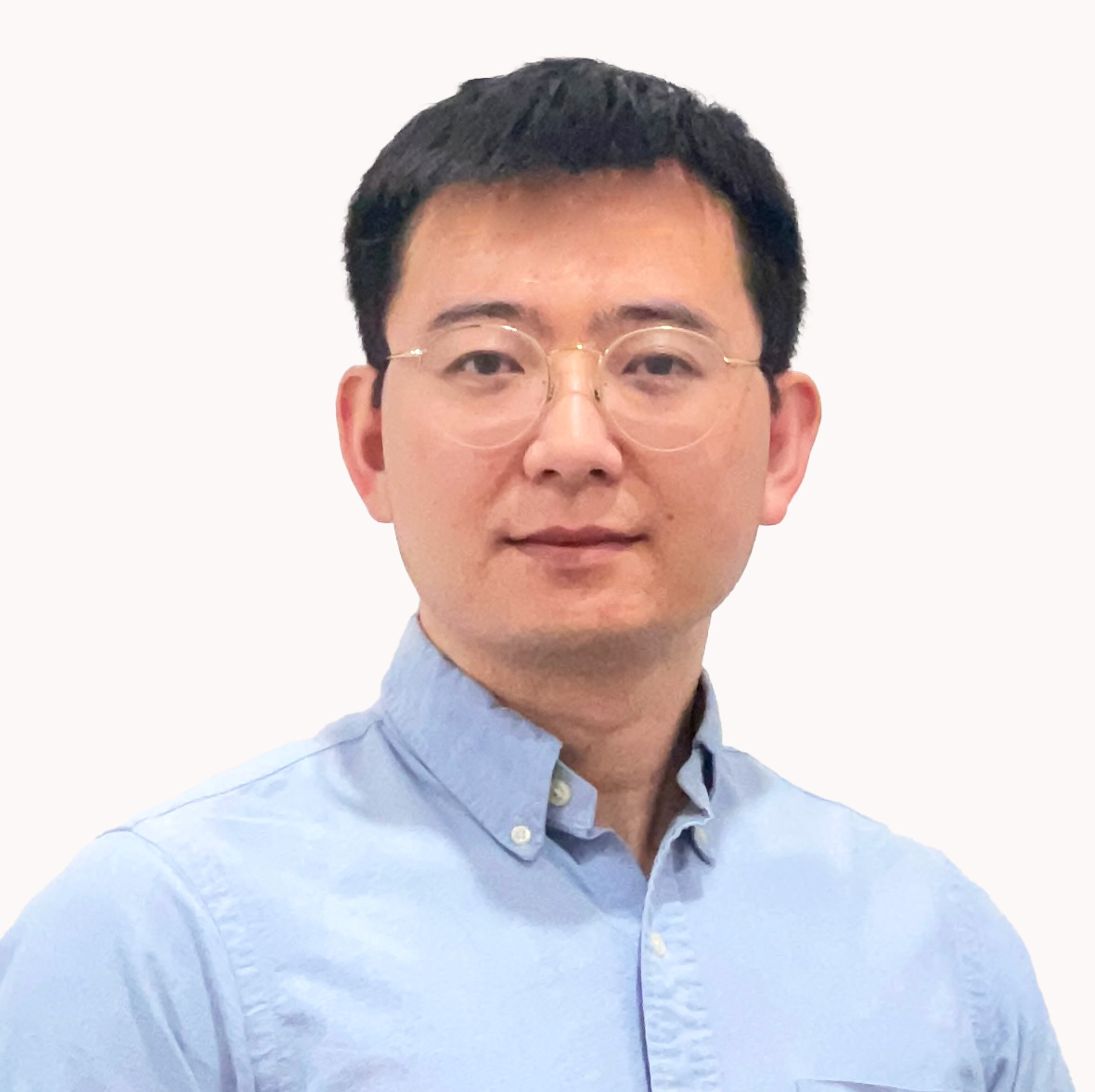
Qing-Jie Li
Senior Application Scientist,
Matlantis Inc.
After receiving his Ph.D.in Materials Science and Engineering from Johns Hopkins University, he was a Postdoctoral Associate at MIT, where his research focused on developing and applying machine learning interatomic potentials (MLIP) for energy materials. He then worked as a Senior Engineer at Samsung Semiconductor US, contributing to computational materials discovery for battery applications before joining Matlantis, Inc. He is currently focused on sustainable materials solutions through the application of computational materials science and artificial intelligence (AI).
Joshua Young
Senior Application Scientist,
Matlantis Inc.
Joshua received his Ph.D. in Materials Science and Engineering from Drexel University, followed by appointments at the Naval Research Laboratory, Binghamton University, and the New Jersey Institute of Technology. Over the course of his career, he has used a wide variety of computational techniques, including density functional theory, molecular dynamics, and materials informatics/machine learning, to study and design materials for electronics, batteries, catalysis, and more.

Webinar Details
| Date and Time | Thursday, July 23, 2026 8:00 AM PDT / 11:00 AM EDT / 4:00 PM BST / 5:00 PM CEST (12:00 AM (midnight) JST, July 24) |
| Location | Online (Zoom) |
| Fee | Free |
| Notes | *This webinar is intended specifically for R&D professionals and academic researchers. We kindly ask individuals from competing organizations to refrain from accessing this content. *A Japanese-narrated on-demand version of the same content is available here for Japanese-speaking audiences. |
Apply here
The event has ended.
公開日:2026.07.07
-


 URL
URL
Copied
New Events and Seminars
NEW
Past News
Webinars
onlineThursday, October 1, 2026
Crystal Structure Prediction in Practice: Setting Up Searches and Reading Results with Matlantis CSP

Video Streaming
Webinars
OnlineOn-demand
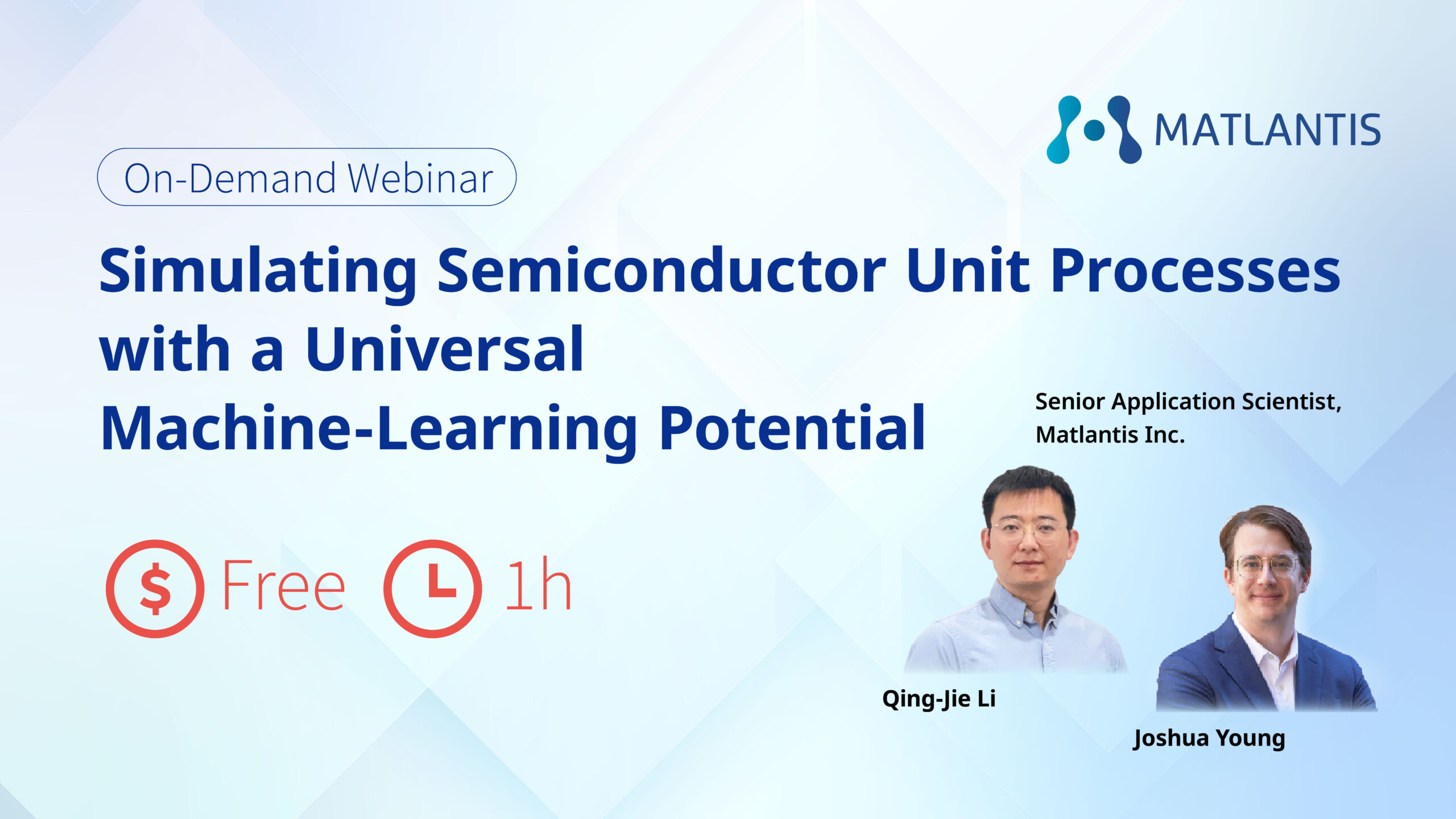
[On-Demand Webinar] Simulating Semiconductor Unit Processes with a Universal Machine-Learning Potential
Video Streaming
Webinars
OnlineOn-demand
[On-Demand Webinar] Accelerating Computational Materials Design with CALPHAD, DFT, MLIPs, and AI Agents
Ootemachi9:30
Hands-on Seminar | computational chemistry with Matlantis: From Basics to Practical Applications

Video Streaming
Webinars
OnlineOn-demand
【On-demand】Expanding Matlantis Applications with Coding Agents: A New Workflow for computational chemistry using natural language