開催予定
ウェビナー
Online Thursday, December 10, 2026
Why Machine Learning Interatomic Potentials Are Transforming the Field of Metal-Organic Frameworks
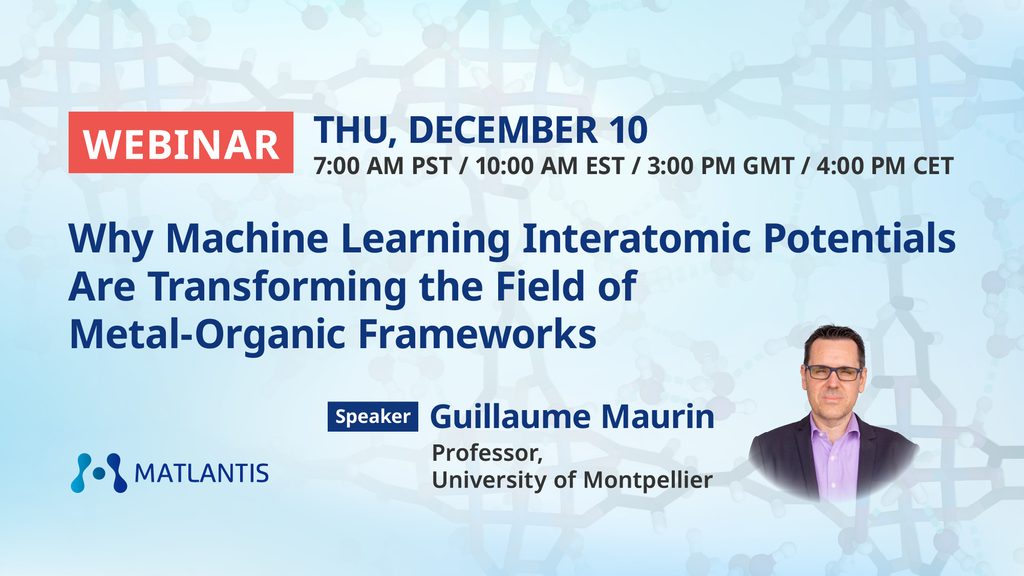
Machine learning interatomic potentials are changing how metal-organic frameworks (MOFs) are screened for gas capture, separation, and water treatment. In this webinar, Prof. Guillaume Maurin of the University of Montpellier explains where they add value, with examples from his recent work using Matlantis PFP.
Who should attend
- Researchers in industry and academia working on adsorbents, gas capture and separation, or water treatment
- Computational scientists evaluating machine learning interatomic potentials for materials screening
- R&D teams interested in computational materials design, whether or not they work on MOFs
Outline
Metal-organic frameworks (MOFs) offer an enormous design space for gas capture, separation, and water treatment, and computational screening has become a standard way to narrow it down. Most high-throughput screening, however, still relies on classical generic force fields. They are fast, but they can miss an accurate description of the host-guest interactions that decide reliable performance predictions, especially strong hydrogen bonding, narrow confinement pockets, and framework flexibility.
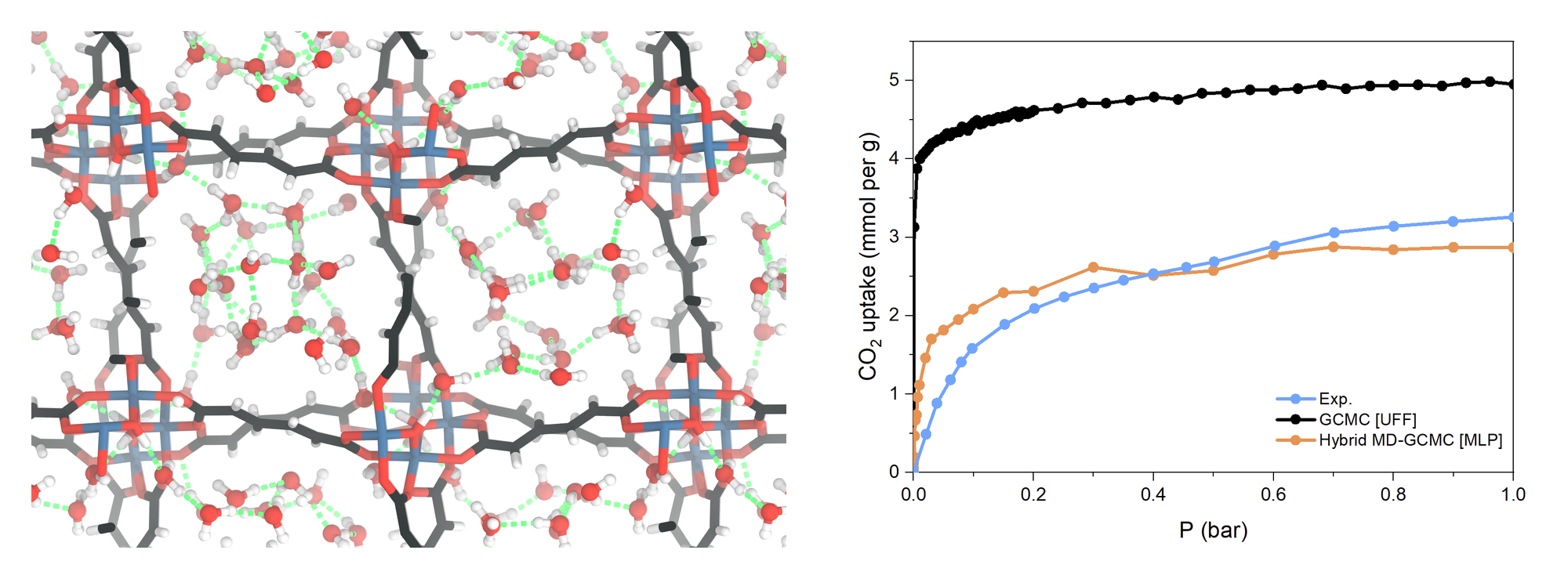
In this webinar, Prof. Maurin will explain why universal machine learning interatomic potentials (MLIPs) are changing how MOFs are evaluated, and how they can be combined with classical force fields to keep screening both accurate and scalable. Examples will include recent work using Matlantis PFP, such as identifying MOFs that capture ethylene under humid conditions and exploring MOFs that selectively remove short-chain PFAS from water.
The talk is intended for researchers in industry and academia who want to understand where MLIPs add value in materials screening, whether or not they work on MOFs.
Speaker
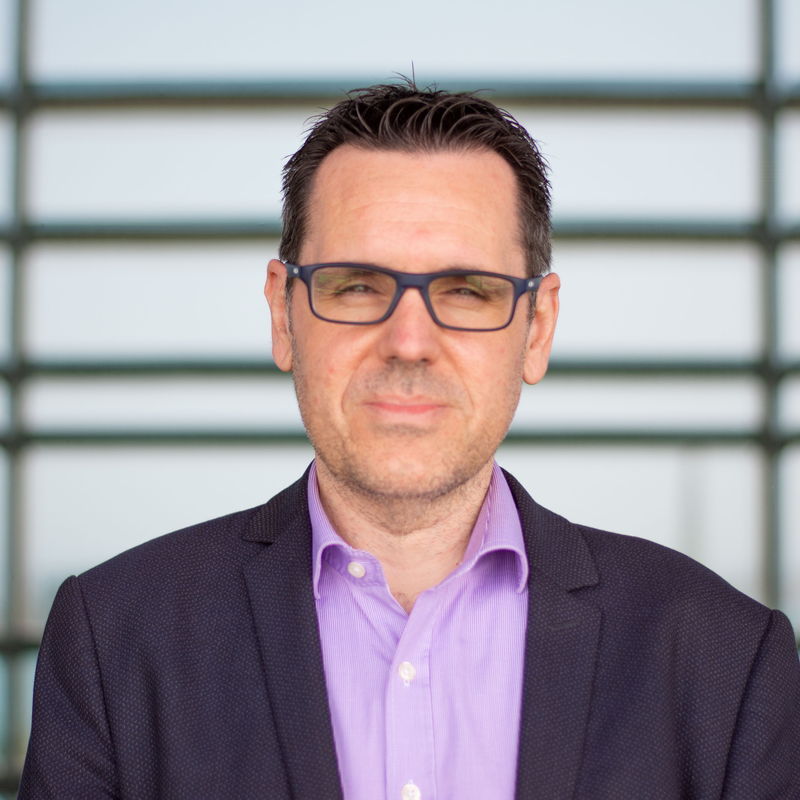
Guillaume Maurin
Full Professor,
University of Montpellier
Guillaume Maurin is a Full Professor at the University of Montpellier and a researcher in theoretical physical chemistry at the Institut Charles Gerhardt Montpellier (ICGM), France, where he leads a group working on the molecular simulation of porous materials. He received his PhD in physical chemistry from the University of Montpellier in 2001, carried out postdoctoral research in London, and obtained his habilitation in 2006. His research uses molecular simulations, and more recently machine learning approaches, to understand and predict the adsorption, diffusion, and structural flexibility of guest molecules in nanoporous materials, with a strong focus on MOFs for energy and environmental applications. He has authored more than 400 publications. In 2023, he was appointed a senior member of the Institut Universitaire de France.
Webinar Details
| Date and Time | Thursday, December 10, 2026 7:00 AM PST / 10:00 AM EST / 3:00 PM GMT / 4:00 PM CET (12:00 AM (midnight) JST, December 11) |
| Location | Online (Zoom) |
| Language | English |
| Fee | Free |
| Notes | *This webinar is intended specifically for R&D professionals and academic researchers. We kindly ask individuals from competing organizations to refrain from accessing this content. |
Apply here
公開日:2026.11.18
-


 URLを
コピーしました
新着イベント・セミナー
NEW
動画配信
ウェビナー
OnlineOn-demand
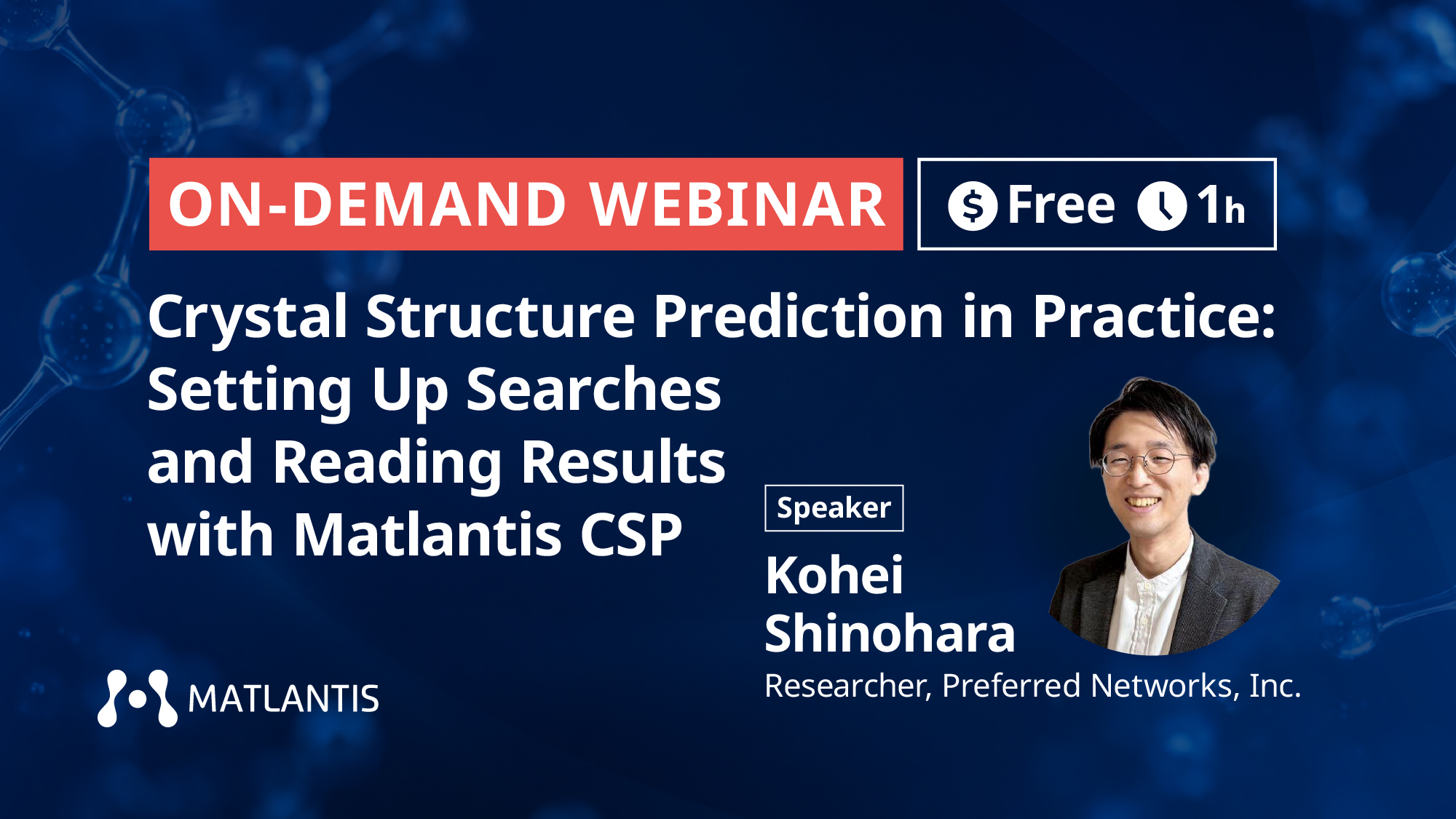
[On-Demand Webinar] Crystal Structure Prediction in Practice: Setting Up Searches and Reading Results with Matlantis CSP
過去のお知らせ
ウェビナー
Zoom10/21
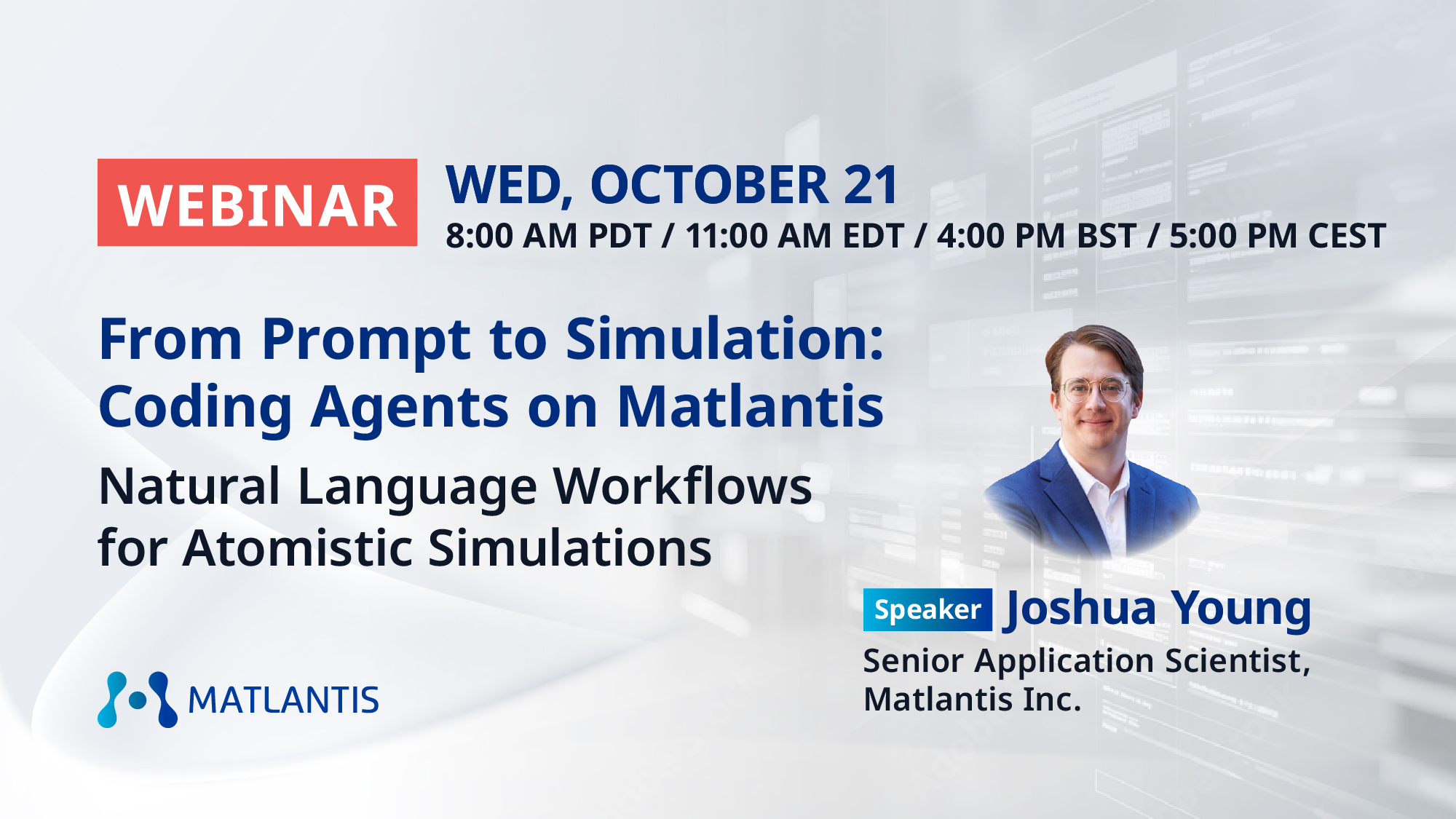
From Prompt to Simulation: Coding Agents on Matlantis – Natural Language Workflows for Atomistic Simulations
動画配信
ウェビナー
OnlineOn-demand
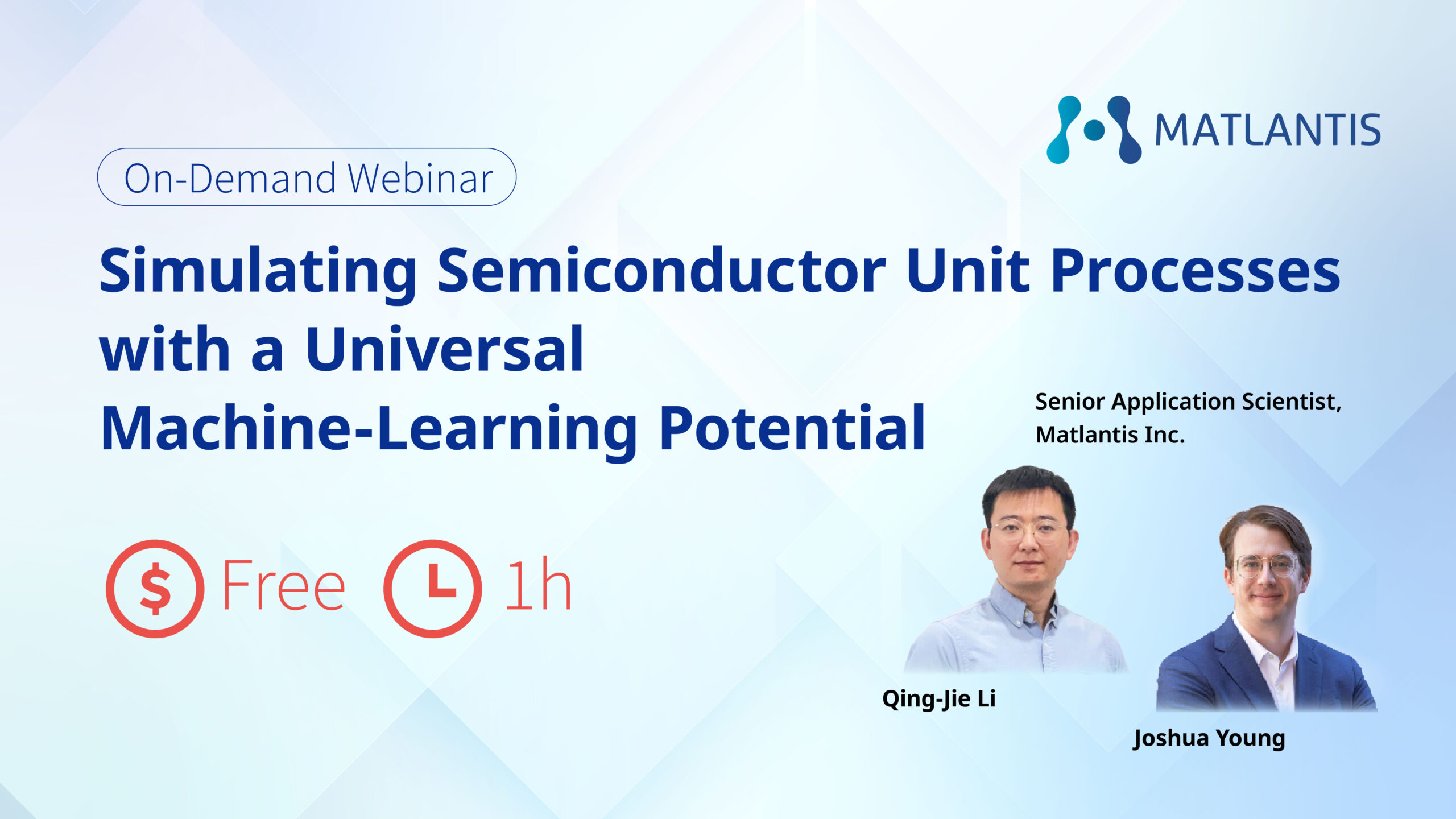
[On-Demand Webinar] Simulating Semiconductor Unit Processes with a Universal Machine-Learning Potential
動画配信
ウェビナー
OnlineOn-demand
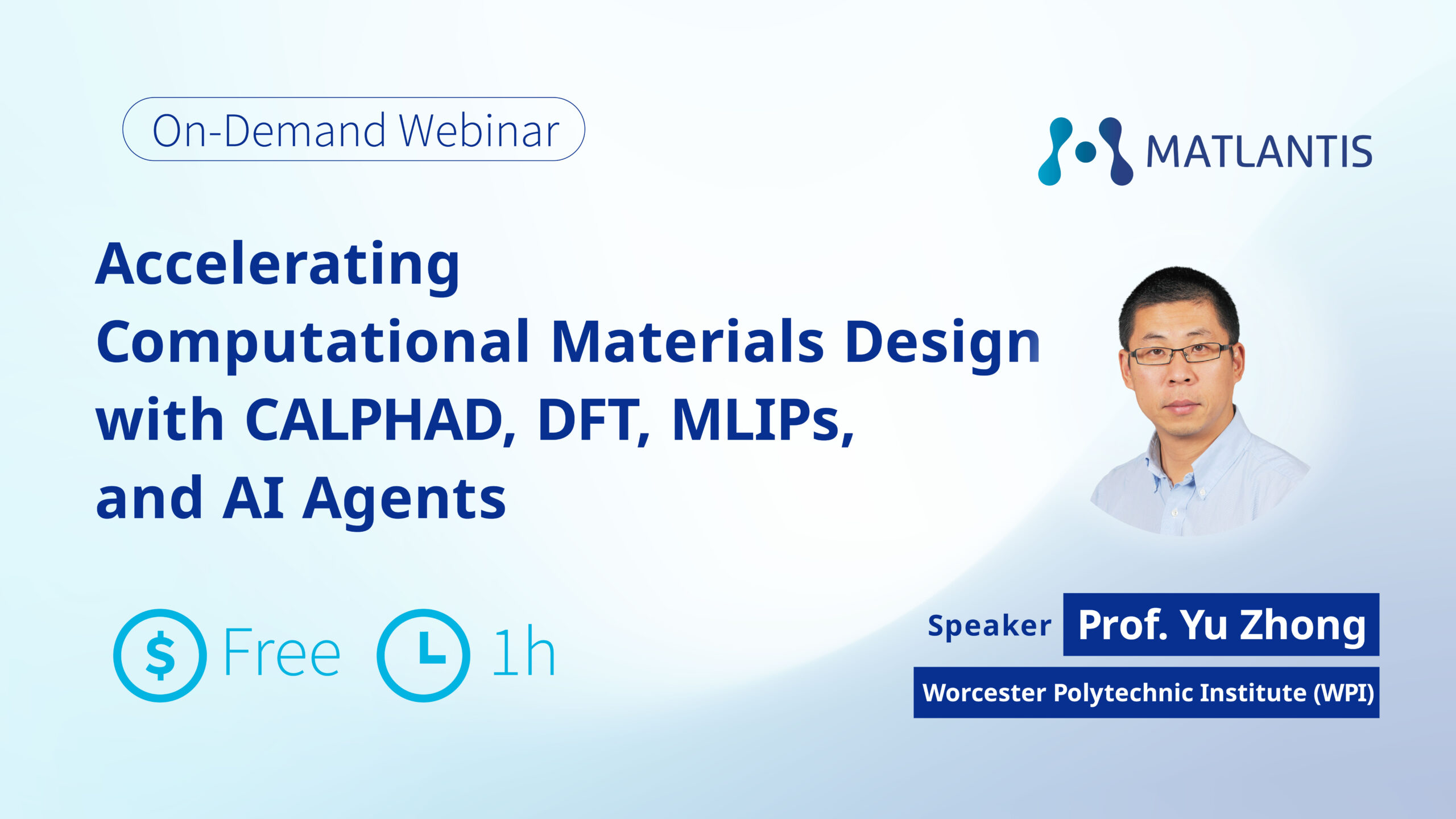
[On-Demand Webinar] Accelerating Computational Materials Design with CALPHAD, DFT, MLIPs, and AI Agents
大手町9:30
ハンズオンセミナー | Matlantisで始める計算化学 〜初歩から実践まで〜