
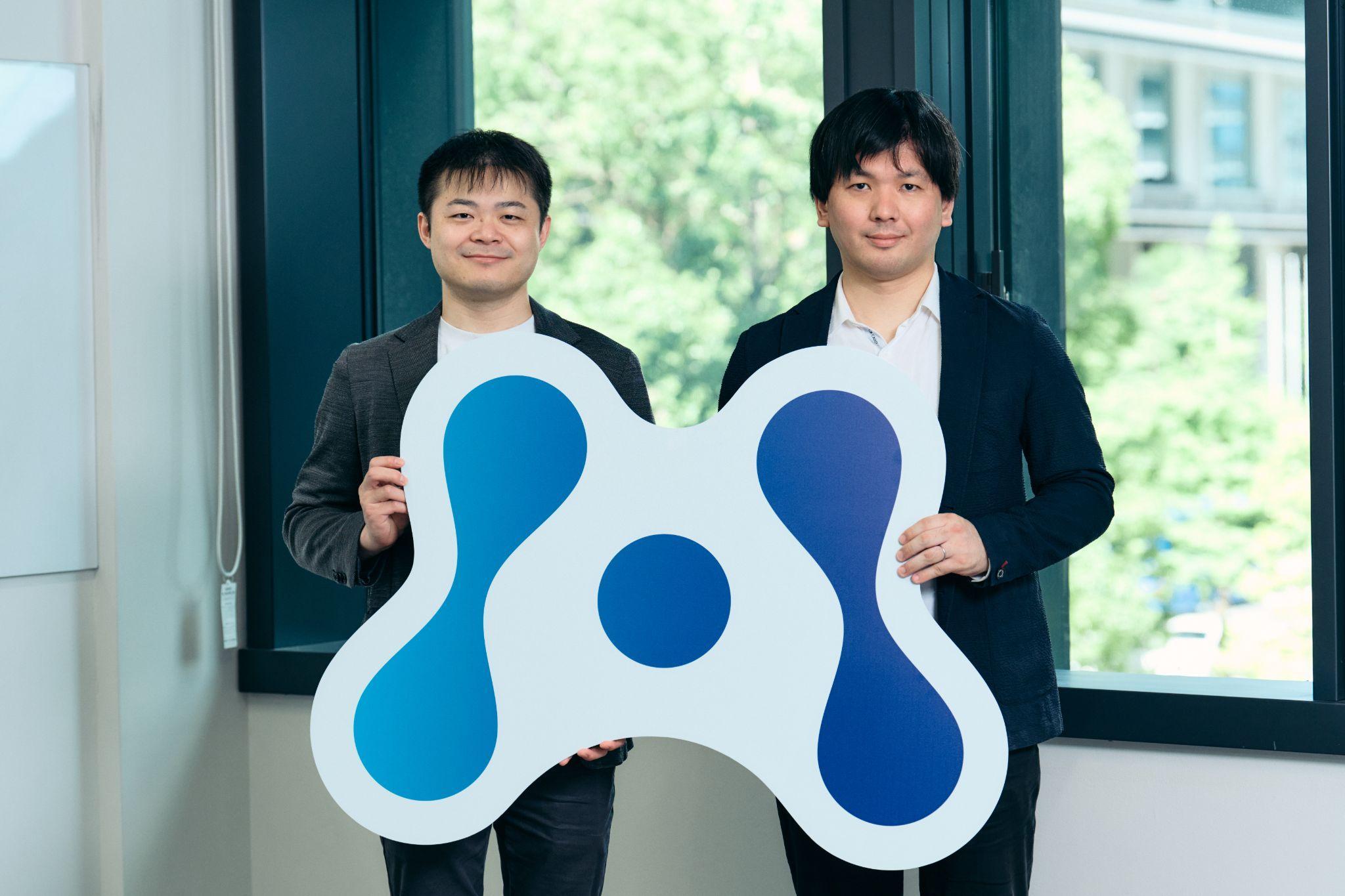
Matlantis application scientists Hasegawa and Aoki gave presentations at the 26th Asian Workshop, held at the Tsukuba International Congress Center from October 27th to 29th, 2025. The Asian Workshop is a workshop on computational physics and materials science that has been held since 1998, primarily in East Asian countries, and attracts researchers from not only Asia but around the world. We will share the details of the presentations below.
Presentation from Matlantis
1, Simulating Electrochemical Interfaces under Bias Voltage Using an Ionic Charge Imbalance Methodwith a Universal Interatomic Machine Learning Potential
Presenter: Taisuke Hasegawa, Application Scientist, Technical Solutions Department
Overview:Describing electrochemical interfaces under bias voltage is challenging for universal machine learning interatomic potentials (MLIP). We introduce the Ionic Charge Imbalance method (ICIM), which simulates bias conditions by intentionally creating a cation-anion imbalance in the liquid phase. This induces a counter charge on the solid surface, leading to the spontaneous formation of an electric double layer (EDL) even without long-range electrostatics in the MLIP. Applying the ICIM with the Matlantis PFP universal MLIP to a Pt(111)/HCI aqueous solution, we confirmed EDL formation and observed the spontaneous Volmer reaction. This demonstrates the ICIM's potential for simulating complex electrochemical phenomena, In the future, we aim to achieve constant bias voltage simulation through a linear combination of ICIM models.
2, Crystal Structure Prediction with a Universal Machine Learning Potential PFP and Efficient Search Algorithm for the Entire Convex Hull
Presenter: Yuta Aoki, Application Scientist, Technical Solutions Department
Overview:Searching for new crystal structures requires computationally expensive full convex hull searches. We demonstrate a new approach that accelerates this process by combining an efficient convex hull expansion algorithm with a universal neural network potential (PFP) for rapid energy evaluation. This method is applicable both to exploring novel stable structures and determining solid-solubility limits. We apply it to search for new hydrogen-rich rare-earth hydrides (Y-H, Y-N-H systems). The result suggests the existence of a series of new stable/metastable Y-H crystal structures which were previously unknown. We also investigate heavy impurity doping in ferroelectric perovskites to explore the creation of polar-metallic materials.
We would like to express our sincere gratitude to everyone who visited us on the day of the presentation. We truly appreciated the opportunity to engage in active discussions.
>> Click here for a list of calculation cases using Matlantis
-


 URL
URL
Copied
New Articles
NEW
The front runner of AI for Science – A Report from the "Matlantis User Conference 2026"
Conference Report

Changing the rules of materials development with Physics-Grounded AI: how Matlantis PFP came to be

Interview
Benchmarking Matlantis-PFP v9 on MLIP Arena (full version)
Introducing Matlantis-PFP v9: Benchmarking on MLIP Arena and Improving Experimental Agreement with r2SCAN
How to Choose Molecular Dynamics (MD) Simulation Software: 6 Key Points and 14 Tools Compared

Molecular Dynamics Explainer