

On September 18, 2026, the "Matlantis User Conference 2026" was held in Marunouchi, Tokyo. More than 400 people, including staff and related personnel, gathered at the venue and deepened their connections through 9 sessions, 61 poster presentations, and a panel discussion.
This year's theme was "The front runner of AI for Science
~ the R&D evolution by the collaboration between Scientists and AI." Moving to a larger venue than last year, the program was expanded to include parallel sessions in two venues and panel discussions. We bring you a report on the event.
We have focused on the key points of the user presentations, and have primarily covered the content of presentations given by our own members.
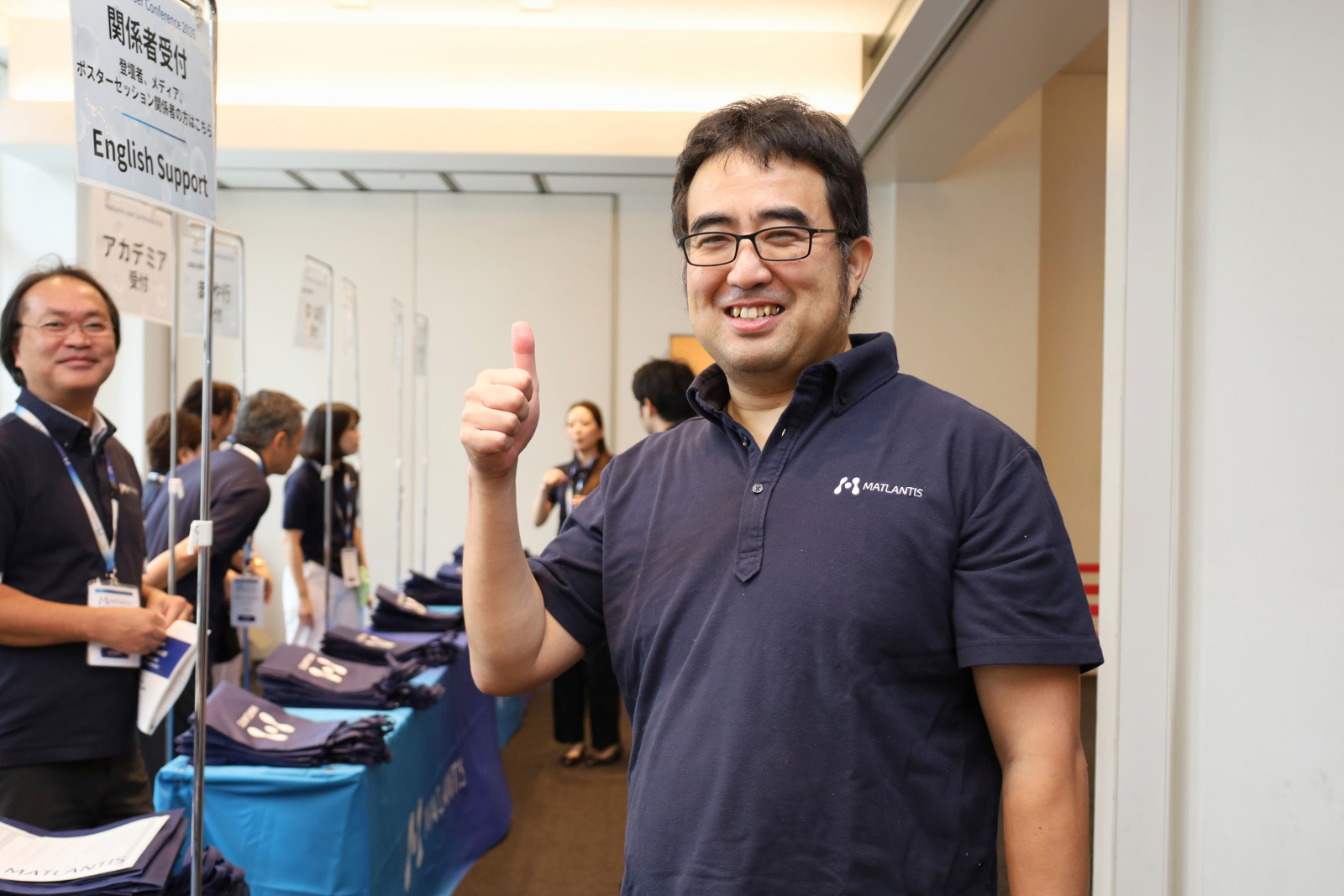
Even before the opening ceremony began, conversations among researchers were already taking place.
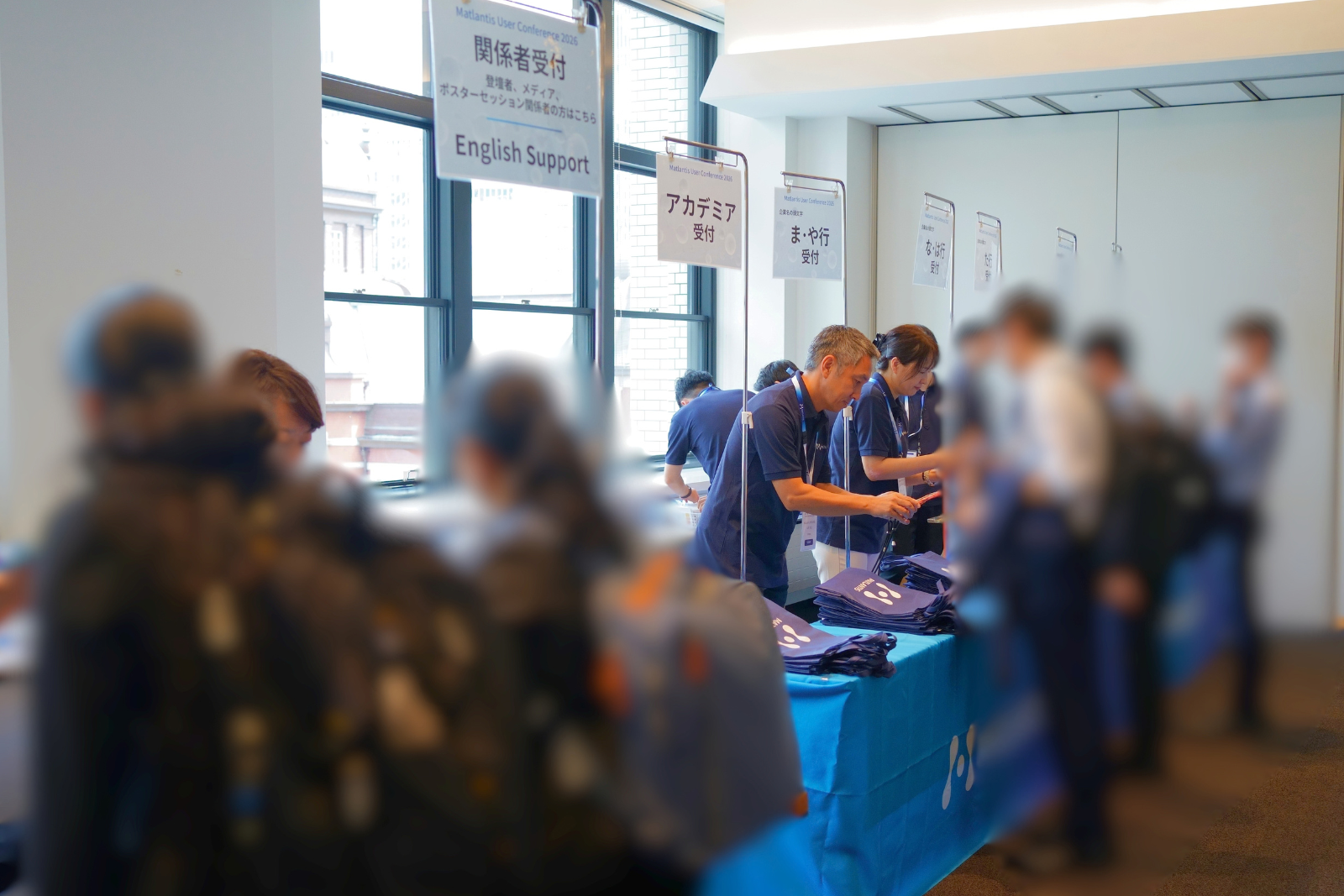
This year, we again provided time for attendees to view the posters from the start of registration until the presentations began. Many people arrived early specifically to see the posters, and we saw people browsing through them one by one in the foyer.
Furthermore, attendees had the opportunity to meet face-to-face and chat about their current activities and research. Even before the presentations began, interactions transcending the boundaries of companies and research institutions were taking place.
Evolving AI for Science to Enhance Researcher Decision-Making
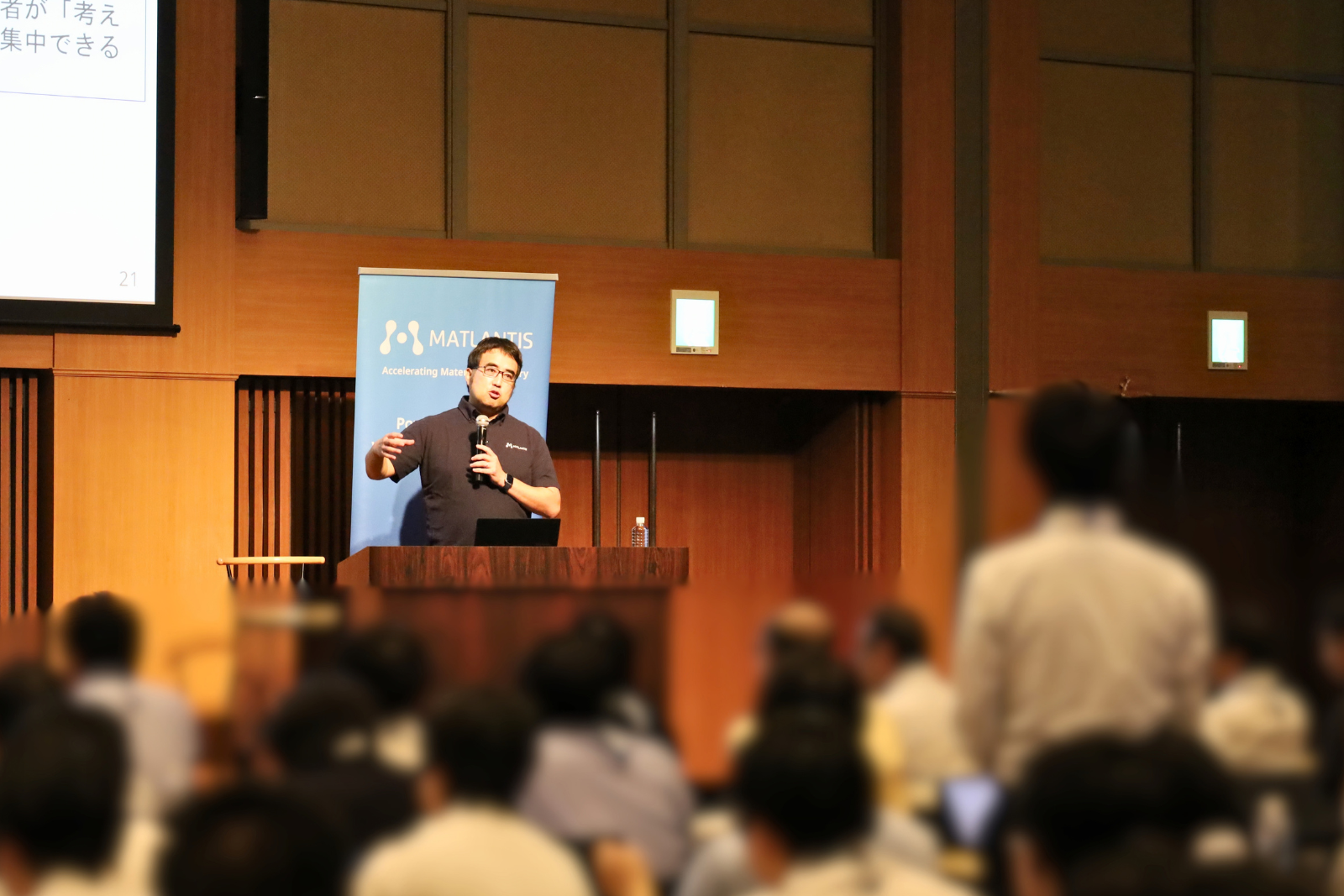
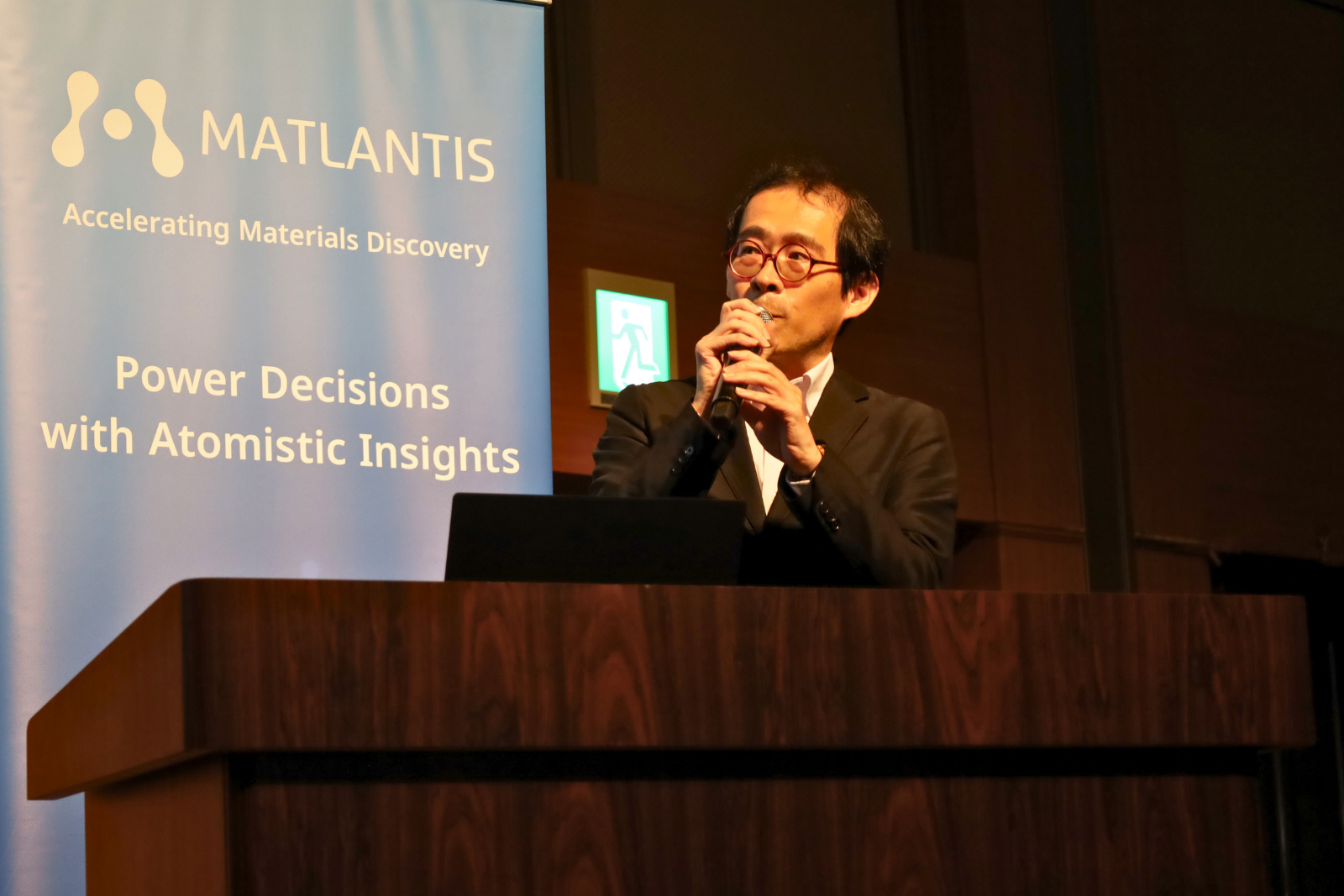
In the nearly full main hall, the keynote address by Daisuke Okanohara, President and CEO of Matlantis, began. The theme was "Power Decisions with Atomistic Insights – Navigating R&D in the Era of AI for Science." He looked back on Matlantis's five years and discussed how the evolution of AI will change the way scientific research is conducted.
Research involves a series of steps: identifying a problem, creating a model, performing calculations and experiments, and then verifying and interpreting the results. While AI speeds up the preparation and execution of calculations, the importance of determining "what to solve" and "whether the results are reliable" is actually increasing. Okanohara indicated that Matlantis aims not to leave all research to AI, but to support researchers so that they can focus on insight and judgment.
"Power Decisions with Atomistic Insights – Driving Decision-Making with Atomistic Insights." In the presentation, we shared the thoughts behind this vision and the initiatives that will support future research and development.
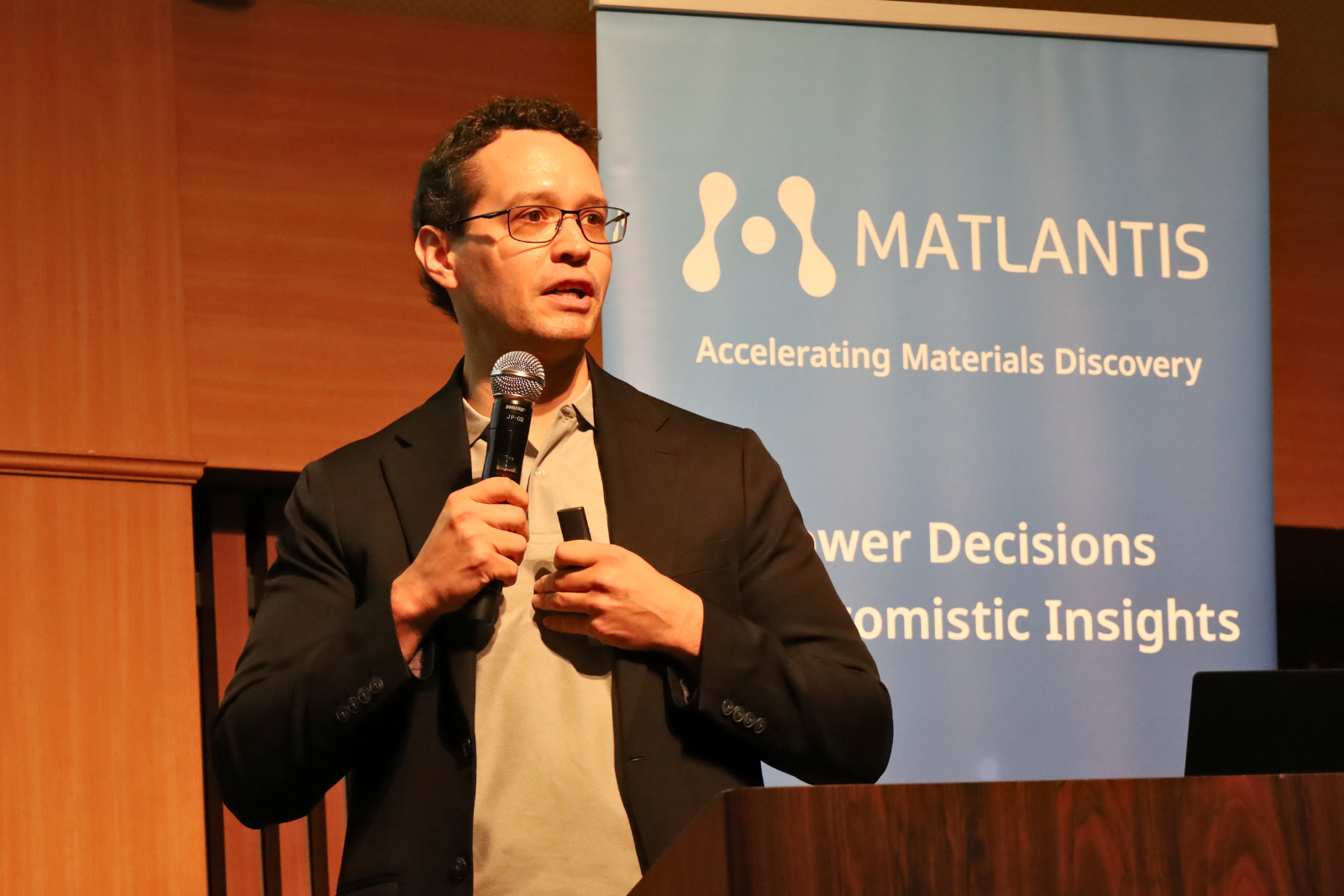
Next to take the stage as a special guest was Justin S. Smith from NVIDIA. He is a researcher who spearheaded the development of "ANI-1" [1], a pioneering study of the potential of machine learning, and who has opened up fields that are connected to Matlantis's technology.
The session reviewed the evolution of materials research, from the era of creating potentials for each individual material to the development of general-purpose models that handle a wide range of elements and materials. Touching upon his own research on ANI-1, he explained how advancements in data and computational technology have expanded the possibilities of materials research. Towards the end, he also touched upon the current collaboration between Matlantis and NVIDIA, including the acceleration of calculations using NVIDIA ALCHEMI.
Towards the end of his presentation, Justin mentioned the collaboration between Matlantis and NVIDIA ALCHEMI. The user session by ENEOS and NVIDIA demonstrated how this technology is being used in the field of materials development.
ENEOS is working on developing new materials by combining AI, GPUs, and materials simulation, utilizing Matlantis and NVIDIA ALCHEMI. First, Takuya Shibayama of NVIDIA explained the acceleration of calculations using ALCHEMI and its integration with Matlantis. Next, Hiroyuki Tsujimoto of ENEOS Holdings introduced the search for oxygen evolution catalysts as an example of its application in research. How to find a material to replace rare and expensive iridium from a vast number of candidates. Efforts to explore a wider range of possibilities by accelerating calculations were discussed.
What was particularly impressive was the exchange between the two speakers towards the end of their presentation. When Mr. Shibayama asked whether the increased computational speed might be creating bottlenecks in other processes, Mr. Tsujimoto cited the challenges of creating candidate structures and the difficulties in moving the computationally narrowed candidates to experimentation. Even as the range of exploration expands, it is ultimately the researchers who decide what to try. It was an exchange that made us think about what researchers need to discern and decide as AI speeds up the process.
More details regarding this case can be found in the press release.
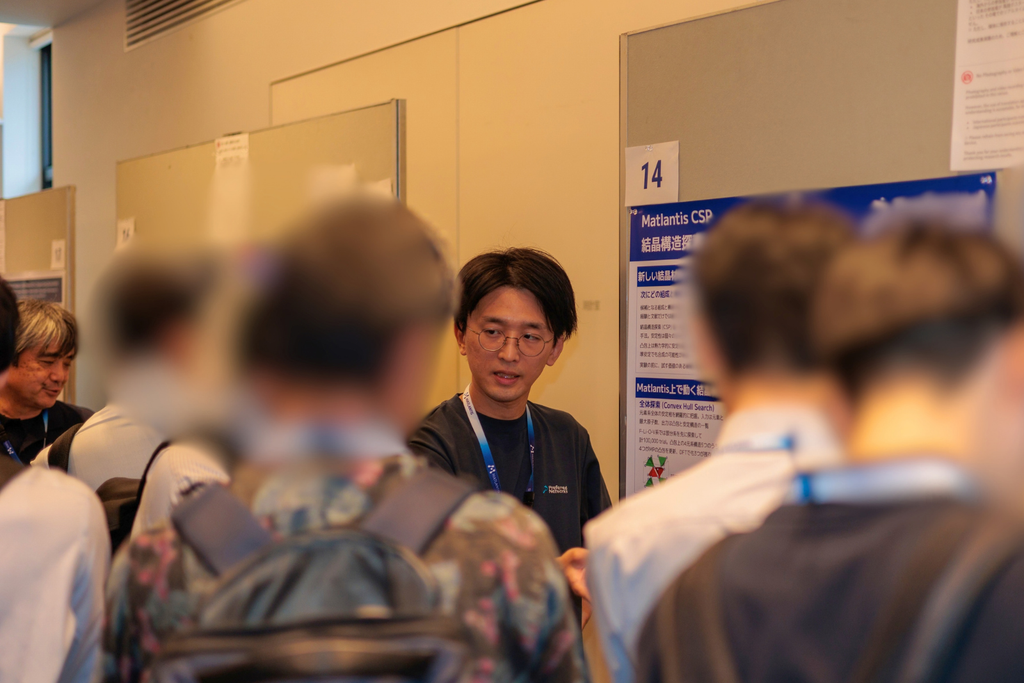
A lively discussion takes place around the poster.
This year, 61 posters were submitted, showcasing research findings across a wide range of fields, including batteries, catalysts, semiconductors, and polymers. Researchers from different affiliations and specialties exchanged ideas around the posters.
Although we prepared a larger venue than last year, the poster session was so popular that people stretched all the way to the back of the aisles. Multiple circles of people formed in front of the posters, crowding together to listen to the presentations. The posters were displayed throughout the day, and some participants even extended their presentation time to continue discussions.

Practical applications in research settings and the future of Matlantis
In the afternoon, parallel sessions were held in the main hall and satellite venues. In the first half, Masateru Kawaguchi from Matlantis and Yasunobu Ando from Institute of Science Tokyo took the stage at their respective venues.
The expanding role of simulations by AI — To enhance the organization's research capabilities
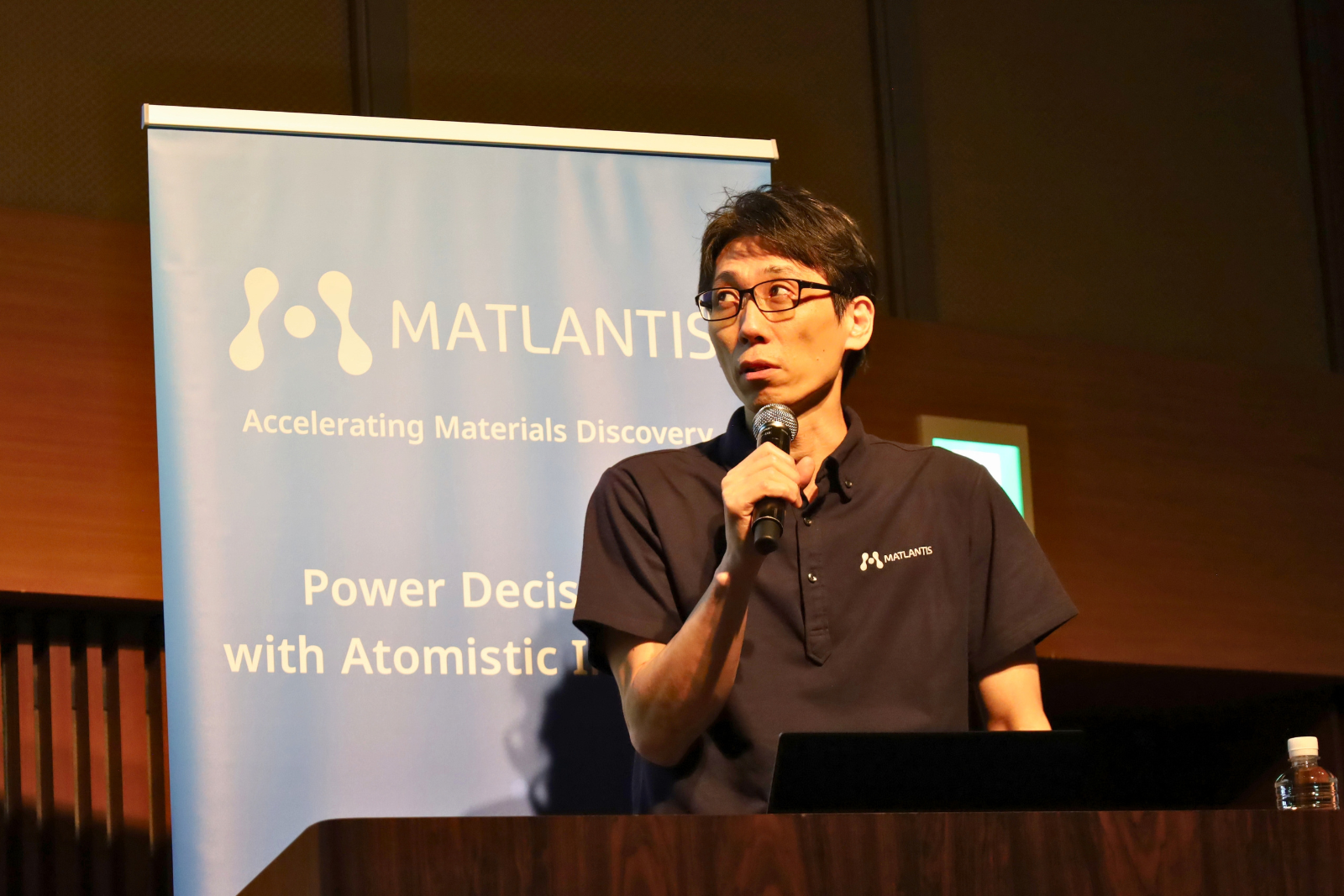
The speaker in the main hall was Masateru Kawaguchi, Head of Product Management at Matlantis. From his position of guiding product development, he spoke about how to transform the advanced power of simulation into the organization's research capabilities.
While computational experts are in high demand, experimental researchers lack the time to learn computation. The perception that "computation is the job of computation specialists" also persists. Kawaguchi's presentation highlighted these two barriers, offering a firsthand perspective from a talk close to the research field. If AI agents assist with preparing structures and setting computational conditions, experts can dedicate more time to problem definition and verifying results. His statement, "AI will change execution, not judgment," conveyed that the faster the work becomes, the more crucial the researcher's judgment becomes in deciding what to investigate and how to utilize the results.
On September 16th, we introduced "Matlantis Case Studio," a system for delivering the insights of computational chemistry to experimental researchers. In a joint demonstration with Resonac, we showed an example where an experimental chemist performed a desired calculation through dialogue with AI. The goal is to increase the number of people who can "just use" the system when needed, bridging the gap between those who "can calculate" and those who "cannot." This indicates a direction for spreading expert knowledge within organizations through products. At the same time, we set up a contact point for inquiries about this initiative during the poster session, and engaged in dialogue with attendees.
The evolution of interatomic potential research and its development into machine learning ~Applications to amorphous materials, batteries, and catalyst research~
At the same time, Professor Yasunobu Ando of Institute of Science Tokyo took the stage at the satellite venue. With so many people gathered that extra chairs had to be added at the back, Professor Ando looked back on the history of interatomic potentials, including stories about when he first started working on machine learning potential research.
We've moved from an era where we adjusted parameters while looking at calculation results to an era where we learn from the results of first-principles calculations. At that time, there was no publicly available code or general-purpose potential, and it was necessary to set up a learning mechanism for each material. This story makes you realize that even technologies that are now available to many researchers have gone through many years of trial and error.
Evaluation of Structural Stability of Co-Free Layered Rock-Salt Cathode Materials Using Crystal Structure Prediction (CSP)
In the main hall during the second half of the parallel sessions, Mitsumoto Kawai of Honda R&D Co., Ltd. presented his research on cathode materials used in electric vehicle batteries. He began his presentation by emphasizing the importance of "connecting calculations to products." As electric vehicles become more widespread, the demand for metals used in batteries will also increase. Mr. Kawai began by discussing his efforts to explore materials that reduce reliance on specific metal elements, taking into account resource prices and supply, as the first step towards commercialization.
Even if a promising combination of elements is identified, the stability of its crystal structure must be verified separately. Mr. Kawai described how he investigated the structure and properties when different elements were used, and then evaluated the stability of candidate crystals using Matlantis's crystal structure search method (MTCSP). His research approach, which involves verifying computationally obtained candidates step by step with a view to commercialization, was clearly evident.
Honda R&D Co., Ltd.'s use of CSP is also featured in our case study interview.
Beyond simulation: Matlantis enables innovation in materials and process design.
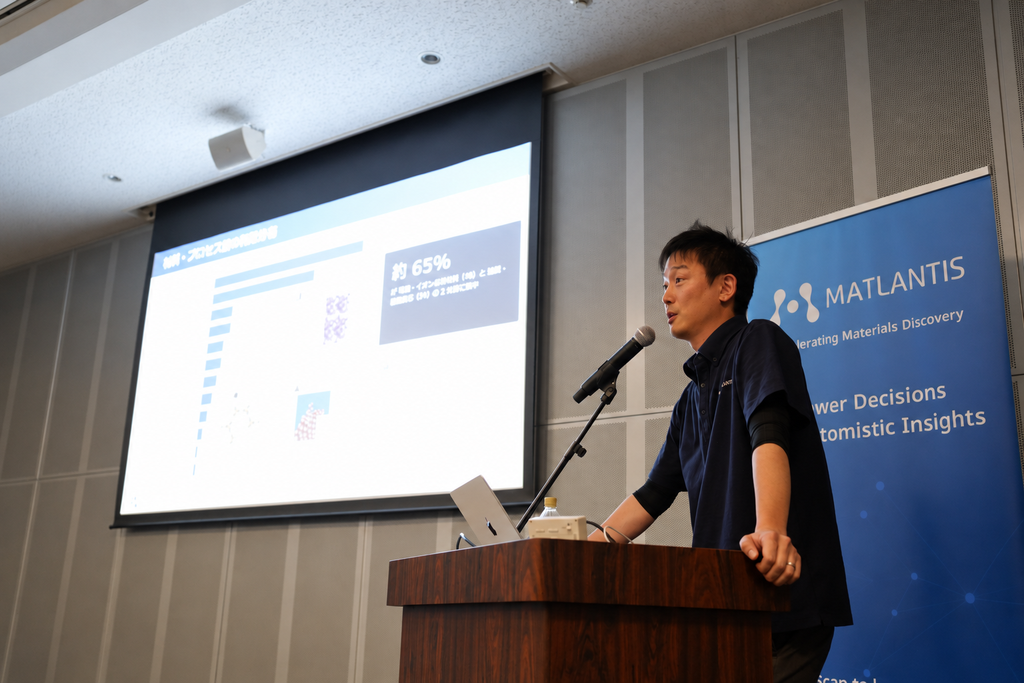
In the second half of the event, held at a satellite venue, Yusuke Asano, Head of Technical Solutions at Matlantis, took the stage. His lecture began with a story about his own experience, where he used to focus on experimental research and was not good at writing code. Asano, who understands the perspective of those who use computations, posed the question, "What do you do after you get results from a simulation?"
Matlantis has accelerated atomic-level calculations, expanding its applications in research, including batteries and catalysts. However, Asano emphasized that "the goal is not simply to produce simulation results." Research and development only becomes successful when the insights gained from calculations are used in material design, and further improved in manufacturing processes, performance, and costs. The lecture also presented examples of how atomic-level analysis was connected to larger-scale calculations to predict what would happen in actual processes.
In the latter half of the presentation, he also outlined a vision for "generating, storing, and utilizing" data in the age of AI. One of the roles Asano expects Matlantis to play is to generate computational data that will be useful for future decisions, including conditions that researchers have not yet been able to try. During the Q&A session, questions were raised about applications to organic and polymer materials and calculations dealing with electronic states, and he frankly touched upon the current difficulties and the need to combine it with other methods. The lecture was about thinking not only about what can be done with calculations, but also how to deliver the results to real-world development.
The use of Matlantis in advanced memory development
After the parallel sessions concluded, participants returned to the main hall. From here, educational YouTuber Yobinori Takumi took the stage as the MC, livening up the venue.
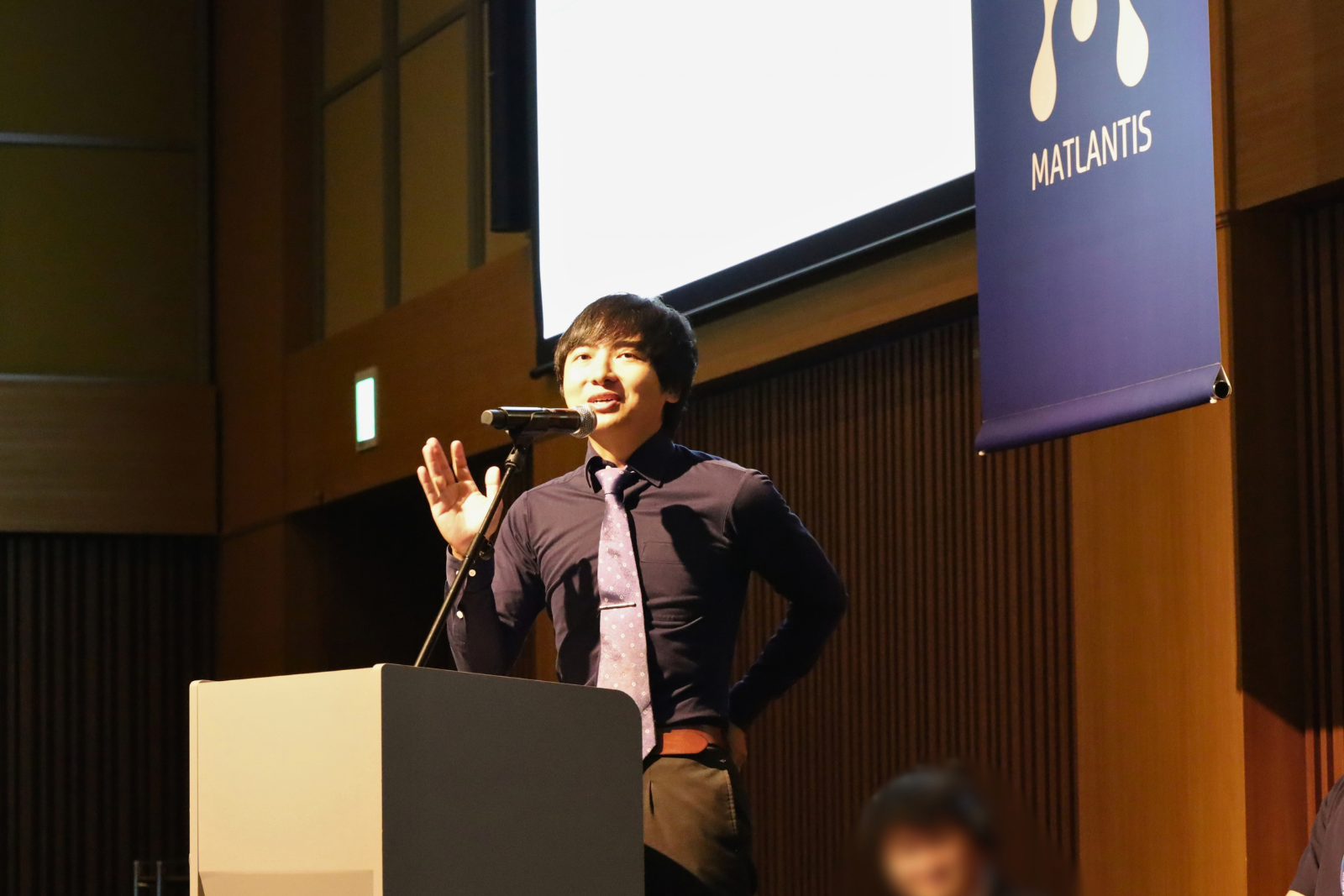
It turns out that Yobinori Takumi and Kioxia's Takashi Ichikawa, who was scheduled to speak next, had met at a quiz competition and had even participated in the same competition recently. Prior to the presentation, Yobinori Takumi posed a quiz about flash memory to Ichikawa, the "quiz king." The audience cheered loudly at the lively banter between the two, and then Ichikawa and Yasuda Kasumi's presentation began.
In the presentation, Mr. Ichikawa introduced common applications and development challenges of flash memory, followed by Mr. Yasuda's presentation on the analysis of threshold characteristic fluctuation mechanisms of semiconductor devices. He explained that properties related to device performance change depending on what happens at the interface. This approach involves investigating the structure using Matlantis and combining it with other computational methods to explore the reasons behind these changes.
During the Q&A session, researchers from other companies also asked how to connect the phenomena reproduced through calculations with actual manufacturing conditions.
[Panel Discussion] How has AI changed research and development? The current state of co-creation of experiments, calculations, and data.
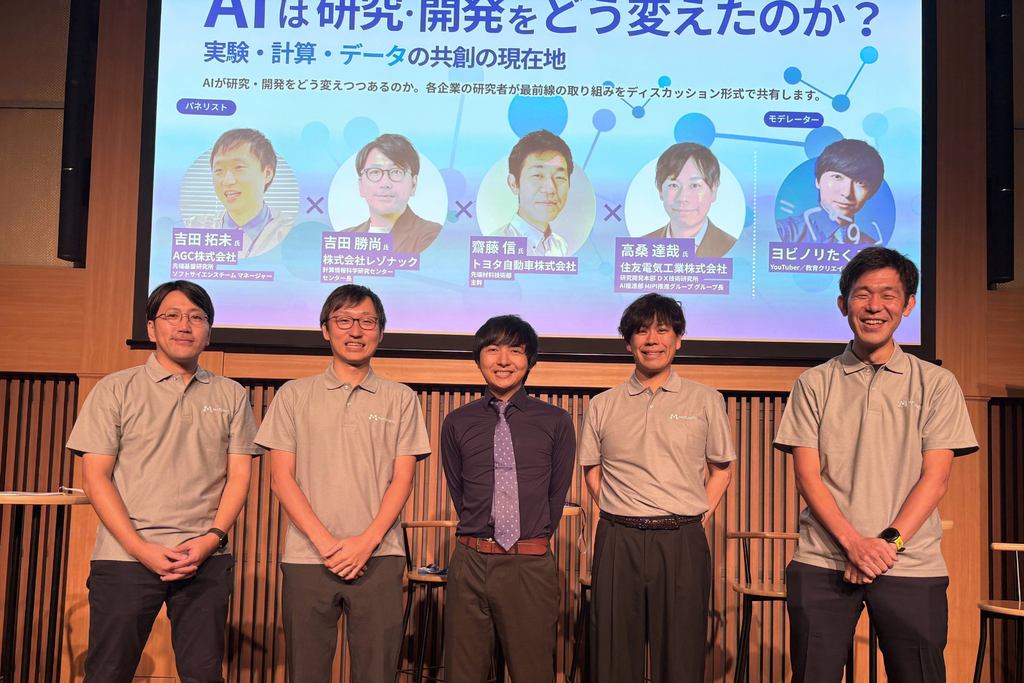
The subsequent panel discussion featured Takumi Yoshida from AGC, Katsuhisa Yoshida from Resonac, Makoto Saito from Toyota Motor Corporation, and Tatsuya Takakuwa from Sumitomo Electric Industries. The discussion was moderated by Takumi Yobinori. Participants in the audience were also invited to take part in an "AI Stance Diagnosis" while each company discussed how they are using AI in their research settings.
The first topic of discussion was, "Do you want to entrust tasks or thinking to AI?" One panelist shared that while he mainly uses AI for routine tasks in his research, he also uses it in his management role to organize his thoughts. He added that while he initially thought AI would make his work easier, the expanded range of possibilities actually required him to make even more decisions.
So, what roles will humans play? There are still many unspoken challenges in the field, and some believe that humans are better suited to observing how materials are used and formulating research themes. Others expressed a desire to decide for themselves "where to compete." The discussion expanded from tasks that could be entrusted to AI to tasks that researchers are reluctant to relinquish.
The topic of nurturing young researchers also came up. There was a strong emphasis on not just using AI to efficiently handle certain aspects of research, but also urging students to tackle the remaining, more challenging parts. The need for students to engage in hands-on, painstaking research was highlighted. Following these remarks, the panelists successively discussed the importance of conducting experiments and verifying the discrepancies between simulations and reality. The panel discussion, while exploring the use of AI, eventually delved into the very topic of what kind of experience researchers should strive to gain.
Leveraging AI for Materials to empower the entire Japanese materials industry
For the closing remarks, Mr. Masashi Hattori of the Cabinet Office took the stage as a guest speaker. "Materials is a core industry in our country. We must continue to win." With these powerful words, he began his speech and discussed the concept of a "knowledge value chain" that connects upstream and downstream industries, the analytical instrument industry, and academia. The goal is to not limit the use of AI for Materials to individual research, but to empower the entire Japanese materials industry.
Discussions Continued at the Networking Reception

After the presentations concluded, food and drinks were laid out in the foyer, which had been the poster venue, and the reception began. People asked the speakers questions about things that had caught their attention during the presentations, deepened discussions that had been an extension of the poster presentations, and as people chatted with drinks in hand, lively discussions formed in various circles. Conversations that transcended fields and affiliations continued even after the closing ceremony.
Thank you to everyone who spoke at the Matlantis User Conference 2026, everyone who presented posters, and everyone who attended.
Matlantis will continue to create a platform where users can share their research findings and practical insights, and connect with each other. We look forward to seeing you again next time.
[1] J. S. Smith, O. Isayev, A. E. Roitberg; ANI-1: an extensible neural network potential with DFT accuracy at force field computational cost. Chem. Sci. 2017; 8 (4): 3192–3203. https://doi.org/10.1039/c6sc05720a
-


 URL
URL
Copied
New Articles
NEW
Changing the rules of materials development with Physics-Grounded AI: how Matlantis PFP came to be
Interview
Benchmarking Matlantis-PFP v9 on MLIP Arena (full version)
Introducing Matlantis-PFP v9: Benchmarking on MLIP Arena and Improving Experimental Agreement with r2SCAN
How to Choose Molecular Dynamics (MD) Simulation Software: 6 Key Points and 14 Tools Compared

Molecular Dynamics Explainer

[Presentation Report] Tokyo University of Agriculture and Technology Doctor's Café #37 & AI Salon #14
Conference Report
![[Presentation Report] Tokyo University of Agriculture and Technology Doctor’s Café #37 & AI Salon #14](https://matlantis.com/wp-content/uploads/2026/07/tuat-doctors-cafe-37-ai-salon-14-1.jpg)
